Fumio Kishida Confirmed as Japan's Prime Minister
2021 · Tokyo, Japan
Fumio Kishida was officially confirmed as Japan's Prime Minister after winning the leadership of the ruling Liberal Democratic Party.
August 9, 1993
The Liberal Democratic Party of Japan lost a 38-year hold on national leadership.
Tokyo, Japan | Liberal Democratic Party
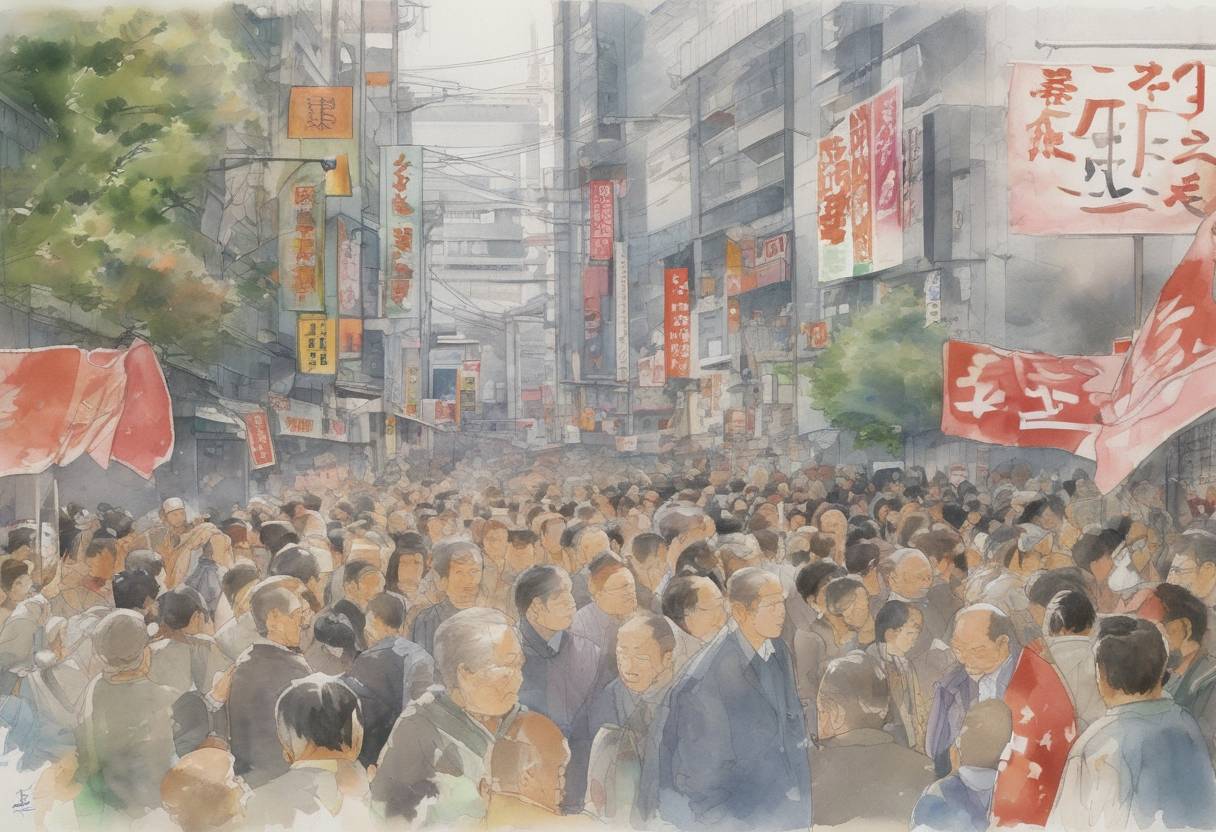
On August 9, 1993, a significant political shift occurred in Japan when the Liberal Democratic Party (LDP) lost its grip on national leadership after dominating Japanese politics for 38 years. This event marked a pivotal moment in Japan’s post-war political landscape, as it ended the LDP’s uninterrupted control since its founding in 1955.
The LDP was established in 1955 through the merger of two conservative parties, the Liberal Party and the Japan Democratic Party. It quickly became the dominant political force in Japan, largely due to its ability to foster economic growth and maintain political stability during the post-war reconstruction period. The party’s policies were characterized by a pro-business stance, close ties with the United States, and a focus on economic development.
Several factors contributed to the LDP’s loss of power in 1993:
Corruption Scandals: Throughout the late 1980s and early 1990s, the LDP was plagued by numerous corruption scandals, which eroded public trust. The most notable was the Recruit scandal, which involved the illicit distribution of shares by the Recruit Company to politicians and business leaders.
Economic Challenges: The burst of the Japanese asset price bubble in the early 1990s led to a prolonged economic stagnation, known as the “Lost Decade.” This economic downturn undermined the LDP’s reputation for economic management.
Internal Divisions: Factionalism within the LDP weakened its unity. Disagreements over policy and leadership led to defections and the formation of new political groups.
Electoral Reform: There was growing public demand for electoral reform to address issues of vote disparity and political corruption. The LDP’s resistance to these reforms further alienated voters.
In the general election held on July 18, 1993, the LDP failed to secure a majority in the House of Representatives. The party won only 223 out of 511 seats, a significant drop from previous elections. This outcome was a result of the aforementioned factors and the emergence of new political parties that capitalized on the public’s desire for change.
Following the election, a coalition government was formed by a group of opposition parties, including the Japan Renewal Party, the Japan Socialist Party, and the Komeito, among others. Morihiro Hosokawa, leader of the Japan New Party, became the Prime Minister, marking the first time since 1955 that a non-LDP leader held the position.
The LDP’s loss in 1993 was a watershed moment in Japanese politics. It demonstrated the vulnerability of long-standing political dominance and highlighted the importance of addressing public concerns such as corruption and economic management. Although the LDP returned to power in 1994 through a coalition, the 1993 election set the stage for a more competitive and dynamic political environment in Japan.
This event also underscored the need for political reform, leading to changes in the electoral system and efforts to reduce political corruption. The LDP’s temporary loss of power served as a catalyst for introspection and adaptation, ultimately contributing to its resilience and continued relevance in Japanese politics.
Source: en.wikipedia.org