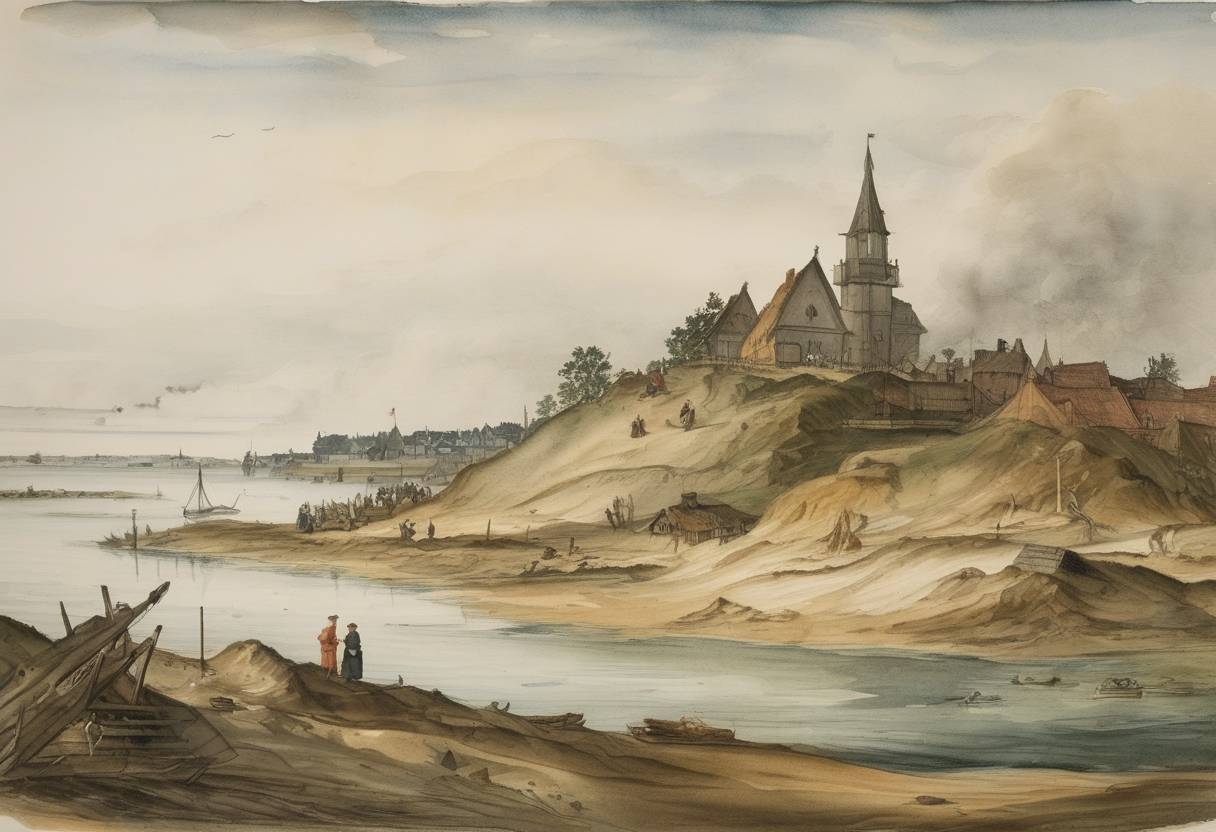
The All Saints’ Flood of November 2, 1570
On November 2, 1570, a devastating natural disaster known as the All Saints’ Flood struck the northern coasts of Europe. This event led to widespread flooding, particularly impacting regions in the Netherlands, Germany, and Denmark. The island of Funen, one of Denmark’s central islands, experienced significant devastation as a result of this catastrophic event.
Background
During the late 16th century, Northern Europe was susceptible to severe weather patterns and high storm tides. The geographical positioning of the North Sea and the low-lying areas in the region made them particularly vulnerable to storm surges. The All Saints’ Flood was not an isolated incident but part of a series of destructive floods that repeatedly affected these regions during this period.
Event Details
The flood was triggered by a severe storm surge that coincided with high tides. Strong winds from a northwesterly direction pushed large volumes of sea water inland, overwhelming the coastal defenses that were insufficient to protect against such an intense surge. The island of Funen, surrounded by both the North Sea and the Baltic Sea, was heavily impacted by the rising waters.
Impact on Funen
- Loss of Life and Property: The inundation led to the loss of many lives as the waters engulfed villages and farmland. Historical records indicate that numerous homes and livestock were swept away or destroyed, causing substantial economic and social distress to the inhabitants of Funen.
- Agricultural Damage: The flooding also resulted in significant agricultural damage, as arable land was inundated with saltwater, rendering it unusable for farming for some years.
Broader Consequences
- Major Flooding Across Europe: Beyond Funen, the All Saints’ Flood caused extensive damage across the Netherlands and parts of northern Germany. Dikes and dams were breached, leading to some regions remaining underwater for extended periods.
- Impact on Infrastructure: The immense damage to infrastructure and property required extensive repairs and led to initiatives for improved flood defenses in the affected regions. The aftermath of the flood prompted advancements in dike construction and flood management strategies.
Historical Significance
The All Saints’ Flood of 1570 was a significant marker in the evolving history of flood management in Northern Europe. It highlighted the vulnerabilities of coastal communities in this low-lying region and underscored the need for more substantial and effective coastal defenses. This event influenced future policies and technologies aimed at mitigating the impacts of such natural disasters.