Mahatma Gandhi's Arrest on November 6, 1913
1913 · Dundee, South Africa
Mahatma Gandhi was arrested while leading a march of Indian miners in South Africa, an event that highlighted his philosophy of nonviolent resistance.
June 7, 1893
Mahatma Gandhi committed his first act of civil disobedience by refusing to leave his seat in the 'whites-only' section of a train in South Africa.
Pietermaritzburg, South Africa | South African Railways
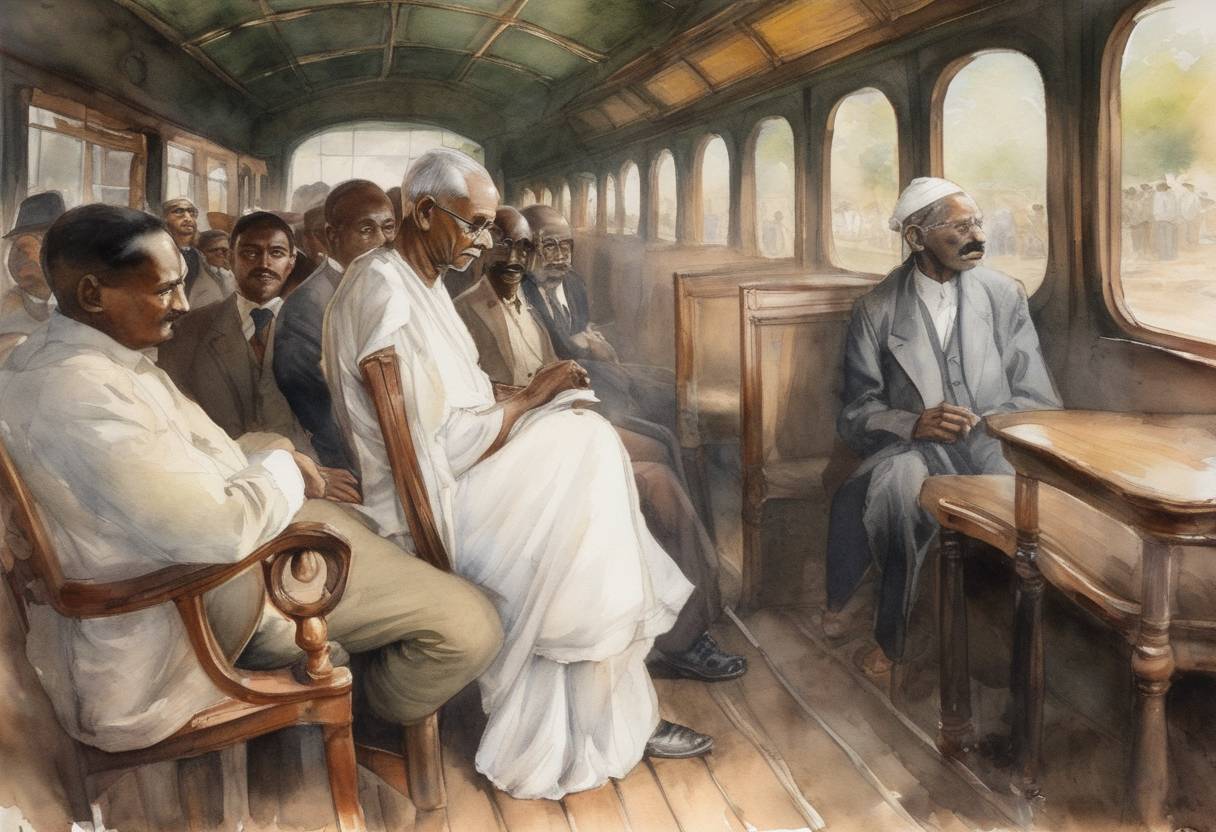
On June 7, 1893, Mohandas Karamchand Gandhi, who would later become known as Mahatma Gandhi, committed his first significant act of civil disobedience while traveling in South Africa. This pivotal event marked the beginning of his lifelong commitment to nonviolent resistance, a tactic he would later use to lead India to independence.
Mahatma Gandhi, a young lawyer at the time, had accepted a position with an Indian firm in Natal, South Africa. Gandhi was aware of the racial discrimination faced by Indians and other non-white people in the region, but this journey provided him with direct and harsh exposure to systemic racial segregation.
Gandhi was traveling from Durban to Pretoria on a business trip. Holding a first-class ticket, he was seated in the first-class compartment of the train at the Pietermaritzburg station. Despite his valid ticket, a white passenger took issue with his presence in the compartment due to Gandhi’s race. The train officials insisted that he should move to the third-class carriage, which was designated for people of color.
Gandhi refused to leave his seat, asserting his right to be in first class as he held a legitimate ticket for it. As a result, railway officials forcibly ejected him from the train and left him at the Pietermaritzburg station on a cold night.
This incident had a profound impact on Gandhi’s personal and political ideology. It was a catalyst for his active involvement in fighting racial oppression and became a turning point in his career as a social reformer. Gandhi’s choice to resist nonviolently set the stage for his later strategies in challenging unjust policies and laws through peaceful means.
The event at Pietermaritzburg prompted Gandhi to devise his philosophy of “Satyagraha,” which translates to “truth force” or “soul force.” This philosophy of nonviolent resistance became central not only to his leadership in the Indian independence movement but also inspired civil rights movements across the world.
The Pietermaritzburg railway station later became a site of historical significance, symbolizing the beginning of Gandhi’s transformative quest for equality and justice. The act of defiance by Gandhi on June 7, 1893, thus stands as a foundational moment in the history of civil rights and nonviolent protest.
Source: www.britannica.com