End of the Indian Rebellion of 1857: Direct British Control Declared
1907 · London, United Kingdom
The Indian Rebellion of 1857, also known as the Sepoy Mutiny, officially ends as Queen Victoria declares direct British control of India.
November 7, 1775
John Murray, 4th Earl of Dunmore and the royal governor of the British Colony of Virginia, signed Dunmore's Proclamation, offering freedom to slaves who would leave their masters and join the British forces.
Williamsburg, Colony of Virginia | British Empire
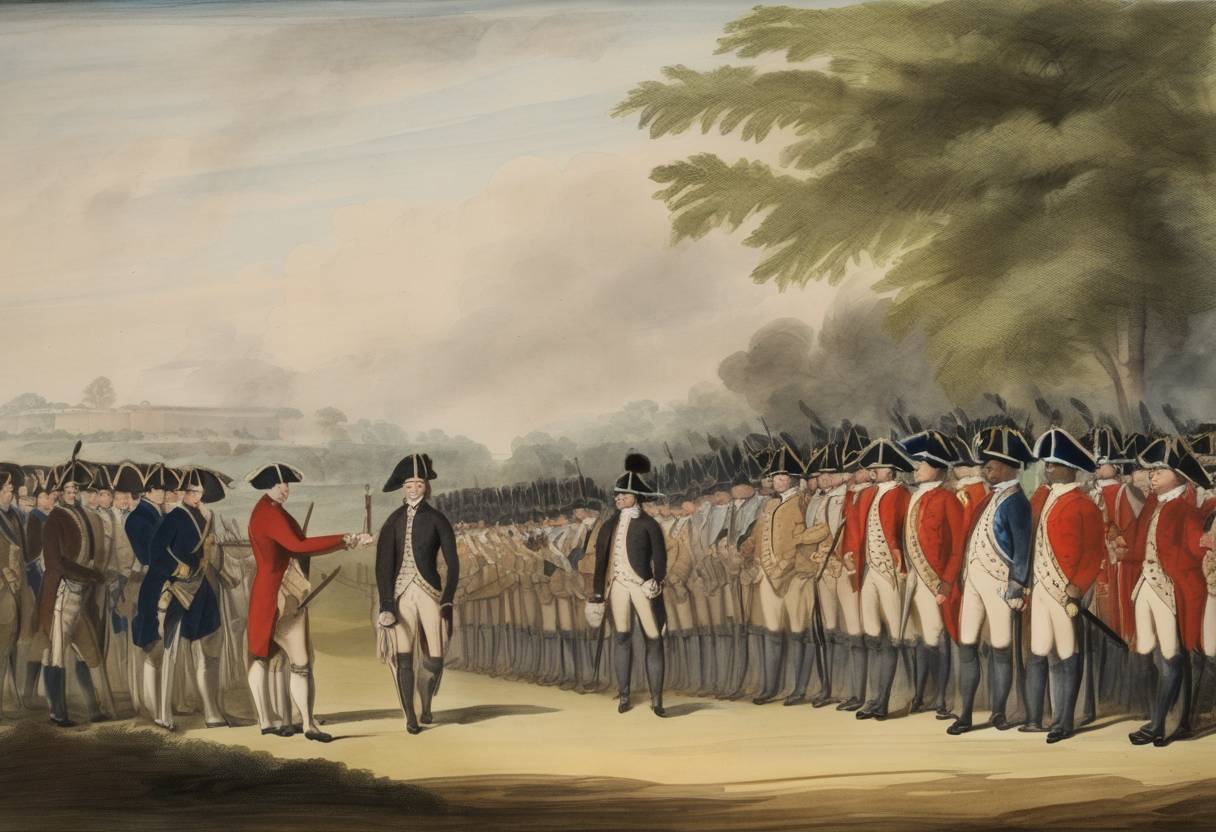
On November 7, 1775, John Murray, the 4th Earl of Dunmore and the royal governor of the British Colony of Virginia, issued a proclamation that would have significant implications during the American Revolutionary War. Known as Dunmore’s Proclamation, it declared martial law in Virginia and offered freedom to enslaved individuals who belonged to rebels (those who opposed British rule) and were willing to escape to join the British imperial forces.
Before issuing this proclamation, tensions between the American colonies and the British government had been escalating. The American Revolution had begun, and the colonies were moving towards a war for independence. The British aimed to quash the rebellion and retain control over the colonies.
John Murray, as governor, found himself increasingly isolated and under threat by Patriot forces. In an attempt to bolster British military strength and destabilize the Colonial workforce supporting the revolution, Dunmore saw an opportunity to exploit the practice of slavery – a cornerstone of Virginia’s economy and society.
Dunmore’s Proclamation explicitly called for all able-bodied men, including enslaved people owned by Patriot masters, to join the British army. In exchange for their military service, Dunmore promised emancipation. The proclamation read, in part, that “all indented Servants, Negroes, or others…able and willing to bear arms” would gain freedom if they aligned with the Crown.
The proclamation had several important outcomes:
Military Impact: Dunmore quickly assembled a small force known as “Lord Dunmore’s Ethiopian Regiment.” Estimates suggest several hundred slaves responded, most notably affecting Virginia, the largest slave-owning colony.
Colonial Reaction: The patriarchal plantation society saw the proclamation as a direct threat, exacerbating tensions. It galvanized support for the Patriot cause among white colonists and helped unite the colonies against British rule; even those who had been reluctant now aligned firmly against the Crown.
Legacy and Historic Symbolism: This act is one of the earliest instances of the British offering freedom to enslaved people in exchange for military service, setting a precedent that contributed to the abolitionist discourse and the role of African Americans in the struggle for emancipation. It exposed the contradictions in the quest for liberty by the American colonists while maintaining the institution of slavery.
Dunmore’s Proclamation remains a pivotal moment in the history of the American Revolution and the complex relationships between slavery, freedom, and military service in aspiring nation-states.
Source: en.wikipedia.org