1041 · Constantinople, Byzantine Empire (modern-day Istanbul, Turkey)
Michael IV, the Byzantine Emperor, dies. Following his death, his nephew Michael V is proclaimed emperor in Constantinople, marking a continuation of the Macedonian dynasty.
January 11, 1055
Theodora becomes Empress of the Byzantine Empire for the second time. A member of the Macedonian dynasty, she consolidates power and begins ruling directly after previously having served as co-empress with her sister Zoe.
Constantinople, Byzantine Empire (modern-day Istanbul, Turkey) | Byzantine Empire
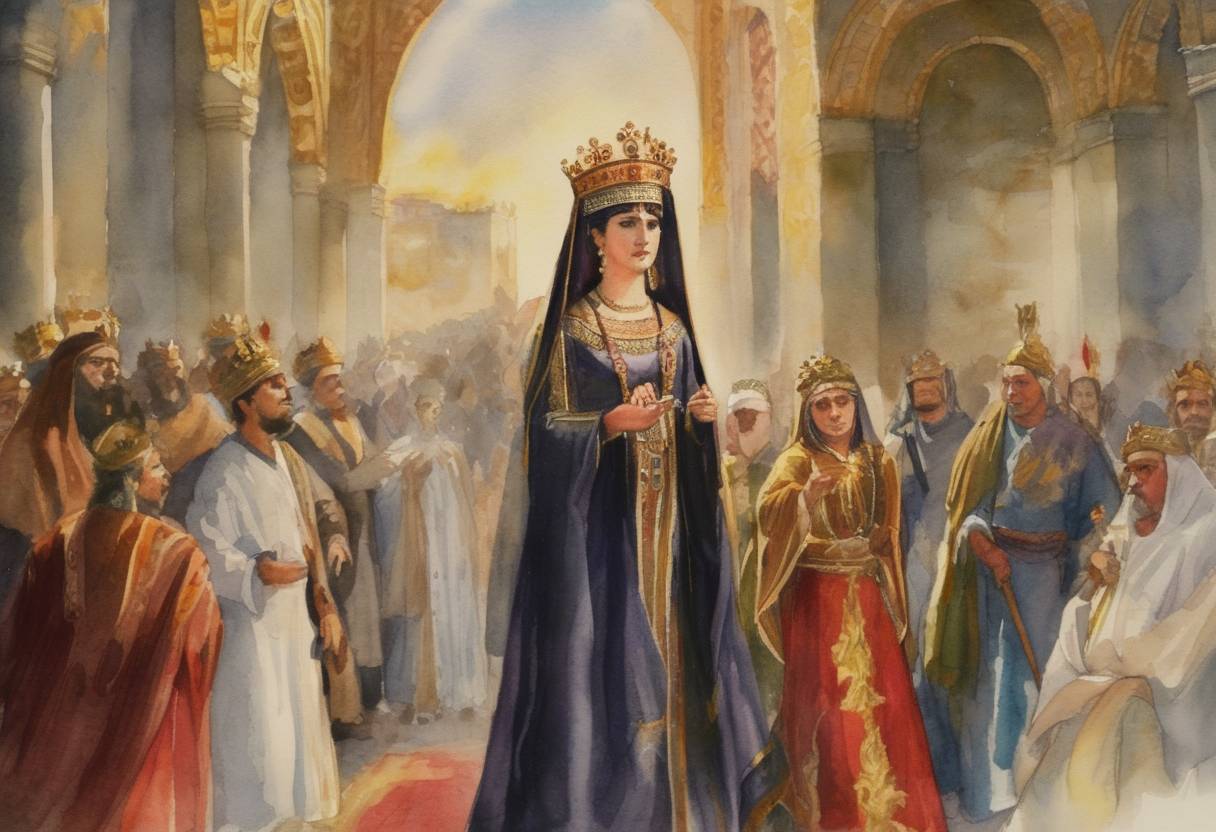
On January 11, 1055, Theodora, a member of the Macedonian dynasty, became the sole Empress of the Byzantine Empire, marking her return to power after previously serving as co-empress alongside her sister Zoe. This significant event in Byzantine history was characterized by Theodora’s consolidation of power and the establishment of her direct rule.
Theodora, born in the late 10th century, was the daughter of Emperor Constantine VIII. Her initial involvement in governance began during the reign of her sister Zoe, one of the influential figures of the Macedonian dynasty. Zoe had been married multiple times, with her spouses often playing significant roles in the empire’s administration. However, tensions and political machinations led to a partnership between the sisters that saw both reigning as co-empresses in the early 1050s.
Theodora’s second ascension to power came after the death of her co-empress sister Zoe in 1050 and the subsequent reign of Emperor Constantine IX Monomachos. When Constantine IX died in January 1055, Theodora was restored to the throne. At this time, she was in her 70s, yet she rapidly assumed control of the empire, demonstrating a keen understanding of statecraft.
During her reign, Theodora managed to secure her position by carefully navigating the complex political landscape of Byzantium. She emphasized law and order, sought to consolidate imperial powers, and worked diligently to root out corruption. Her administration was marked by efforts to strengthen the central authority of the imperial office at a time when numerous factions and aristocratic families were vying for influence.
Theodora’s rule was notably significant as it emphasized the role of women in Byzantine political life, traditionally dominated by male emperors. Her reign also underscored the continuing influence of the Macedonian dynasty, which had successfully governed the Byzantine Empire for over a century. Theodora’s ability to restore and maintain imperial stability was vital for the Byzantine Empire during a period that threatened fragmentation and decline.
Her death in the summer of 1056 marked the end of the Macedonian dynasty, leading to a brief period of instability before the ascendancy of the Komnenian dynasty, which would ultimately restore the empire to power in the subsequent decades.
Theodora’s legacy, as one of the last reigning icons of the Macedonian dynasty, highlights the complexities and shifting dynamics of imperial governance in medieval Byzantium.
Source: en.wikipedia.org