The Treaty of Paris and the Anglo-Spanish War (1654–1660)
1657 · Paris, France
The Treaty of Paris is signed, ending the Anglo-Spanish War (1654–1660) between France and Spain.
June 26, 1579
The Treaty of Plessis-les-Tours was signed, forming the foundation of the Union of Utrecht that would lead to the independence of the Dutch Republic from Spanish rule.
Plessis-les-Tours, France | Dutch Republic
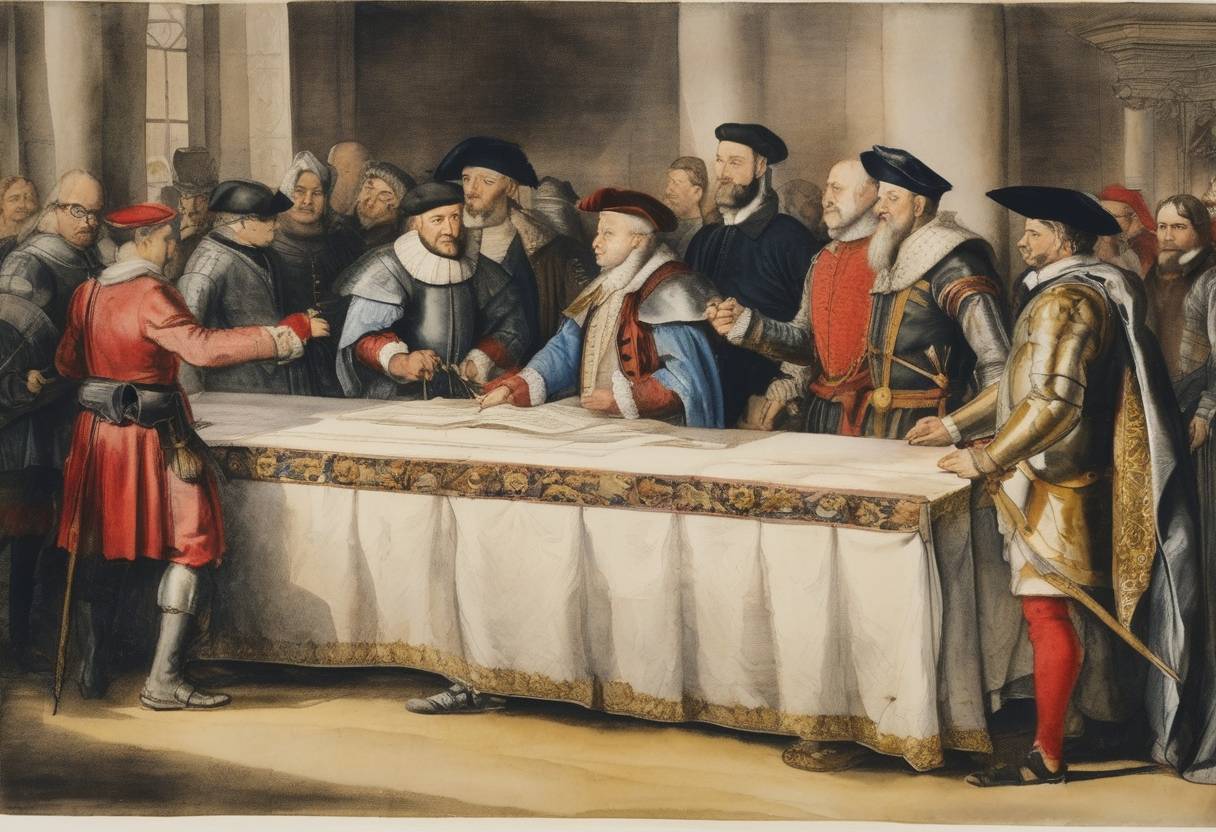
The Treaty of Plessis-les-Tours, signed on June 26, 1579, was a pivotal diplomatic agreement in European history that laid essential groundwork for the Union of Utrecht, a critical step towards the independence of the Dutch Republic from Spanish rule.
The mid to late 16th century was a period marked by intense religious and political strife across Europe. The Low Countries, under the control of the Spanish Habsburg monarch Philip II, were experiencing severe tensions due to differing religious ideologies, particularly between Protestant reformers and the Catholic rule of Spain. This period, known as the Dutch Revolt or the Eighty Years’ War (1568–1648), involved complex struggles for autonomy, religious freedom, and resistance against Spanish hegemony.
The Treaty of Plessis-les-Tours came about as part of a broader coalition effort to counteract Spanish authority in the region. This agreement primarily involved French support for the Dutch cause, as the Duke of Anjou, François, a French royal, was invited to offer assistance to the rebellious provinces. In essence, the signatories of the treaty sought to enlist outside assistance, recognizing Anjou as a potential protector who could strengthen the position of the provinces against Spain.
Though not as widely referenced as the Union of Utrecht itself, the Treaty of Plessis-les-Tours demonstrated the strategic international alliances forming in opposition to Spanish power. It highlighted the complexities of political relationships in the late Renaissance Europe, where lines between political, religious, and national identities were frequently blurred.
The agreement effectively sowed the seeds for the Union of Utrecht, signed on January 23, 1579, which formally united several provinces in a confederation signaling the foundation of what would become the Dutch Republic. This union is often viewed as a pivotal moment in European history, contributing to the gradual decline of Habsburg dominance and laying the groundwork for the modern state system.
In the longer term, the developments stemming from the Treaty of Plessis-les-Tours and subsequent agreements significantly influenced the political landscape of Europe, leading to shifts in power and the emergence of the Netherlands as a major economic and cultural power in the 17th century, known as the Dutch Golden Age.
Source: www.britannica.com