The First Siege of Pensacola: August 20, 1707
1707 · Pensacola, United States
The first siege of Pensacola took place during Queen Anne's War when the Spanish captured the town of Pensacola from the British.
February 29, 1704
The Raid on Deerfield took place during Queen Anne's War. A force of French and Native American warriors attacked the colonial settlement of Deerfield in the Province of Massachusetts Bay, capturing or killing many settlers.
Deerfield, Colony of Massachusetts Bay (now United States) | French forces and Native American allies
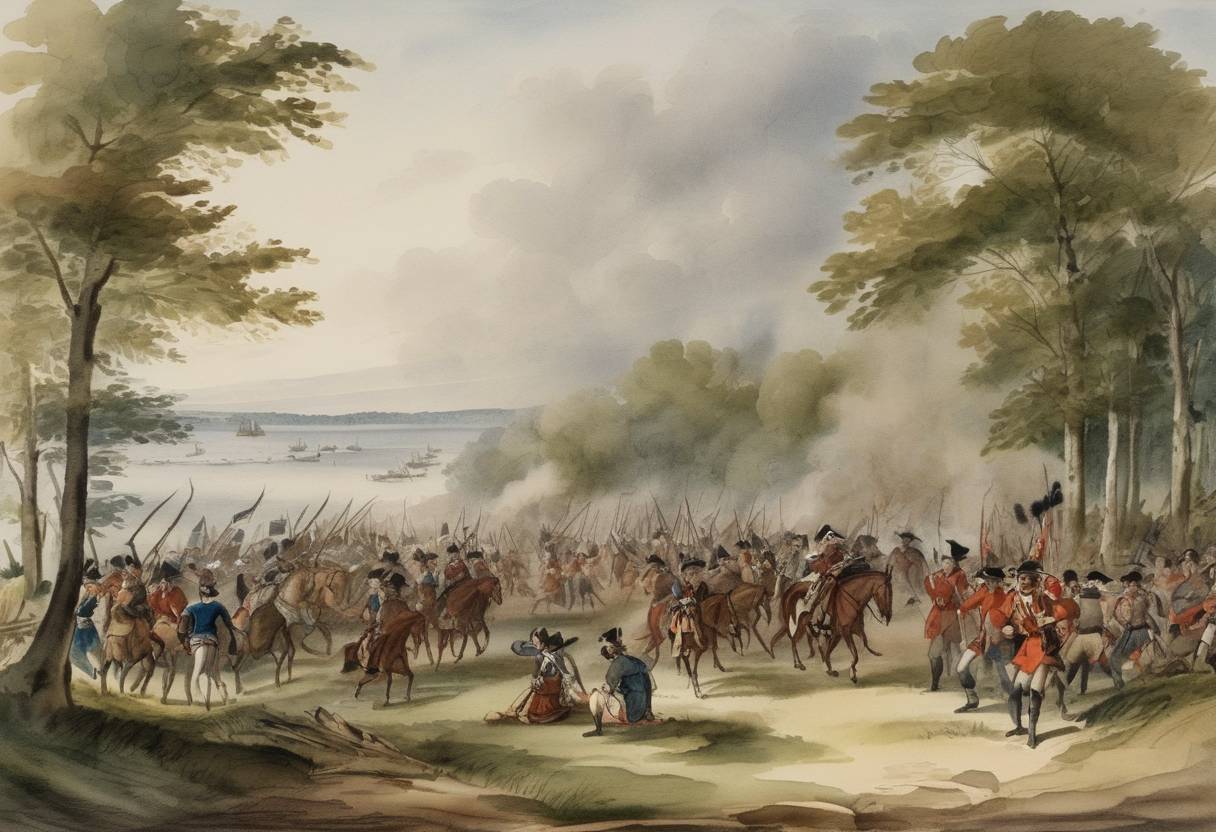
The Raid on Deerfield was a significant and devastating event during Queen Anne’s War, wherein a force comprised of French soldiers and their Native American allies attacked a colonial settlement in what is now Massachusetts. This raid is often remembered for its impact on the colonial frontier and the brutal confrontations between European settlers and Indigenous people in colonial New England.
Queen Anne’s War (1702-1713) was the North American theater of the War of the Spanish Succession, involving confrontations between British and French forces with their respective Native American allies. Deerfield, founded in the late 17th century and located in the Province of Massachusetts Bay, was a frontier settlement that epitomized the disputed and volatile boundary between British colonial territories and French and Indigenous lands. It had previously suffered during King William’s War as well, making it a target given its strategic and symbolic importance.
On the night of February 28, 1704, a force of around 300 French soldiers and Native American warriors approached the village. These warriors included members of the Mohawk, Wyandot, and Abenaki tribes, coordinated by Jean-Baptiste Hertel de Rouville, a French military officer. The attack commenced just before dawn on February 29, taking the village by surprise.
Despite fortifications, the settlers were largely unprepared for the winter raid. The attackers quickly overwhelmed the settlement’s defenses, burning buildings and killing approximately 47 settlers. Many of the victims were killed outright in the initial assault, including women and children, while the invaders looted homes and set them ablaze.
In addition to those killed, 112 settlers were taken captive and forced on a grueling march to Canada. Among the captives was the settlement’s minister, Reverend John Williams, whose family was notably affected — with his wife being killed during the march and his children taken hostage. His subsequent account, “The Redeemed Captive,” became an important narrative detailing the experiences of colonial captives.
The raid highlighted the complexities of alliances in North America, as Indigenous groups sided with the French due to shared grievances against English encroachments on their territories. It also showcased the vulnerability of frontier settlements amidst the broader European power struggle in North America.
The Raid on Deerfield exemplified the harsh realities of colonial life and frontier warfare during the period. It underscored the brutal nature of conflicts where European interests intersected with Indigenous lands, leading to suffering and displacement for many. Furthermore, it had lasting repercussions on the psyche of New England colonists, fostering a heightened sense of insecurity and mistrust toward their neighbors, both European and Indigenous.
The event remains a poignant reminder of the complexities of cultural and political interactions in early American history and the substantial impact these frontier conflicts had on colonial development and Indigenous communities.
Source: en.wikipedia.org