The End of the Falklands War: June 14, 1982
1982 · Stanley, Falkland Islands
The Falklands War ends as British forces retake the islands from Argentina.
June 8, 1982
In Stanley, Falkland Islands, British forces launched an attack on the Argentine positions during the Falklands War, advancing their campaign significantly in the Battle of Mount Longdon.
Stanley, Falkland Islands | British Armed Forces
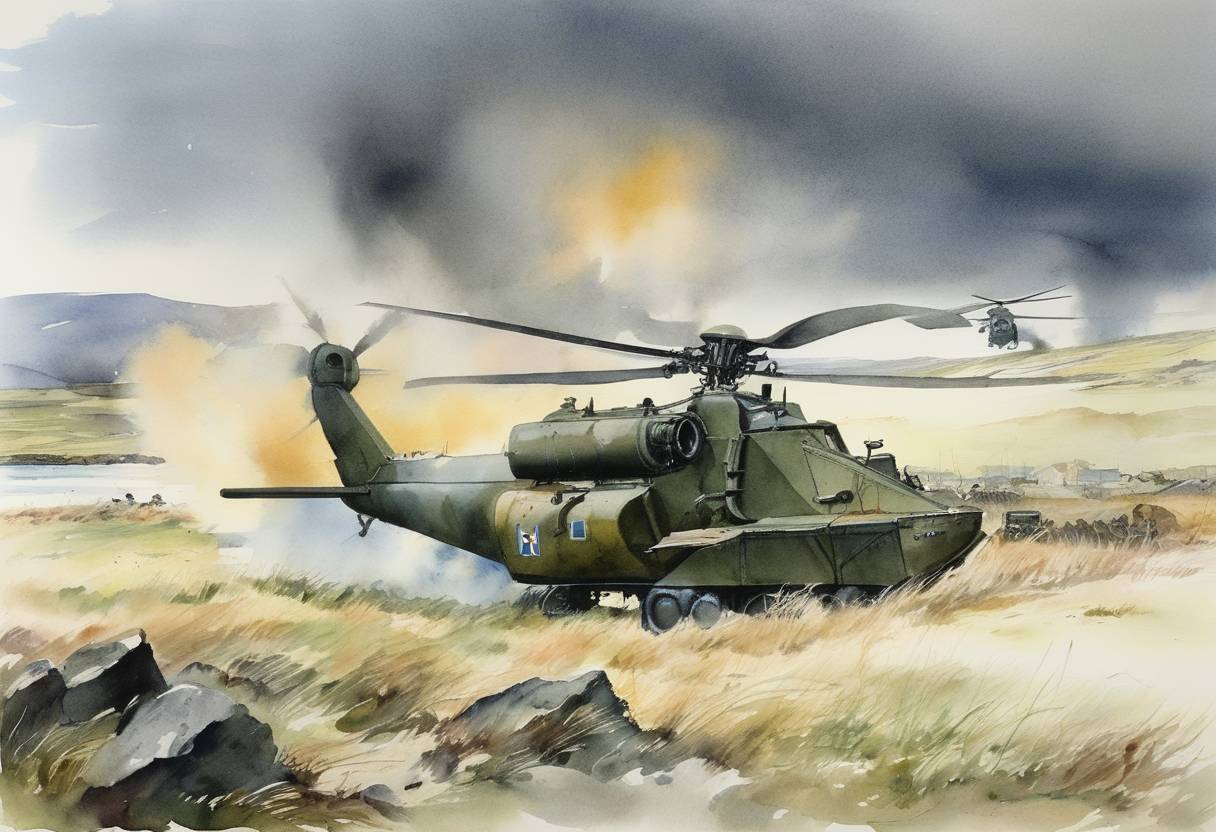
On June 8, 1982, during the Falklands War, British forces escalated their offensive against Argentine positions in the Battle of Mount Longdon, a crucial engagement that significantly advanced their campaign efforts. This battle was a part of a series of critical confrontations contributing to the British reclaiming control over the Falkland Islands.
The Falklands War began on April 2, 1982, when Argentina invaded the British-ruled Falkland Islands, claiming sovereignty over the territory. The conflict escalated as the United Kingdom responded with a military task force to retake the islands. By June, the British forces had landed on the islands and were advancing towards the Argentine defensive positions around the capital, Stanley.
Mount Longdon, located near Stanley, was strategically important due to its vantage point over the approaches to the capital. The British 3rd Battalion, Parachute Regiment (“3 PARA”), was tasked with capturing the mountain from its Argentine defenders, resulting in an intense battle marked by challenging terrain and determined resistance.
The victory at Mount Longdon played a crucial role in the British campaign. It not only ensured the strategic heights overlooking Stanley were in British control but also paved the way for subsequent assaults on surrounding positions, ultimately leading to the Argentine surrender on June 14, 1982. This battle demonstrated the effectiveness of British infantry tactics and training in harsh conditions, contributing significantly to the overall success of their military objectives in the Falklands War.
The Battle of Mount Longdon remains a significant example of the challenges and heroism associated with reclaiming contested territories and is remembered as a turning point in the Falklands conflict.
Source: en.wikipedia.org