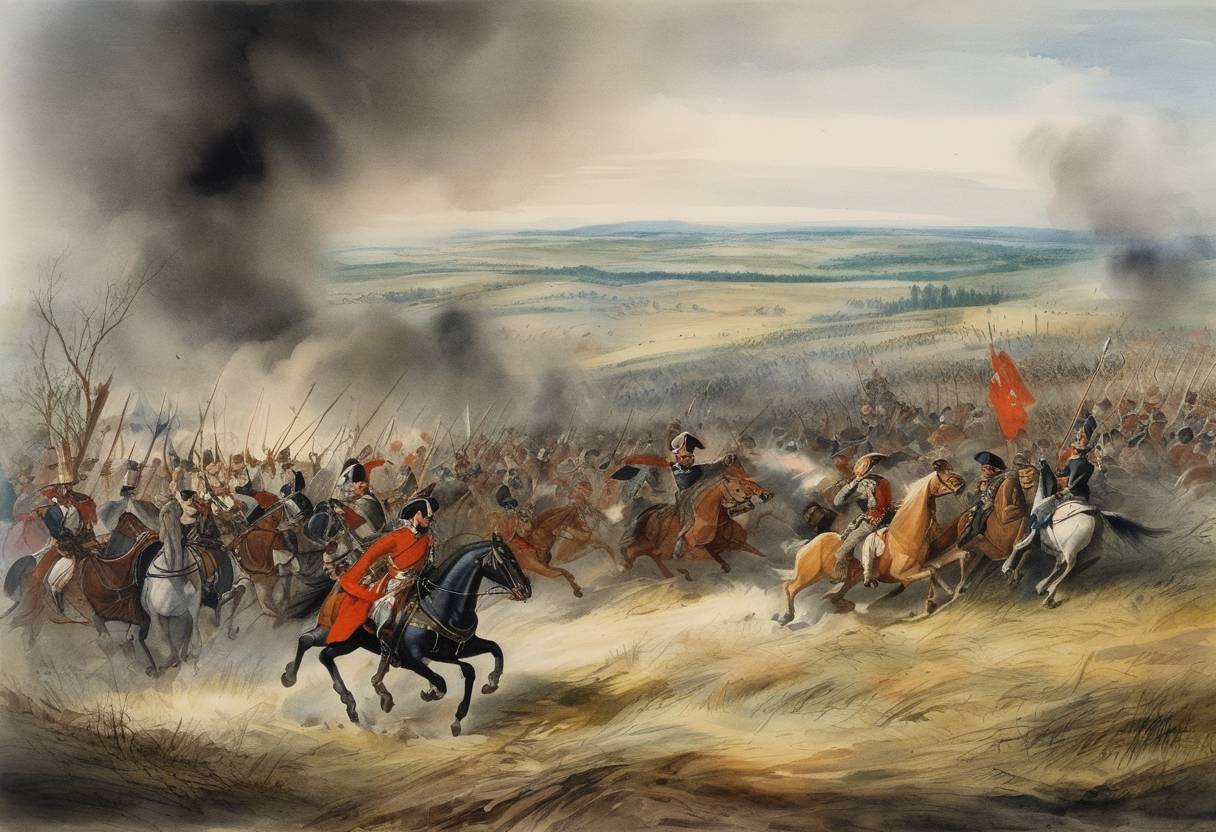
Battle of Sahay: November 19, 1742
Context and Background
The Battle of Sahay occurred during the War of the Austrian Succession, a series of conflicts from 1740 to 1748 over the disputed succession of Maria Theresa to the throne of the Habsburg Monarchy. This period was marked by shifting alliances and extensive campaigns across Europe.
- Austrian Forces: Led by Count Ludwig Andreas von Khevenhüller, a prominent and experienced Habsburg general who played a critical role in various Austrian victories during the war.
- Bavarian Forces: Commanded by General Count Friedrich Heinrich von Seckendorff, an experienced commander tasked with supporting the French cause against Austria.
The Battle
Date and Location
- Date: November 19, 1742
- Location: The vicinity of Sahay (modern-day Zahájí in the Czech Republic)
Prelude
By late 1742, the Austrians, under Maria Theresa’s leadership and seeking to recover territories lost early in the war, concentrated their efforts in Bohemia. The strategic objective was to regain control and push back the Bavarian and French forces occupying the region.
The Engagement
The Austrian forces, despite being marginally outnumbered, utilized superior tactics and local knowledge to engage the combined Bavarian forces decisively. Utilizing the element of surprise and strategic troop positioning, Austrian forces were able to outmaneuver their adversaries.
Outcome
The battle concluded with a victory for the Austrian forces. This success contributed to reversing the gains made by the anti-Habsburg forces in the region and served as a morale booster for the Habsburg Empire, solidifying their control in Bohemia for the time being.
Aftermath and Consequences
- Territorial Gains: The victory at Sahay helped the Austrians regain significant portions of Bohemia.
- Strategic Impact: It further entrenched Maria Theresa’s position, allowing her forces to stabilize the eastern front and redirect resources and troops to other critical areas.
- Political Ramifications: The battle emphasized the shifting dynamics of the War of the Austrian Succession, showcasing the Habsburg resilience against the alliance of France and Bavaria.
Historical Significance
The Battle of Sahay is notable as a part of the larger narrative of Maria Theresa’s struggle to secure her inheritance and establish her reign during one of Europe’s most complex succession conflicts. It exemplifies the military strategies and alliances that characterized the mid-18th-century European battlefields.