The Completion of the Black Maria: February 1, 1893
1893 · West Orange, United States
Thomas Edison completes the world's first movie studio, the Black Maria, in West Orange, New Jersey.
January 31, 1891
The first attempt at making a movie is made by Thomas Edison with the invention of the Kinetoscope.
West Orange, New Jersey, United States | Edison Manufacturing Company
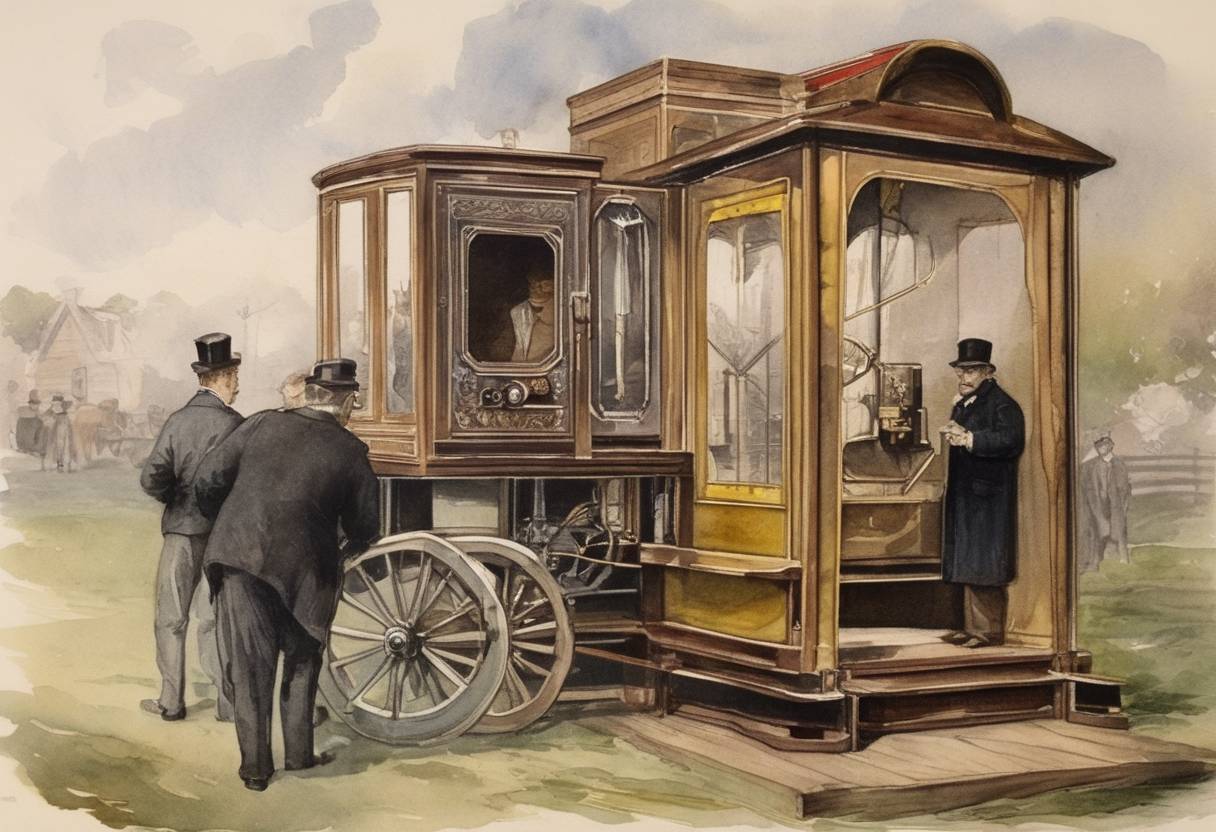
On January 31, 1891, Thomas Edison conducted a groundbreaking demonstration related to the development of motion pictures, although it’s essential to clarify that the concept of a “first movie” is complex due to overlapping innovations. Edison, together with his assistant William Kennedy Laurie Dickson, was actively engaged in the fruition of the Kinetoscope, a device that would transform the public’s experience of visual entertainment.
The Kinetoscope was an early motion-picture exhibition device, designed primarily for individual viewing. Edison aimed to create a machine that could do for the eye what the phonograph did for the ear, leading to the exploration of synchronized sound and image.
Edison selected January 31, 1891, to share a preliminary demonstration of the Kinetoscope concept. The demonstration primarily centered on the potential of the device and showcased moving images on a small scale. This event marked a pivotal point in the further advancement of film technology.
While the demonstration in early 1891 was not the public debut of a finished product, it underlined the significance of Edison’s work in setting the stage for future cinematic endeavors. The Kinetoscope concept would inspire further innovations, ultimately making cinema a central cultural medium worldwide.
Source: www.britannica.com