The Democratic National Convention Opens in Chicago - August 28, 1968
1968 · Chicago, United States
The Democratic National Convention opens in Chicago, marked by anti-Vietnam War protests.
July 9, 1896
William Jennings Bryan delivers his famous 'Cross of Gold' speech at the Democratic National Convention.
Chicago, United States | Democratic Party
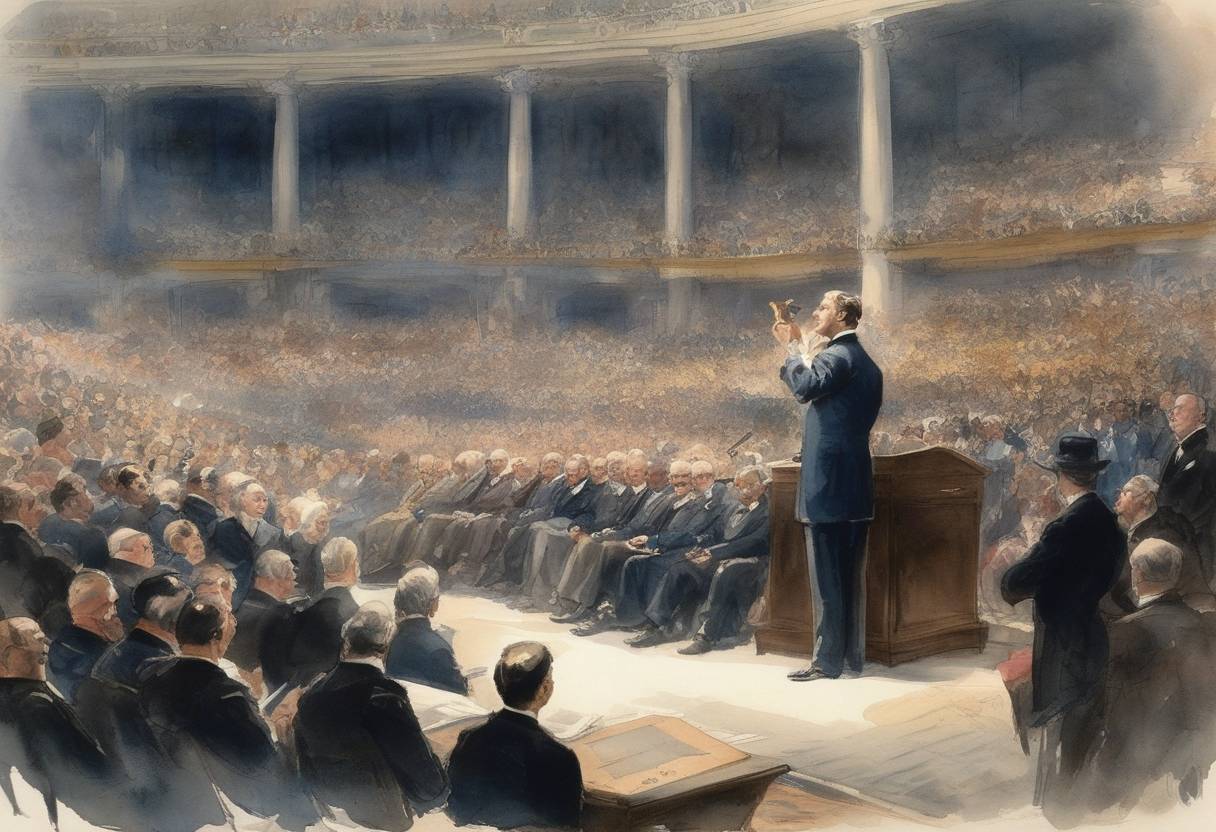
On July 9, 1896, during the Democratic National Convention held in Chicago, Illinois, William Jennings Bryan, a lawyer and former Congressman from Nebraska, delivered his electrifying ‘Cross of Gold’ speech. This pivotal oration would not only secure his nomination as the Democratic candidate for the presidency of the United States but also solidify his place in American political history.
The late 19th century in the United States was characterized by economic depression and severe deflation. The monetary debate intensely centered around the gold standard, favored by the conservative eastern establishment, and the introduction of free silver, which was supported by populists and agrarians in the South and West. Free silver advocates argued that unlimited coinage of silver would inflate the currency, making it easier for debt-ridden farmers and working-class individuals to manage their debts.
Bryan became a prominent advocate for the free silver movement. His dramatic appearance at the convention was part of a populist push against the gold standard, which they believed favored wealthy industrialists while harming farmers and poorer citizens.
Bryan’s speech was a masterclass in rhetoric that closed the debate on the party platform. Using powerful imagery and persuasive arguments, he attacked the gold standard and presented silver as a means by which the nation’s prosperity could be restored. The climax of his speech included the now-famous phrase:
“You shall not crucify mankind upon a cross of gold.”
This line metaphorically criticized the gold standard for its perceived devastating effects on American farmers and the working poor.
The impact of Bryan’s ‘Cross of Gold’ speech was immediate and profound. At just 36 years old, Bryan became the youngest major party nominee for President in U.S. history. His candidature marked a shift in the Democratic Party toward populism and away from the pro-business, conservative policies of the past.
Though Bryan ultimately lost the general election to Republican William McKinley, his speech had a lasting influence. It energized the populist movement and highlighted the growing divide in the Democratic Party between its populist and its conservative wings.
The ‘Cross of Gold’ speech remains one of the most famous and studied speeches in American political history. It articulated the struggles of the common people against industrialist power and economic policy. Though the silver movement eventually faded, Bryant’s speech symbolized a pivotal moment in the history of American populism and cemented his legacy as a powerful orator and advocate for economic reform.
Source: www.history.com