Inauguration of the First Transatlantic Telephone Cable System: TAT-1
1956 · Clarenville, Canada
The first transatlantic telephone cable system, TAT-1, was inaugurated, providing a direct telephone link between North America and Europe.
August 5, 1858
First transatlantic telegraph cable successfully completed, enabling telecommunication between Europe and North America.
Valentia Island, Ireland | Atlantic Telegraph Company
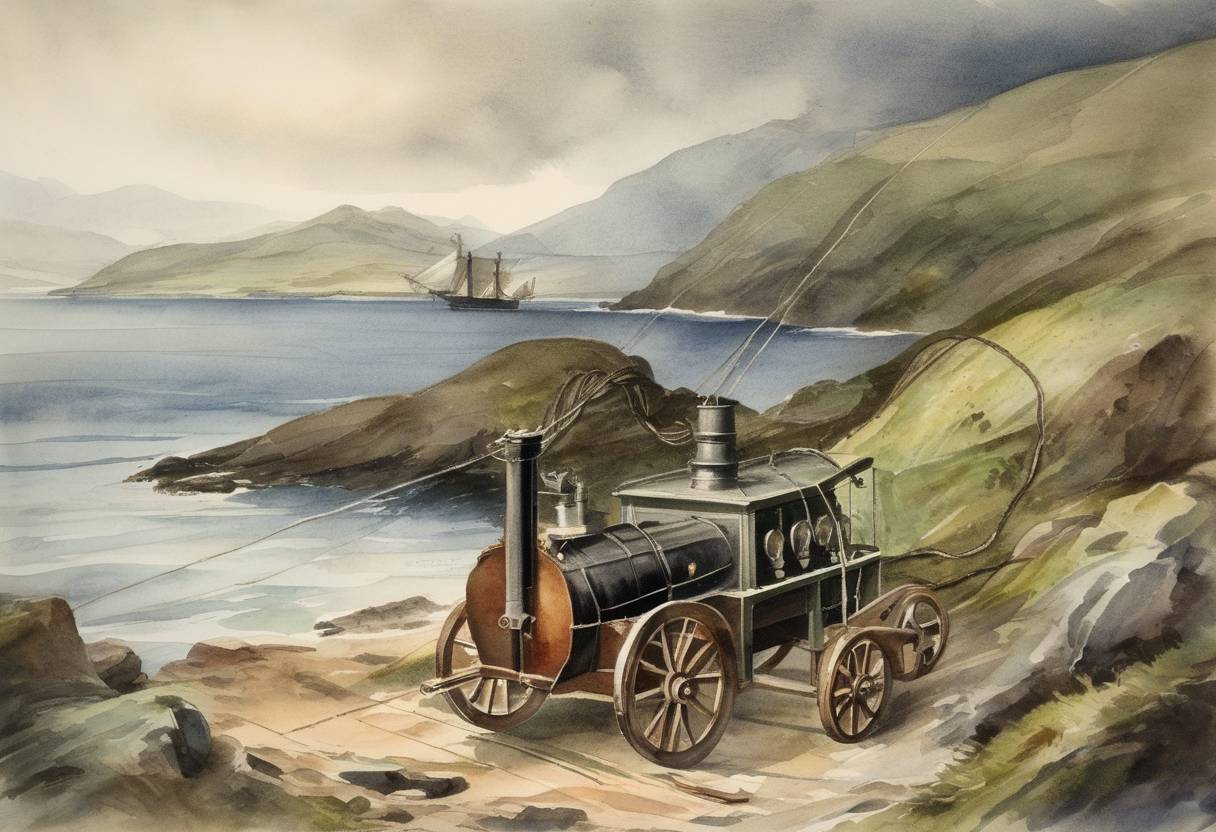
On August 5, 1858, the first successful transatlantic telegraph cable was completed, establishing a revolutionary communication link between Valentia Island, Ireland, and Trinity Bay, Newfoundland, connecting Europe and North America directly for the first time.
The idea of a transatlantic telegraph was first proposed in the early 1850s. The rapid growth of telecommunication and telegraph networks across land highlighted the potential benefits of connecting continents. The Atlantic Telegraph Company, founded in 1856 by Cyrus West Field, was instrumental in actualizing this vision. Field, alongside engineers and scientists, worked on overcoming technical and logistical challenges, such as cable durability and insulation, that previous attempts had failed to resolve.
The project commenced its first successful cable-laying operation in 1857 but faced numerous setbacks, including cable breaks and adverse weather conditions. A joint British-US naval effort was employed using two ships, HMS Agamemnon and USS Niagara, which began the laying of the cable in June 1858. The cable was finally spliced and completed on August 5, 1858, after several trials.
Upon completion, the transatlantic telegraph cable reduced the time for communication between Europe and North America from weeks (the time it took a message to cross the ocean by ship) to mere minutes. The first official communication on August 16, 1858, was a congratulatory message from Queen Victoria to then-US President James Buchanan, marking a historic moment in international relations and communication.
Despite heralding a new era in global communications, the initial cable only functioned for approximately three weeks before failing due to technical problems, primarily caused by excessive voltage used in transmission. However, the lessons learned led to improvements; by 1866, a more durable and reliable cable was successfully laid, setting the foundation for the global telecommunication network that would eventually span the globe.
The transatlantic telegraph cable was pivotal in diminishing temporal and spatial barriers, effectively shrinking the world and enabling more immediate decision-making and economic transactions, laying the groundwork for modern global connectivity.
Source: en.wikipedia.org