The Battle of Okinawa: Conclusion and Significance
1945 · Okinawa, Japan
The Battle of Okinawa ended with an Allied victory. It was one of the bloodiest battles of the Pacific War during World War II.
March 23, 1945
The Battle of Okinawa began between American and Japanese forces in the Pacific Theater of World War II.
Okinawa, Japan | U.S. military
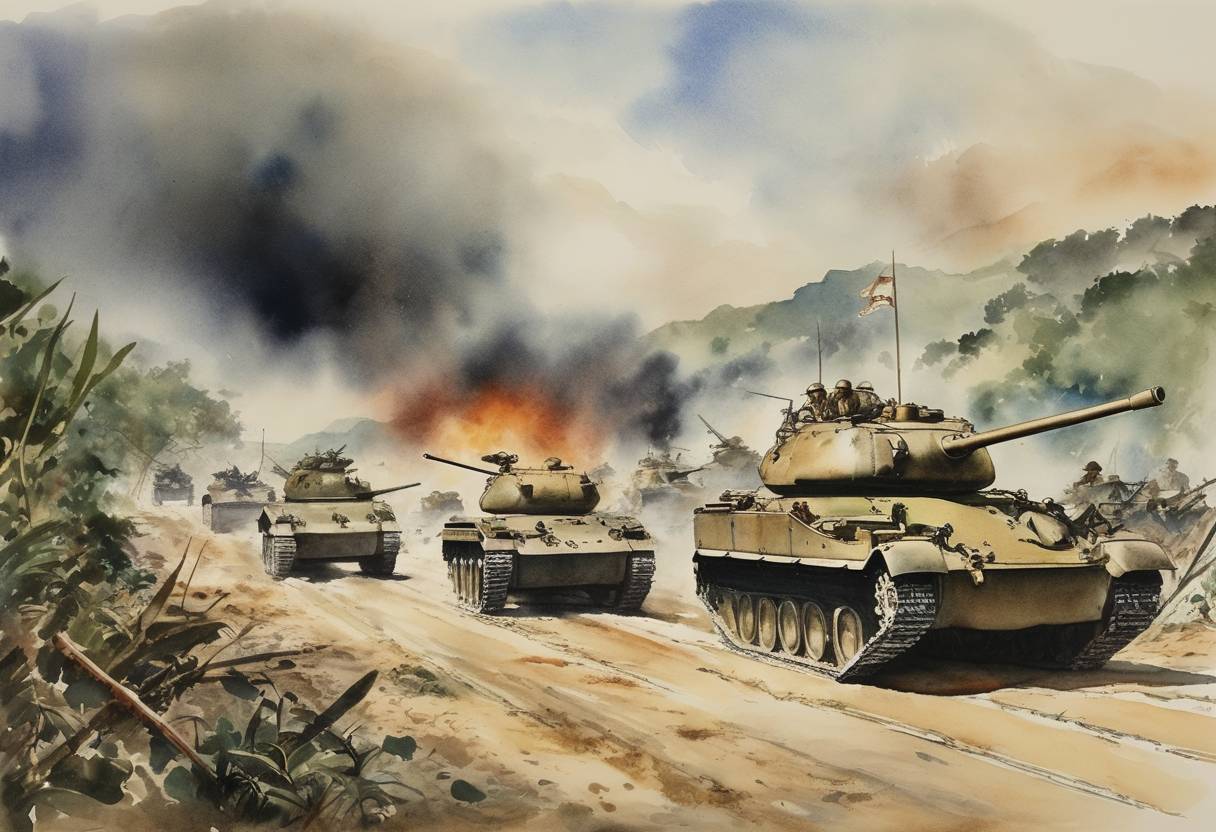
The Battle of Okinawa, one of the largest amphibious assaults in the Pacific Theater during World War II, began on April 1, 1945. Initial preparations and operations were set in motion in March, but the official amphibious landing, known as L-Day, marked the beginning of this crucial conflict. Here’s a detailed look at the events leading up to and the commencement of the battle:
Strategic Importance: The island of Okinawa was strategically significant as a potential staging area for the planned invasion of mainland Japan. Its location facilitated air operations and provided a base for naval forces.
Preparations: Before the main landing, American forces engaged in extensive aerial and naval bombardment of Okinawa. The goal was to weaken the Japanese defenses, which were deeply entrenched.
Operation Iceberg: The campaign commenced under the codename Operation Iceberg, involving a massive concentration of U.S. forces. The operation reflected careful planning and the deployment of significant resources.
Amphibious Assault: On April 1, 1945, the Tenth Army, consisting of around 180,000 U.S. troops, landed on the beaches of Okinawa. The initial phases saw relatively little resistance, as Japanese forces strategically withdrew to prepared defensive positions inland.
Prolonged Fighting: The battle would become one of the bloodiest in the Pacific, lasting for nearly three months. Fierce ground combat, kamikaze attacks, and harsh terrain contributed to substantial casualties on both sides.
Impact on Japan’s Surrender: The Battle of Okinawa proved pivotal, demonstrating the ferocity and high cost of a prospective invasion of Japan. This understanding influenced deliberations regarding the use of atomic weapons and accelerated Japan’s eventual surrender.
The Battle of Okinawa exemplified the strategic depth and intensity of Pacific warfare. It highlighted the challenges of island-based combat and had profound implications for post-war military strategy and geopolitics.
This conflict remains a somber chapter in military history, reflecting the extensive human cost sustained by both military forces and civilians.
Source: en.wikipedia.org