Rhode Island Bans the Importation of Slaves - June 13, 1774
1774 · Providence, United States
Rhode Island became the first of Britain's North American colonies to ban the importation of slaves, marking an early legislative step against slavery.
May 18, 1652
Rhode Island passed the first law in North America making slavery illegal.
Newport, American Colonies | Rhode Island General Assembly
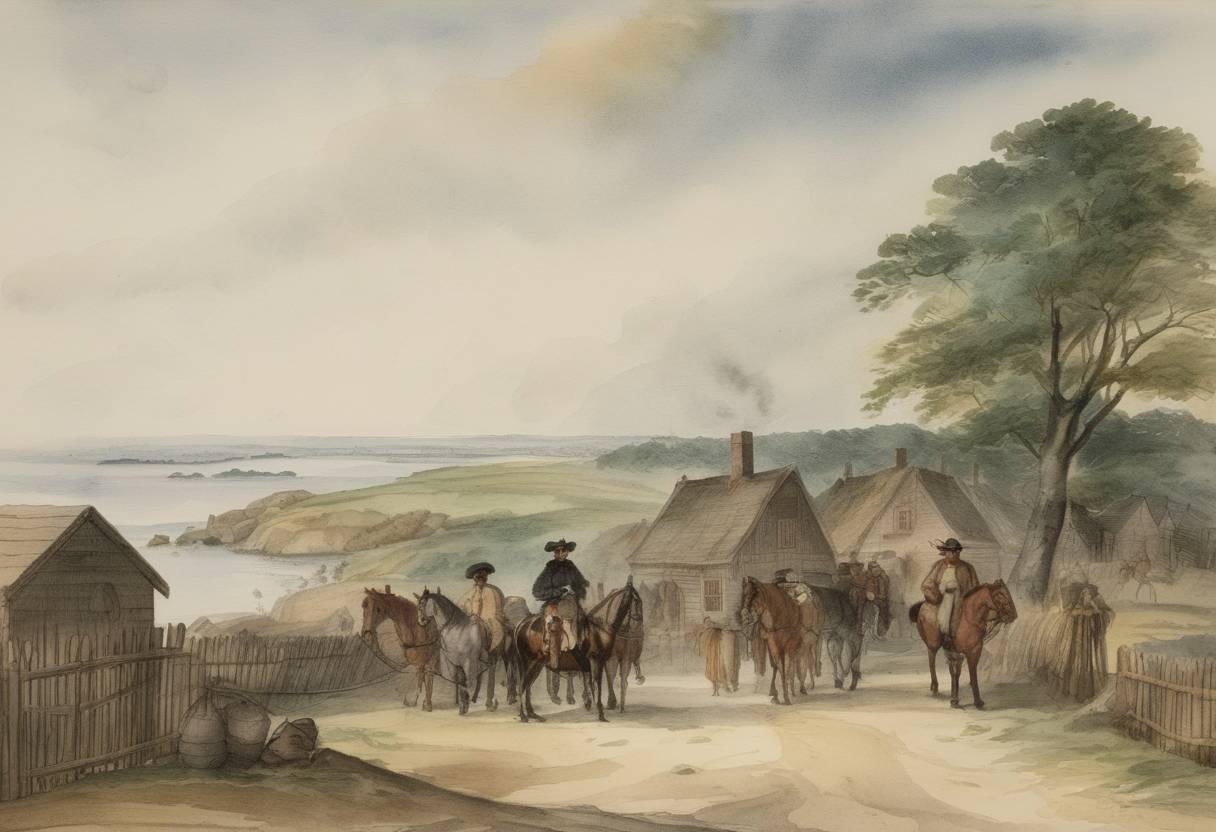
On May 18, 1652, Rhode Island made a significant legislative move by enacting the first law in North America that aimed to prohibit slavery. This pioneering act was passed by the Rhode Island General Assembly, which convened in Providence at the time when Rhode Island was still a part of the colonial framework under English rule.
The mid-17th century was a period of growing economic change and social transformation in the American colonies. Enslavement of African people was starting to take root as a labor system, particularly in the southern colonies, driven by the demands of plantation agriculture and European mercantile interests. However, the Northern colonies, including Rhode Island, exhibited a more diverse set of social policies influenced by a variety of immigrants with different beliefs and practices regarding labor and human rights.
Rhode Island, which was founded by Roger Williams as a haven for religious dissenters and advocates of separation of church and state, was uniquely positioned to make such a progressive legislative move. The colony’s commitment to individual freedoms and civil rights was a core part of its foundational ideology.
The 1652 law explicitly prohibited the holding of any person in servitude or slavery for more than 10 years. It aimed to obstruct the practice among European settlers who had begun to engage in the enslavement of Africans and Native Americans. By setting a limit on the duration of servitude, the law was designed to curtail the lifelong enslavement that characterized much of the rest of the American colonies and the Atlantic world.
Significantly, the law underlined the idea of temporary servitude as opposed to indefinite slavery, a notion that was radical for its time. It set the foundation for a legal framework that recognized servitude should not be an everlasting condition.
Despite the passage of this pioneering law, enforcement proved difficult. The economic incentive of slave labor was powerful, and the law’s impact was limited in scope and efficacy. The law, importantly, lacked the necessary enforcement mechanisms and often went ignored due to economic and societal pressures.
In subsequent decades, as Rhode Island’s own economy became more tied to the transatlantic slave trade, particularly through its ports in Newport, the coherence and enforcement of such legislation waned. The initial efforts of 1652 thus foreshadowed a long and complex struggle within Rhode Island, and the colonies at large, between moral imperatives and economic dependencies on slavery.
Nevertheless, the 1652 law remains a significant historical marker—an early legal recognition of the injustice of slavery in America’s colonial history, emphasizing the contentious and evolving nature of freedom and human rights in pre-Revolutionary America.
Source: www.britannica.com