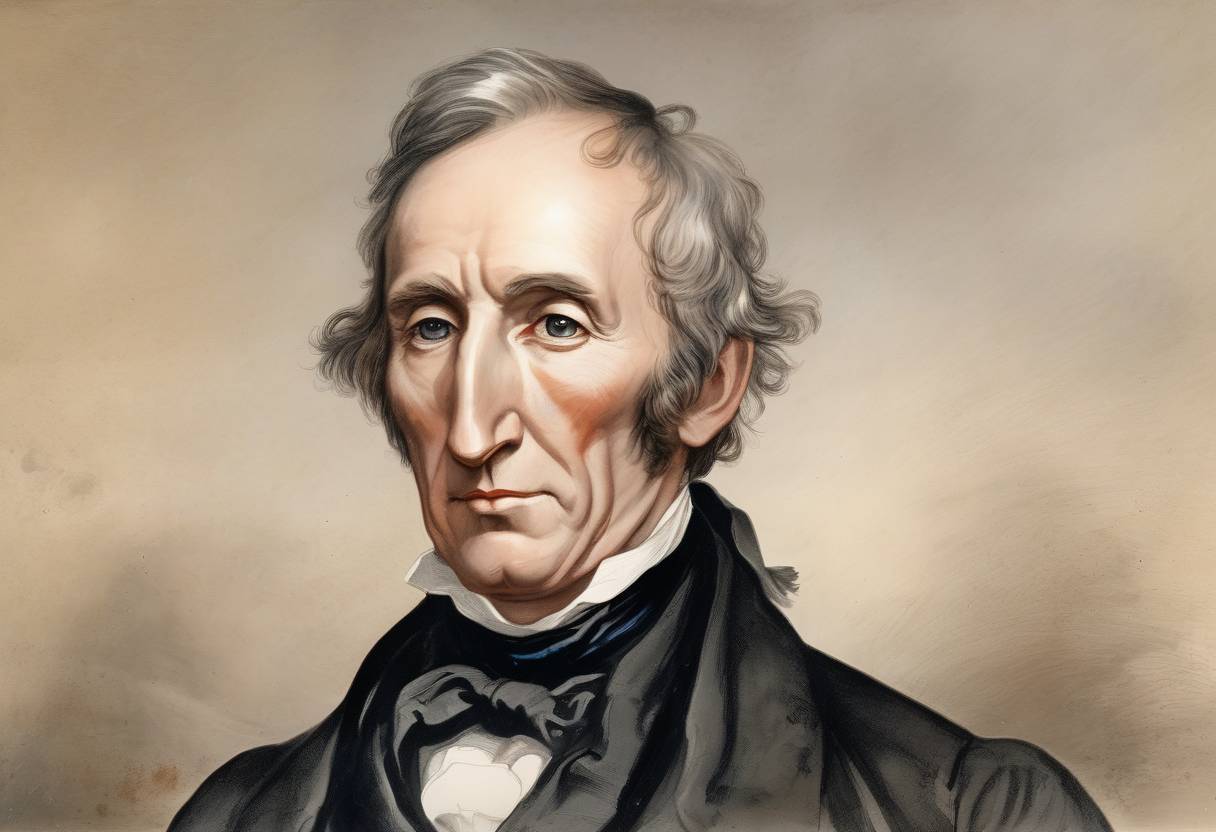
Annexation of the Republic of Texas: March 1, 1845
On March 1, 1845, U.S. President John Tyler signed a joint resolution of Congress to annex the Republic of Texas, a significant step that paved the way for Texas to become the 28th state of the United States. This event was a culmination of complex political maneuvers and marked a pivotal moment in American expansionism.
Context and Background
The Republic of Texas: Texas had declared its independence from Mexico in 1836 following the Texas Revolution. The Republic of Texas existed as an independent nation for nearly a decade, during which it sought recognition and support from other countries, including the United States.
U.S. Interest in Texas: The United States had shown interest in annexing Texas due to its vast lands and strategic location. However, the issue was contentious, primarily because of the implications for the balance of slave and free states in the Union.
Political Climate: The annexation of Texas was a divisive issue in American politics. Northern states generally opposed it due to the expansion of slavery, while Southern states supported it for the same reason. The debate over Texas was also tied to the broader concept of Manifest Destiny, the belief that the U.S. was destined to expand across the North American continent.
Key Events Leading to the Annexation
Tyler’s Presidency: John Tyler, who became president after the death of William Henry Harrison, was a strong advocate for the annexation of Texas. Despite opposition from his own Whig Party, Tyler pursued the annexation as a key goal of his administration.
Negotiations and Treaties: Initial attempts to annex Texas through a treaty failed in the Senate due to insufficient support. However, Tyler and his administration continued to push for annexation through other means.
Joint Resolution: Unlike a treaty, which requires a two-thirds majority in the Senate, a joint resolution requires a simple majority in both houses of Congress. This strategy was employed to bypass the Senate’s opposition.
The Signing and Its Aftermath
Signing of the Resolution: On March 1, 1845, President Tyler signed the joint resolution passed by Congress, which offered terms for Texas’s annexation. This resolution invited Texas to join the Union and laid out the conditions for its statehood.
Texas’s Acceptance: The Republic of Texas accepted the terms of annexation later in 1845, and on December 29, 1845, Texas was formally admitted to the United States as the 28th state.
Consequences: The annexation of Texas had significant consequences. It contributed to the outbreak of the Mexican-American War (1846-1848), as Mexico had never recognized Texas’s independence and viewed its annexation as an act of aggression. The war ultimately resulted in the U.S. acquiring vast territories in the southwest.
Historical Significance
The annexation of Texas was a landmark in the era of American expansionism. It highlighted the contentious issues of slavery and statehood that would continue to shape U.S. politics leading up to the Civil War. Moreover, it underscored the nation’s commitment to Manifest Destiny, setting a precedent for future territorial acquisitions.