1987 · Jerusalem, Israel
The trial of John Demjanjuk, accused of being the notorious Nazi death camp guard 'Ivan the Terrible', begins in Jerusalem.
April 11, 1961
The trial of Adolf Eichmann, a major organizer of the Holocaust, began in Jerusalem, bringing international attention to Nazi war crimes.
Jerusalem, Israel | Israeli government
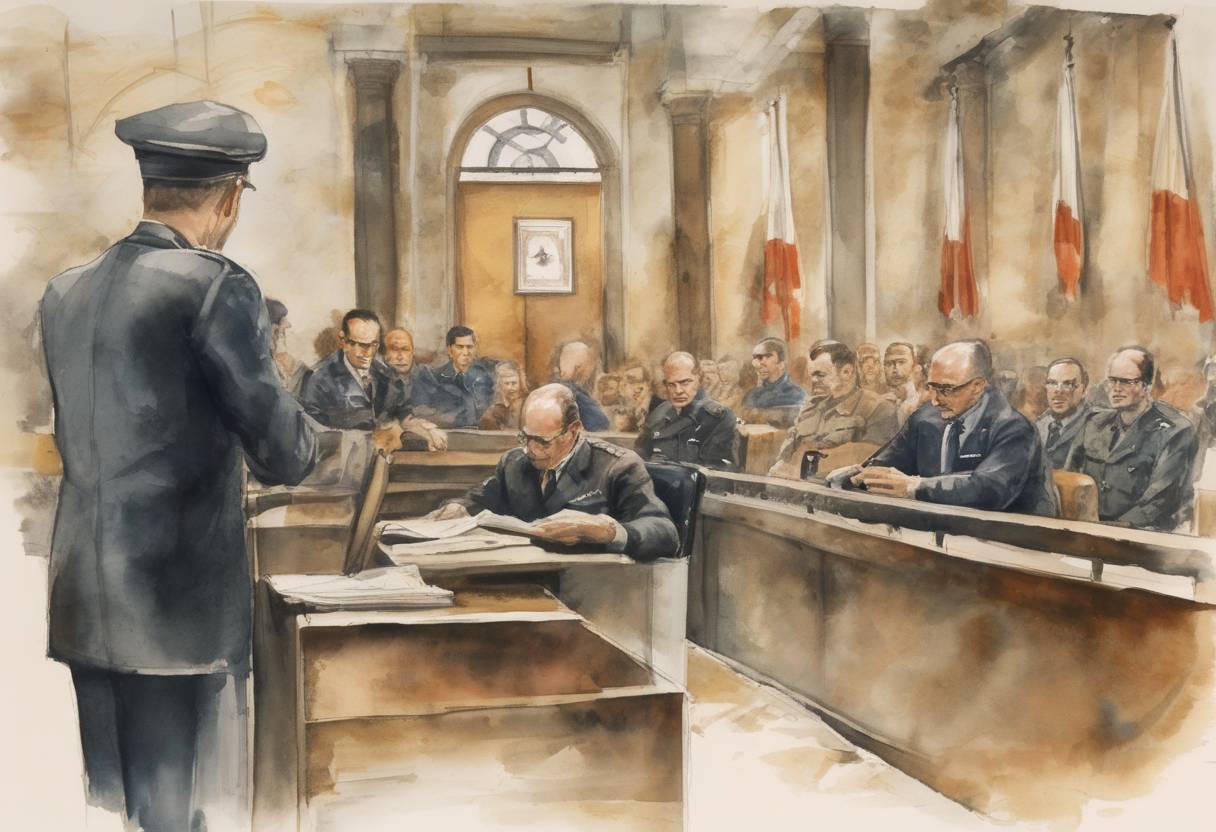
On April 11, 1961, the trial of Adolf Eichmann commenced in Jerusalem, marking a pivotal moment in the global reckoning with the atrocities of the Holocaust. Eichmann, a former SS-Obersturmbannführer, was one of the principal architects of the Holocaust, responsible for the logistics of mass deportations of Jews to ghettos and extermination camps across Nazi-occupied Europe.
Adolf Eichmann was captured by Israeli Mossad agents in Argentina in 1960, where he had been living under the alias Ricardo Klement. His capture and subsequent extradition to Israel were shrouded in secrecy and controversy, as Argentina had not been informed of the operation. This bold move by Israel underscored the determination to bring Nazi war criminals to justice.
The trial was held at the Beit Ha’am (House of the People) in Jerusalem and was presided over by a panel of three judges: Moshe Landau, Benjamin Halevy, and Yitzhak Raveh. Gideon Hausner, the Attorney General of Israel, led the prosecution. The trial was conducted in Hebrew, with Eichmann provided with translations.
Charges: Eichmann faced 15 charges, including crimes against humanity, war crimes, and membership in a criminal organization. The charges were based on his role in orchestrating the logistics of the Holocaust.
Defense: Eichmann’s defense was primarily based on the argument that he was merely following orders, a defense that had been commonly used by Nazi officials. He claimed he was a small cog in the machinery of the Nazi regime.
Testimonies: The trial featured testimonies from Holocaust survivors, which brought the horrors of the Holocaust to the forefront of international consciousness. These testimonies were crucial in illustrating the impact of Eichmann’s actions.
Media Coverage: The trial was one of the first to be widely televised, bringing unprecedented international attention to the proceedings and the Holocaust. It played a significant role in educating the world about the Holocaust’s atrocities.
On December 15, 1961, Eichmann was found guilty on most of the charges. He was sentenced to death, and his appeal was rejected. Eichmann was executed by hanging on June 1, 1962, marking the only time Israel has carried out a death sentence.
The trial of Adolf Eichmann was significant for several reasons:
Holocaust Awareness: It brought the details of the Holocaust to a global audience, highlighting the systematic nature of the genocide and the bureaucratic efficiency with which it was carried out.
Legal Precedents: The trial set important legal precedents in international law, particularly concerning the prosecution of war crimes and crimes against humanity.
Moral and Ethical Reflections: The trial prompted widespread moral and ethical reflections on obedience, responsibility, and the nature of evil, famously explored by political theorist Hannah Arendt in her work “Eichmann in Jerusalem: A Report on the Banality of Evil.”
The Eichmann trial remains a landmark in the history of international justice and the ongoing efforts to confront and understand the Holocaust.
Source: en.wikipedia.org