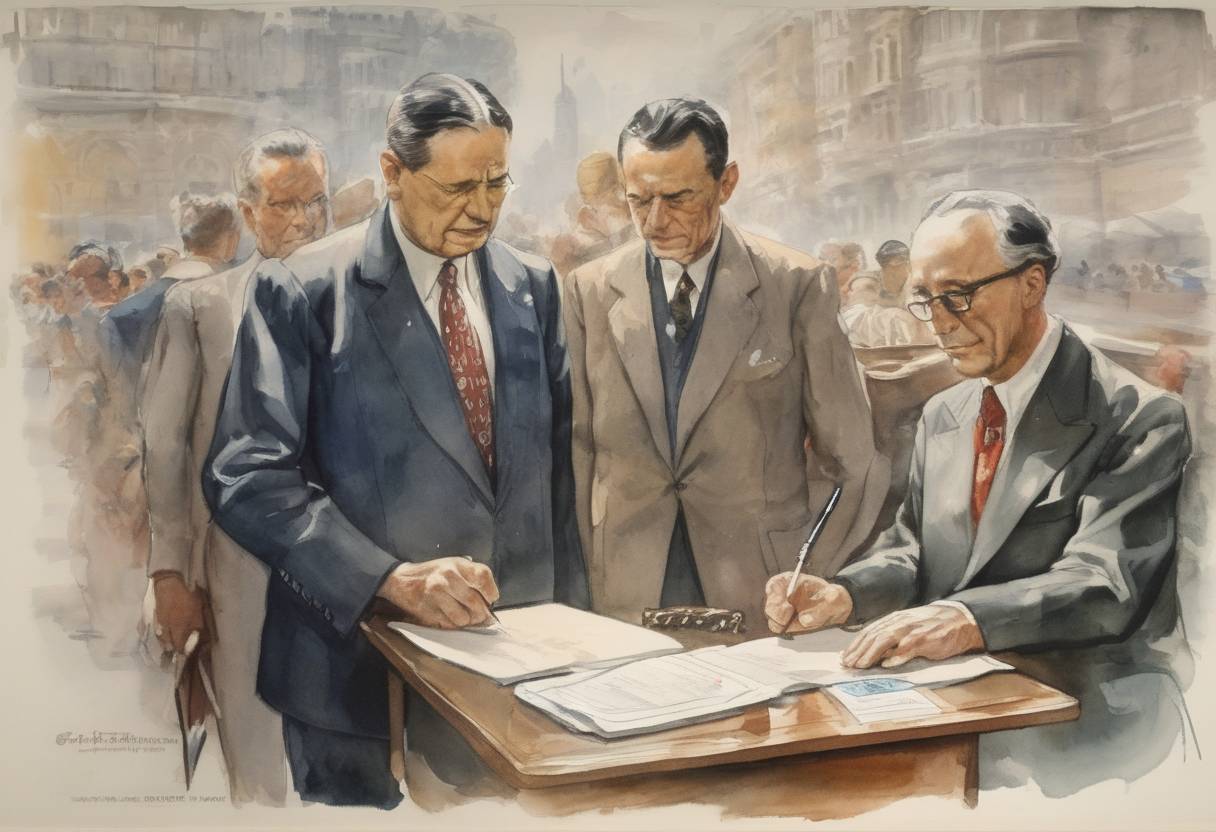
The General Agreement on Tariffs and Trade (GATT)
Overview
On October 24, 1947, the General Agreement on Tariffs and Trade (GATT) was signed by 23 nations in Geneva, Switzerland. This pivotal agreement aimed to promote international trade by reducing or eliminating trade barriers such as tariffs and quotas. The GATT was a multilateral treaty that laid the groundwork for the modern global trading system and eventually evolved into the World Trade Organization (WTO) in 1995.
Historical Context
In the aftermath of World War II, there was a strong desire among nations to foster economic cooperation and prevent the protectionist policies that had contributed to the economic difficulties of the 1930s. The GATT was part of a broader effort to create a stable and prosperous international economic environment. It was initially intended to be part of the International Trade Organization (ITO), a proposed United Nations agency. However, the ITO never came into existence due to lack of ratification, leaving the GATT as the primary framework for international trade regulation.
Key Provisions
- Reduction of Tariffs: The GATT aimed to reduce tariffs and other trade barriers through a series of negotiations, known as “rounds,” which took place over several decades.
- Most-Favored-Nation Principle: This principle required that any trade advantage or favor granted by one GATT member to another must be extended to all other members, ensuring non-discriminatory trade practices.
- Trade Negotiations: The GATT provided a platform for member countries to negotiate trade agreements and resolve disputes.
Significance and Impact
- Economic Growth: By facilitating freer trade, the GATT contributed to significant economic growth and development in the post-war period.
- Expansion of Membership: Starting with 23 original signatories, the GATT expanded over the years to include over 100 countries, reflecting its global impact.
- Foundation for the WTO: The GATT’s framework and principles were instrumental in the establishment of the World Trade Organization in 1995, which took over and expanded upon the GATT’s mandate.
Conclusion
The signing of the GATT on October 24, 1947, marked a significant step towards the liberalization of international trade. By reducing trade barriers and promoting economic cooperation, the GATT played a crucial role in shaping the modern global economy. Its evolution into the WTO further solidified its legacy as a cornerstone of international trade relations.