Death of Pepin of Herstal and the Subsequent Power Struggle
714 · Jupille-sur-Meuse, Frankish Kingdom
Pepin of Herstal, the Frankish mayor of the palace of Austrasia, dies. His death leads to a power struggle in the Frankish kingdom.
November 29, 0561
King Chlothar I, the last of the four sons of Clovis I, dies at Compiègne. His death leads to the division of the Frankish Kingdom among his four sons, marking a significant moment in the Merovingian dynasty.
Compiègne, Frankish Kingdom | Merovingian dynasty
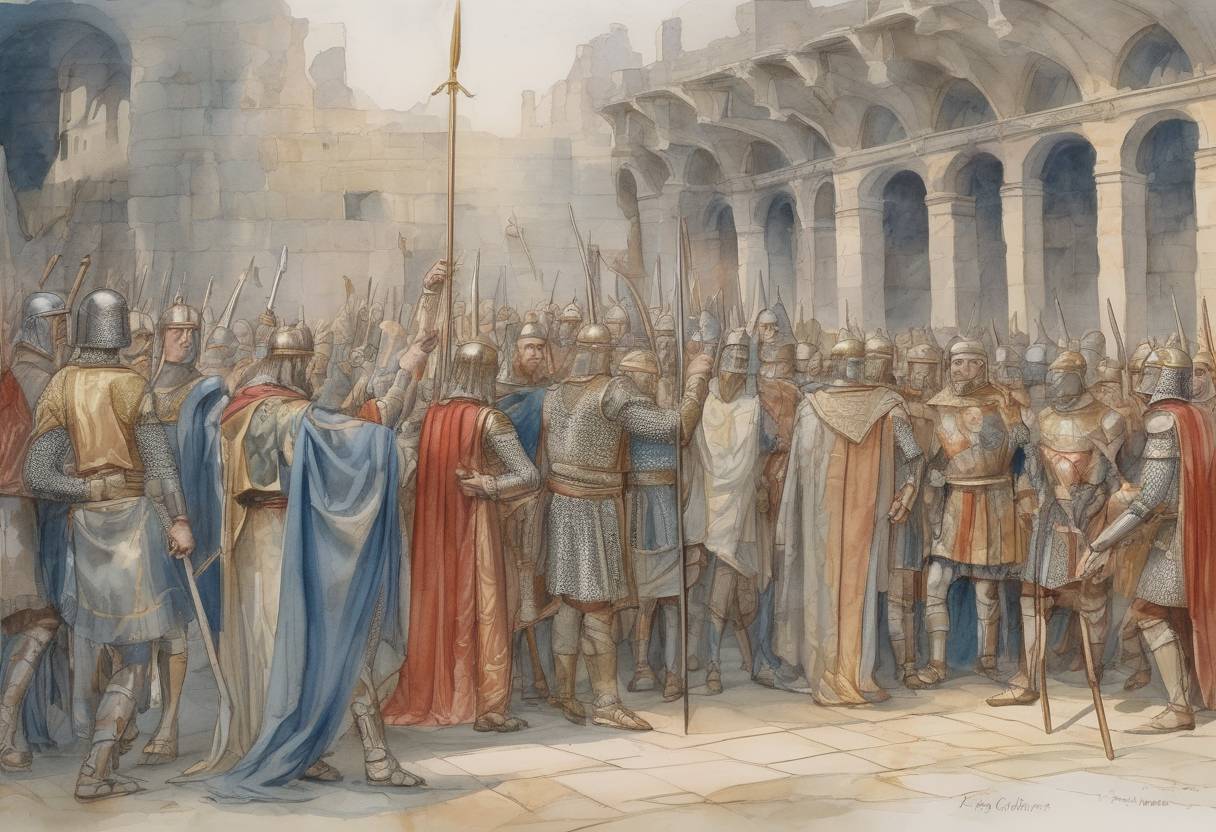
On November 29, 561, King Chlothar I, the last surviving son of Clovis I, passed away in Compiègne, a significant event that led to the division of the Frankish Kingdom among his four sons. This moment marked a pivotal point in the history of the Merovingian dynasty, which ruled over the Franks for nearly three centuries.
Chlothar I was born around 497 and was one of the four sons of Clovis I, the founder of the Merovingian dynasty and the first king to unite all the Frankish tribes under one ruler. Upon Clovis’s death in 511, his kingdom was divided among his sons: Theuderic I, Chlodomer, Childebert I, and Chlothar I. Each son received a portion of the kingdom, a practice that was customary among the Franks to ensure the continuation of the dynasty.
Chlothar I initially ruled over Soissons, but through a series of strategic marriages, conquests, and the deaths of his brothers, he gradually expanded his territory. By 558, he had successfully reunited the Frankish Kingdom under his sole rule, becoming the king of all the Franks.
Chlothar I’s death in 561 led to the re-division of the Frankish Kingdom among his four sons:
This division was significant as it set the stage for future conflicts and power struggles among the Merovingian rulers, often characterized by fraternal rivalry and territorial disputes.
The partitioning of the Frankish Kingdom after Chlothar I’s death had several important implications:
Chlothar I’s death and the subsequent division of his kingdom underscore the complexities of Merovingian succession practices and their long-term impact on the history of the Frankish realms.