The Completion of the Salt March: April 5, 1930
1930 · Dandi, India
Mahatma Gandhi completed the Salt March, a 240-mile protest against the British salt tax in India, which became a significant event in the Indian independence movement.
April 6, 1930
Mahatma Gandhi completed his 240-mile Salt March to the sea in protest against the British salt monopoly in India.
Dandi, India | Indian National Congress
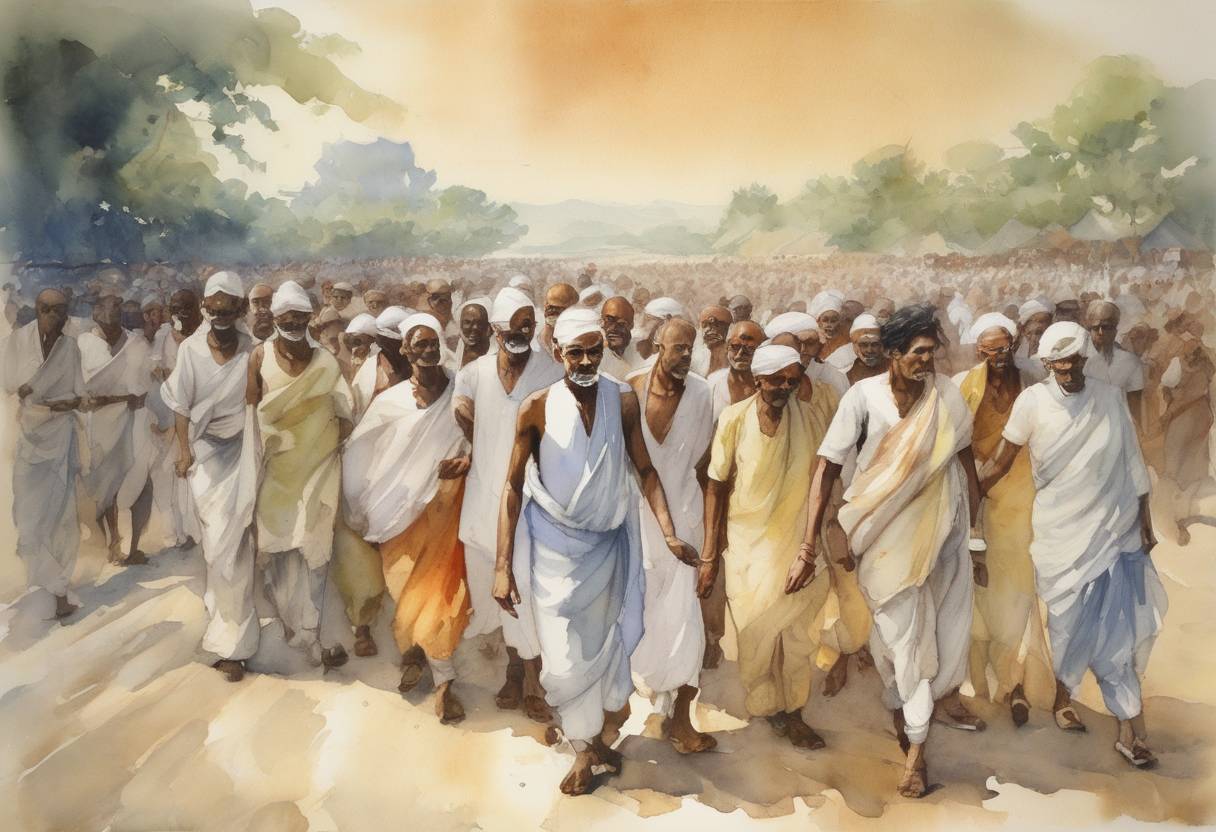
On April 6, 1930, Mahatma Gandhi completed the iconic Salt March, a pivotal event in the Indian struggle for independence from British rule. This nonviolent protest was a direct action campaign against the British salt monopoly, which symbolized the broader injustices of colonial rule.
The British Salt Act of 1882 prohibited Indians from collecting or selling salt independently, forcing them to buy the essential mineral from the British, who imposed a heavy tax. This law disproportionately affected the poorest Indians, making salt a powerful symbol of colonial oppression.
Gandhi, then 61 years old, embarked on this journey with 78 of his followers, known as satyagrahis. As they marched, thousands of Indians joined them, turning the event into a mass protest.
The Salt March was a turning point in the Indian independence movement. It demonstrated the power of mass nonviolent protest and inspired future civil rights movements worldwide. Gandhi’s leadership during the march solidified his position as a central figure in the struggle against colonial rule and underscored the effectiveness of nonviolent resistance as a tool for social and political change.
Source: en.wikipedia.org