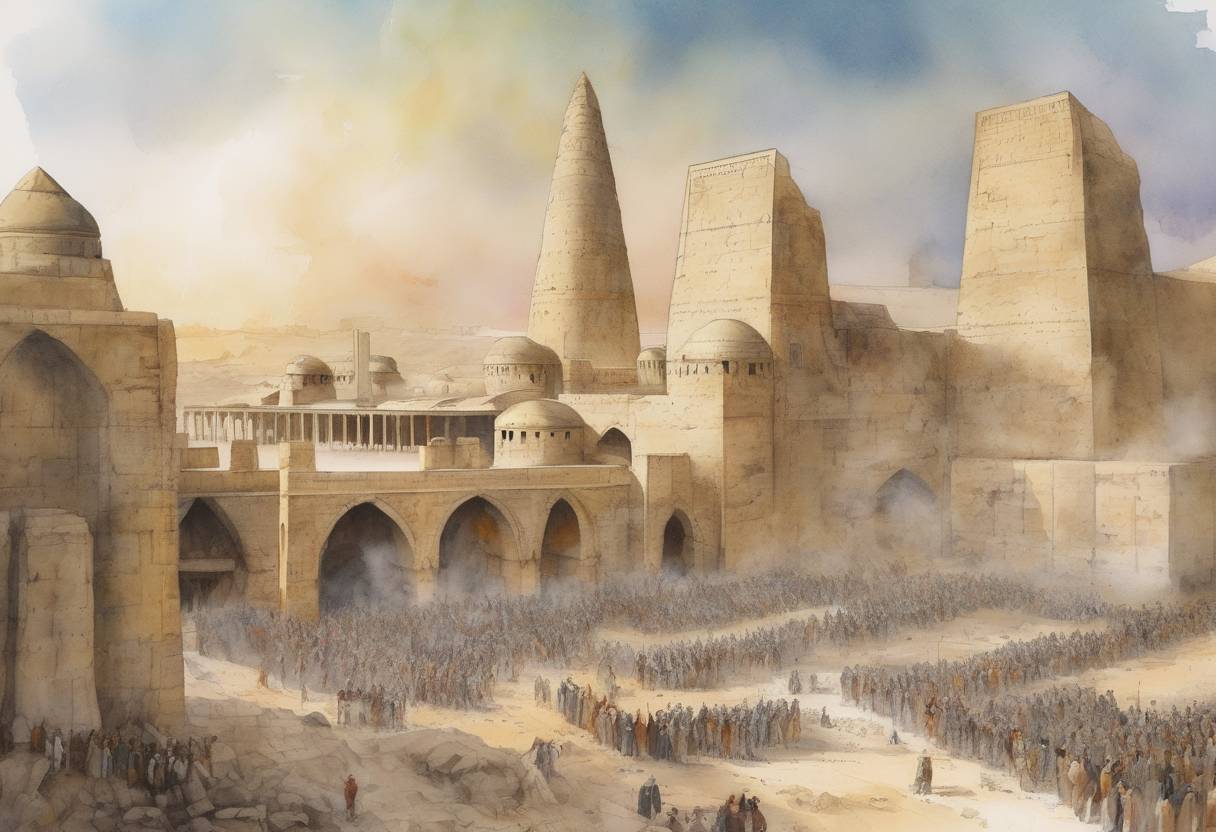
Capture of Ctesiphon by the Rashidun Caliphate
Historical Context
The capture of Ctesiphon on November 19, 636, was a pivotal moment in the Muslim conquest of Persia, marking a significant shift in the power dynamics of the region. Ctesiphon, located near modern-day Baghdad, was the capital of the Sasanian Empire and a major cultural and economic center. The conquest was part of the broader Islamic expansion following the death of the Prophet Muhammad in 632, which saw the Rashidun Caliphate rapidly extend its territories.
Key Events Leading Up to the Capture
Battle of al-Qadisiyyah (636): The decisive battle that paved the way for the capture of Ctesiphon was the Battle of al-Qadisiyyah, fought between the forces of the Rashidun Caliphate and the Sasanian Empire. The battle, which took place over several days, resulted in a significant victory for the Muslims, weakening the Sasanian military and morale.
Strategic Advances: Following their victory at al-Qadisiyyah, the Muslim forces, led by the capable general Sa’d ibn Abi Waqqas, advanced towards Ctesiphon. The Sasanians, under the leadership of Emperor Yazdegerd III, were unable to mount an effective defense due to their depleted forces and internal strife.
The Capture of Ctesiphon
- Date: November 19, 636
- Forces Involved: The Rashidun army, estimated to be around 30,000 strong, faced a weakened Sasanian defense.
- Tactics: The Muslim forces employed strategic maneuvers to cross the Tigris River and besiege the city. The Sasanians, unable to hold their ground, eventually abandoned Ctesiphon.
Aftermath and Consequences
Loot and Wealth: The capture of Ctesiphon yielded substantial wealth for the Rashidun Caliphate, as the city was known for its opulence and treasures. This wealth was distributed among the Muslim soldiers and the state treasury, bolstering the Caliphate’s resources.
Collapse of the Sasanian Empire: The fall of Ctesiphon marked the beginning of the end for the Sasanian Empire. Although Yazdegerd III attempted to regroup and resist, the loss of the capital was a severe blow from which the empire could not recover.
Expansion of Islam: The conquest of Ctesiphon facilitated the further spread of Islam into Persia and beyond. It demonstrated the military prowess of the Rashidun Caliphate and its ability to integrate new territories into its expanding empire.
Broader Historical Significance
The capture of Ctesiphon was a crucial milestone in the Islamic conquests, symbolizing the decline of one of the world’s great empires and the rise of a new power in the Middle East. It set the stage for the eventual establishment of Islamic culture and governance across Persia, influencing the region’s history, culture, and religion for centuries to come.