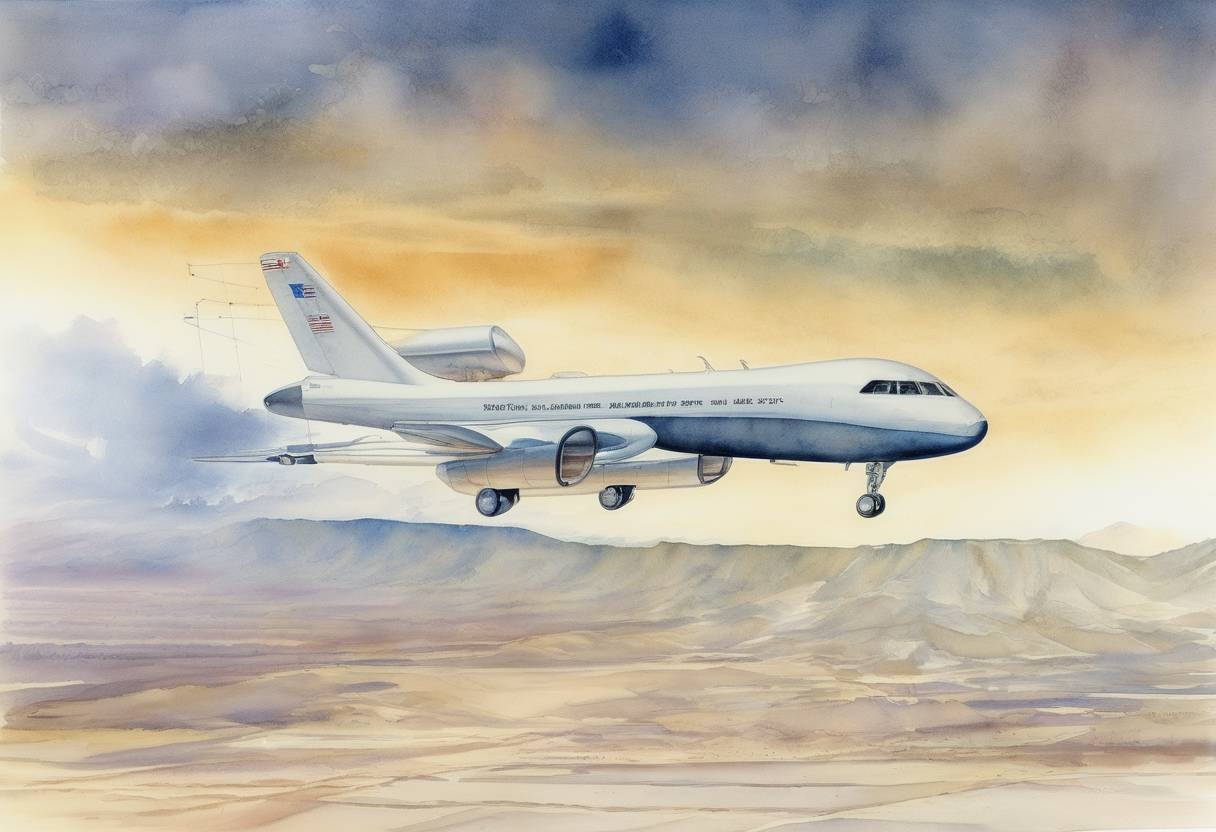
The Voyager’s Historic Flight: December 23, 1986
On December 23, 1986, the Voyager experimental aircraft, piloted by Dick Rutan and Jeana Yeager, completed a groundbreaking journey by landing at Edwards Air Force Base in California. This event marked the first non-stop, non-refueled flight around the world, a feat that captured global attention and demonstrated remarkable advancements in aviation technology and human endurance.
Background
The Voyager aircraft was designed by Burt Rutan, a renowned aerospace engineer and brother of pilot Dick Rutan. The project was initiated with the ambitious goal of circumnavigating the globe without stopping or refueling, a challenge that required innovative design and meticulous planning. The aircraft itself was a marvel of engineering, featuring a lightweight structure made of advanced composite materials, with a wingspan of 110 feet and a weight of just over 2,200 pounds when empty.
The Flight
Departure: The Voyager took off from Edwards Air Force Base on December 14, 1986. The flight was meticulously planned to optimize fuel efficiency and navigate the complex airspaces across various countries.
Journey: Over the course of nine days, Rutan and Yeager faced numerous challenges, including severe weather conditions, mechanical issues, and the physical and mental strain of continuous flight. The aircraft flew a total distance of approximately 26,366 statute miles (42,432 kilometers), crossing the equator twice and navigating through both the Northern and Southern Hemispheres.
Navigation and Challenges: The flight required precise navigation and coordination with international air traffic control. The pilots had to manage limited resources, including fuel and food, while maintaining the aircraft’s delicate balance and structural integrity.
Landing and Aftermath
Landing: On December 23, 1986, Voyager safely landed back at Edwards Air Force Base, greeted by a cheering crowd and international media. The successful completion of the flight set a new world record for the longest non-stop, non-refueled flight in aviation history.
Significance: The achievement demonstrated the potential of advanced materials and design in aviation, paving the way for future innovations. It also highlighted the spirit of exploration and human perseverance, inspiring a new generation of aviators and engineers.
Recognition: The Voyager’s flight earned widespread acclaim, including the prestigious Collier Trophy in 1986, awarded for the greatest achievement in aeronautics or astronautics in America. The aircraft itself is now displayed at the National Air and Space Museum in Washington, D.C., serving as a testament to this remarkable journey.
The Voyager’s flight remains a landmark achievement in aviation history, symbolizing the relentless pursuit of pushing the boundaries of what is possible in human flight.