Richard E. Byrd's Historic Flight Over the South Pole
1929 · South Pole, Antarctica
U.S. Admiral Richard E. Byrd became the first person to fly over the South Pole, marking a significant achievement in polar exploration.
December 14, 1911
Norwegian explorer Roald Amundsen became the first person to reach the South Pole, marking a significant achievement in the Heroic Age of Antarctic Exploration.
South Pole, Antarctica | N/A
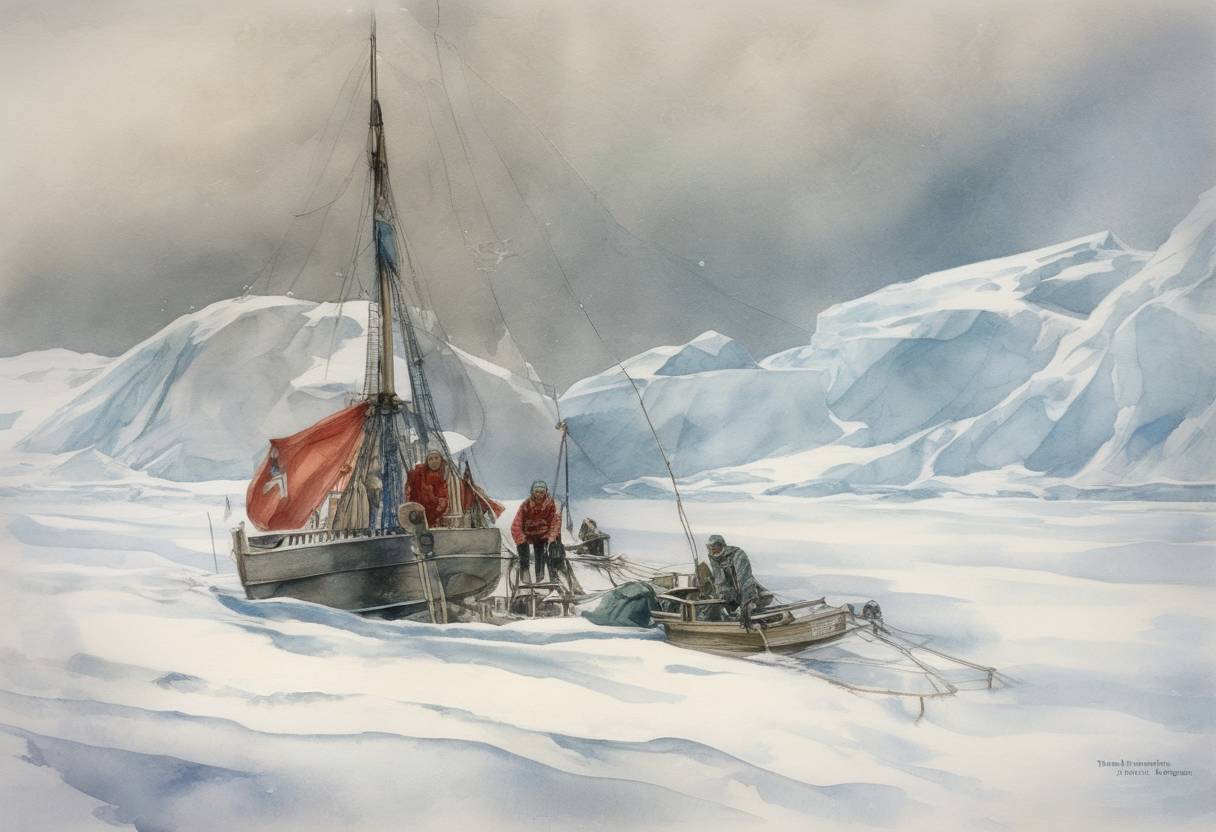
On December 14, 1911, Norwegian explorer Roald Amundsen and his team became the first humans to reach the South Pole, marking a pivotal moment in the Heroic Age of Antarctic Exploration. This achievement was the result of meticulous planning, strategic decision-making, and sheer determination.
Roald Amundsen, born in 1872 in Borge, Norway, was an experienced explorer known for his polar expeditions. Prior to his South Pole journey, Amundsen had gained fame for being the first to successfully navigate the Northwest Passage between 1903 and 1906.
Initially, Amundsen planned to head to the North Pole. However, upon learning that Robert Peary had claimed to reach the North Pole in 1909, Amundsen secretly redirected his efforts towards the South Pole, a goal also pursued by British explorer Robert Falcon Scott.
Amundsen’s expedition set sail aboard the ship Fram in June 1910. The team reached the Bay of Whales in Antarctica in January 1911, where they established their base camp, named Framheim. Amundsen’s approach was characterized by careful preparation and reliance on proven techniques:
On October 19, 1911, Amundsen and his team of four men—Olav Bjaaland, Helmer Hanssen, Sverre Hassel, and Oscar Wisting—set out from Framheim. After a grueling journey across the Antarctic plateau, they reached the South Pole on December 14, 1911. They planted the Norwegian flag and named the area “Polheim.”
Amundsen’s successful expedition was announced to the world in March 1912, overshadowing Scott’s ill-fated journey, which reached the pole a month later, only to face tragedy on the return trip.
Amundsen’s achievement was significant for several reasons:
Roald Amundsen’s journey to the South Pole remains a landmark in the history of exploration, exemplifying human endurance and the spirit of discovery.
Source: en.wikipedia.org