Richard II Crowned King of England
1377 · London, England
Richard II was crowned King of England at the age of 10.
August 5, 1100
Henry I was crowned King of England at Westminster Abbey.
London, England | English Monarchy
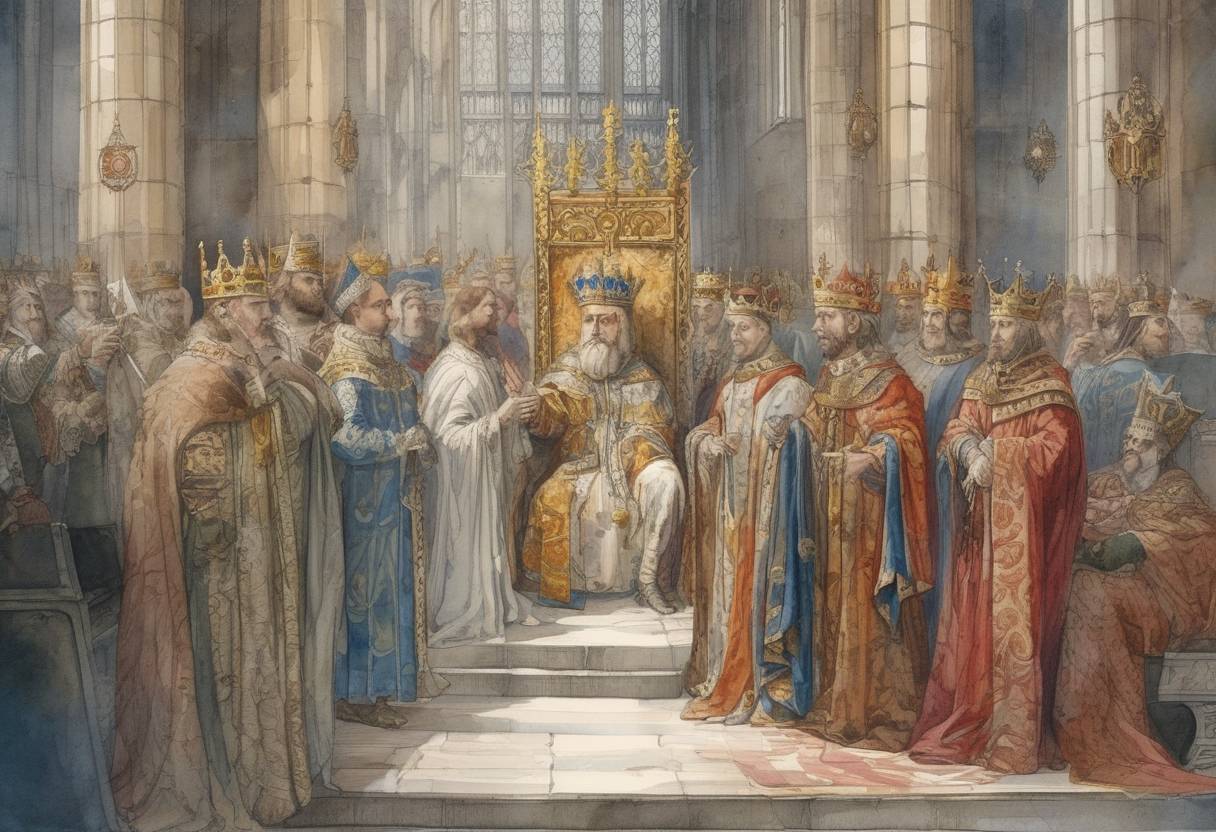
On August 5, 1100, Henry I was crowned King of England at Westminster Abbey. This event marked a significant moment in English history, as it followed the unexpected death of his brother, King William II, also known as William Rufus.
Death of William II: William II died under mysterious circumstances on August 2, 1100, during a hunting expedition in the New Forest. He was struck by an arrow, and while it was officially deemed an accident, suspicions of foul play lingered. His sudden death left the English throne vacant.
Henry’s Quick Action: Henry, the youngest son of William the Conqueror, acted swiftly upon his brother’s death. He seized the opportunity to claim the throne before his elder brother, Robert Curthose, Duke of Normandy, could return from the First Crusade to assert his own claim.
Location and Ceremony: The coronation took place at Westminster Abbey, a traditional site for English royal coronations. The ceremony was conducted by Maurice, Bishop of London, due to the absence of Anselm, the Archbishop of Canterbury, who was in exile at the time.
Significance of the Coronation: By being crowned so quickly, Henry I solidified his claim to the throne and garnered the support of key nobles and church officials. His coronation was a strategic move to legitimize his rule and prevent any challenges from his brother Robert.
Consolidation of Power: Henry I moved rapidly to consolidate his power. He issued the Charter of Liberties, a precursor to the Magna Carta, which promised to reform abuses and restore the laws of Edward the Confessor. This was an attempt to win the favor of the barons and the church.
Conflict with Robert Curthose: Henry’s accession led to a conflict with Robert Curthose, culminating in the Battle of Tinchebray in 1106, where Henry defeated and captured Robert, securing his control over both England and Normandy.
Legacy: Henry I’s reign was marked by administrative efficiency and legal reform. He strengthened the royal treasury and established a more centralized government. His rule laid the groundwork for the future development of the English monarchy.
Henry I’s coronation on August 5, 1100, was a pivotal event that shaped the course of English history, setting the stage for a reign that would see significant developments in governance and law.
Source: en.wikipedia.org