1854 · Balaclava, Ukraine
The first Victoria Cross is awarded during the Crimean War.
October 25, 1854
The Charge of the Light Brigade occurred during the Battle of Balaclava in the Crimean War. A miscommunication led to the British light cavalry charging directly into Russian artillery, resulting in heavy casualties.
Balaclava, Crimea | British Army
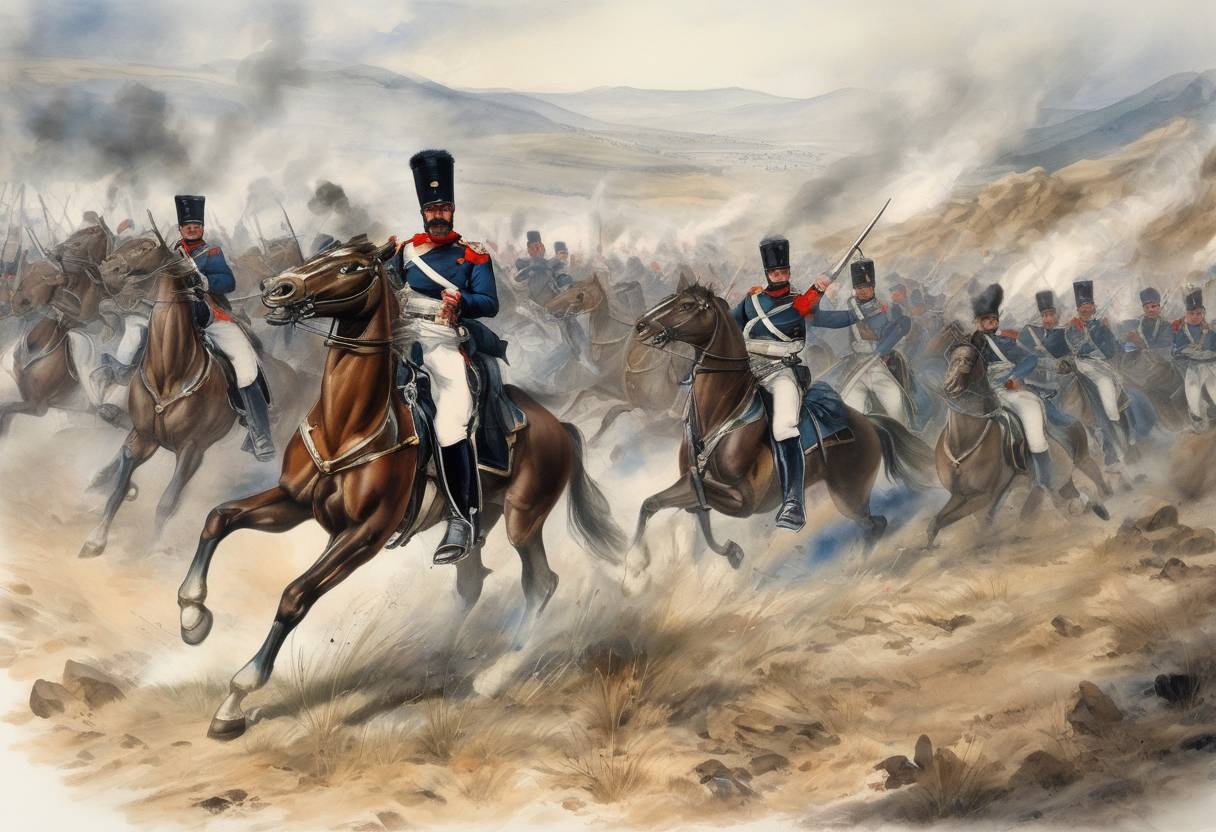
The Charge of the Light Brigade took place on October 25, 1854, during the Battle of Balaclava, a significant engagement of the Crimean War (1853-1856). The Crimean War was primarily fought between the Russian Empire and an alliance of the Ottoman Empire, France, Britain, and Sardinia. The conflict was rooted in the decline of the Ottoman Empire and the strategic interests of European powers in the region.
The Battle of Balaclava was part of the larger Siege of Sevastopol, where the allied forces aimed to capture the Russian naval base. The battle is notable for several distinct phases, including the defense of the British supply base at Balaclava and the famous “Thin Red Line” stand by the 93rd Highlanders.
The Charge of the Light Brigade was a result of a miscommunication within the British command. Lord Raglan, the British commander, intended to send the Light Brigade to prevent the Russians from removing captured guns from the battlefield. However, the order was ambiguously conveyed through Captain Louis Nolan to Lord Lucan, the cavalry commander, and then to Lord Cardigan, who led the Light Brigade.
Misinterpreting the order, the Light Brigade, consisting of around 670 cavalrymen, charged directly into a well-defended Russian artillery position at the end of a valley, flanked by enemy forces on both sides. The charge, though executed with remarkable bravery, was tactically disastrous.
The Light Brigade suffered severe casualties. Of the approximately 670 men who charged, around 110 were killed, and 160 were wounded. Additionally, about 375 horses were lost. The charge became emblematic of the valor and futility of war.
The Charge of the Light Brigade quickly became a symbol of military mismanagement and the heroism of soldiers. It was immortalized in Alfred, Lord Tennyson’s poem “The Charge of the Light Brigade,” which highlighted the bravery of the cavalrymen despite the blunder.
The event underscored the need for clear communication and effective leadership in military operations. It also contributed to the ongoing debate about the competence of British military leadership during the Crimean War.
The Crimean War itself had significant long-term effects, including the modernization of military tactics and the introduction of war reporting and photography. It also exposed the inadequacies of the British military system, leading to subsequent reforms.
The Charge of the Light Brigade remains a poignant example of the complexities and tragedies of war, illustrating how miscommunication can lead to devastating consequences.
Source: en.wikipedia.org