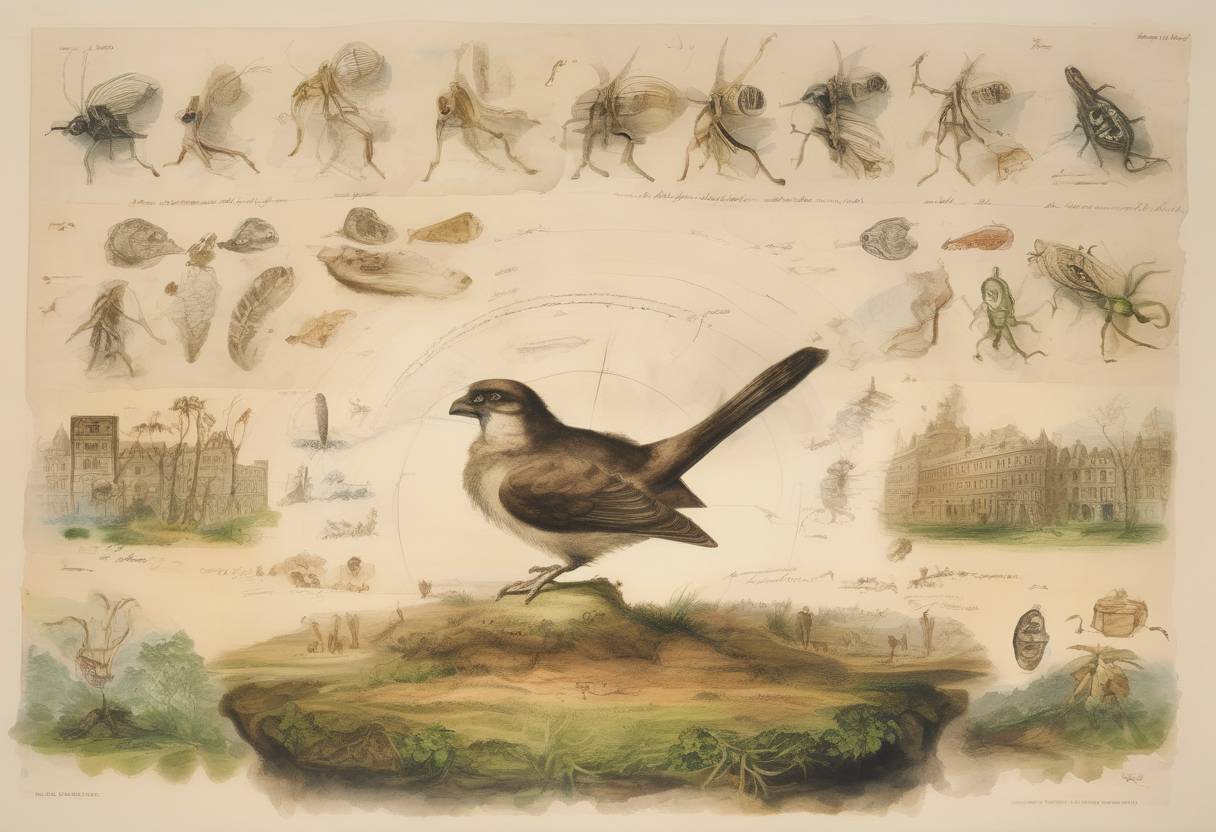
Charles Darwin Publishes On the Origin of Species
On November 24, 1859, Charles Darwin published On the Origin of Species, a groundbreaking work that introduced the scientific theory of evolution by natural selection. This publication marked a pivotal moment in the history of science, fundamentally altering the way we understand biological life and its development over time.
Background
Charles Darwin, an English naturalist, embarked on a five-year voyage aboard HMS Beagle from 1831 to 1836. During this journey, he collected a vast array of specimens and made numerous observations, particularly in the Galápagos Islands, which would later inform his theories. Upon returning to England, Darwin spent over two decades refining his ideas and gathering additional evidence to support his theory of evolution.
Key Concepts
On the Origin of Species introduced several key concepts:
Natural Selection: Darwin proposed that species evolve over time through a process of natural selection, where individuals with traits better suited to their environment are more likely to survive and reproduce. This leads to the gradual adaptation of species to their environments.
Common Descent: The book suggested that all species of life have descended from common ancestors, branching out over time into the diverse forms we see today.
Variation and Heredity: Darwin emphasized the importance of variation within species and the role of heredity in passing advantageous traits to subsequent generations.
Impact and Reception
The publication of On the Origin of Species was met with both acclaim and controversy. It challenged the prevailing views of the time, which were largely based on creationist beliefs. The book sparked widespread debate among scientists, theologians, and the general public.
Scientific Community: While some scientists were initially skeptical, many gradually accepted Darwin’s ideas as more evidence accumulated. The theory of evolution by natural selection became a cornerstone of modern biology.
Religious and Social Implications: The book’s implications for human origins and its challenge to traditional religious views led to significant societal debate. It prompted discussions on the relationship between science and religion, which continue to this day.
Legacy
Darwin’s work laid the foundation for the field of evolutionary biology. It has influenced a wide range of disciplines, from genetics to ecology, and continues to be a central concept in understanding the natural world. The theory of evolution by natural selection remains one of the most robust and widely supported scientific theories.
In summary, the publication of On the Origin of Species on November 24, 1859, was a transformative event in scientific history, reshaping our understanding of life on Earth and our place within it.