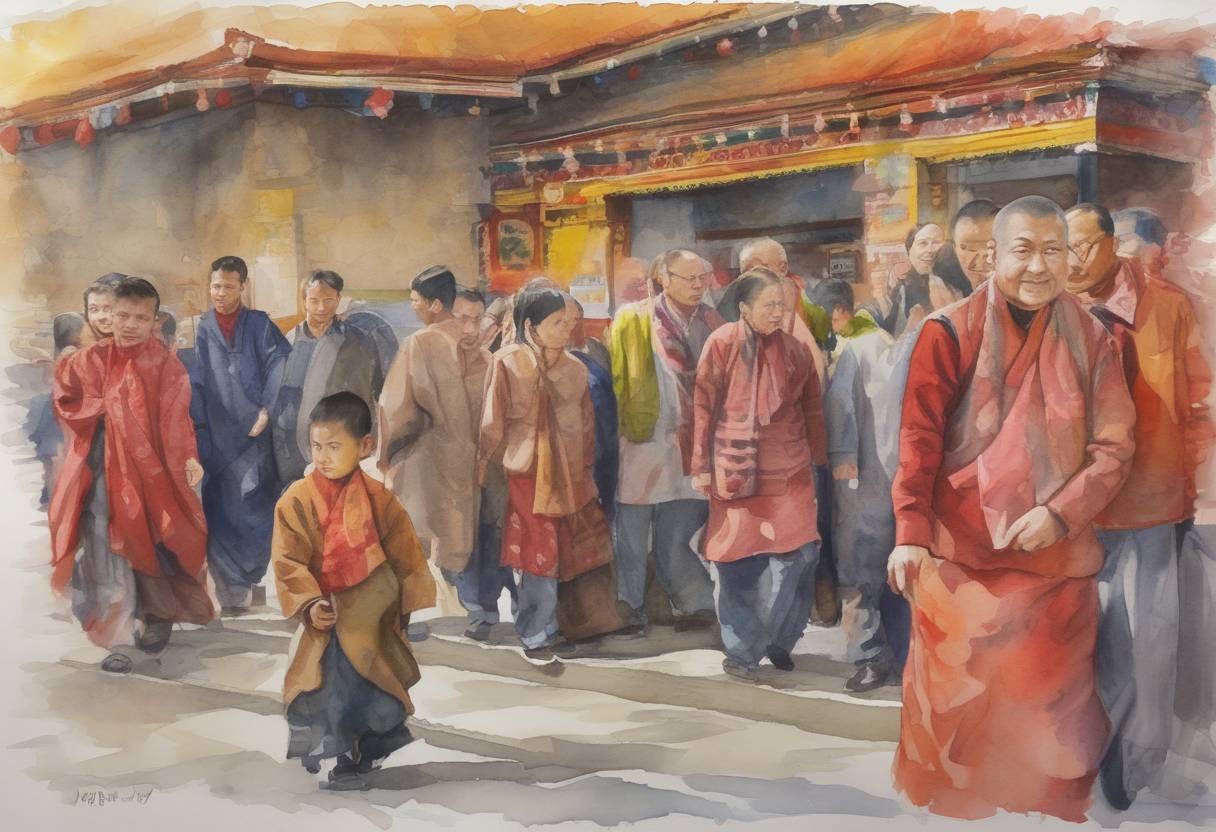
Bhutan’s First General Elections: March 24, 2008
On March 24, 2008, the Kingdom of Bhutan held its first-ever general elections, marking a significant transition from an absolute monarchy to a constitutional monarchy with a parliamentary democracy. This historic event was the culmination of a series of reforms initiated by the Bhutanese monarchy to democratize the nation’s political system.
Background
Absolute Monarchy: Prior to the elections, Bhutan was governed as an absolute monarchy. The Wangchuck dynasty had ruled since 1907, with the king holding significant power over the country’s governance.
Reform Initiatives: The move towards democracy began under King Jigme Singye Wangchuck, the fourth king of Bhutan, who voluntarily initiated political reforms. In 2001, he announced plans to draft a new constitution that would introduce democratic governance.
Constitutional Framework: The new constitution, finalized in 2005 and enacted in 2008, established Bhutan as a constitutional monarchy. It outlined the framework for a parliamentary democracy, including the creation of a bicameral parliament consisting of the National Assembly and the National Council.
The 2008 Elections
Political Parties: Two main political parties contested the elections: the Druk Phuensum Tshogpa (DPT) and the People’s Democratic Party (PDP). The DPT, led by Jigmi Y. Thinley, was seen as having strong ties to the monarchy.
Election Process: The elections were conducted under the supervision of the Election Commission of Bhutan. Voter turnout was high, reflecting the public’s engagement with the democratic process.
Results: The Druk Phuensum Tshogpa (DPT) won a decisive victory, securing 45 out of 47 seats in the National Assembly. Jigmi Y. Thinley became Bhutan’s first democratically elected Prime Minister.
Significance and Aftermath
Peaceful Transition: The elections were conducted peacefully, with no reports of violence or major irregularities, showcasing Bhutan’s commitment to a smooth transition to democracy.
Monarchy’s Role: Despite the shift to a parliamentary democracy, the monarchy retained a significant cultural and symbolic role in Bhutanese society. King Jigme Khesar Namgyel Wangchuck, who succeeded his father in 2006, continued to be a revered figure.
International Recognition: Bhutan’s successful transition was praised internationally, with many viewing it as a model for peaceful democratization in a region often marked by political instability.
Continued Reforms: The establishment of a democratic government paved the way for further reforms in governance, economic development, and social policies, aligning with Bhutan’s unique development philosophy of Gross National Happiness.
The 2008 general elections were a pivotal moment in Bhutan’s history, reflecting the country’s unique approach to balancing tradition with modern governance. This transition has since been a cornerstone of Bhutan’s political and social landscape.