The Debut of the 50-Star Flag of the United States
1960 · Philadelphia, United States
The 50-star flag of the United States debuts in Philadelphia after Hawaii becomes the 50th state.
July 4, 1976
The United States celebrates its Bicentennial, marking 200 years since the Declaration of Independence.
Various, United States | United States Government
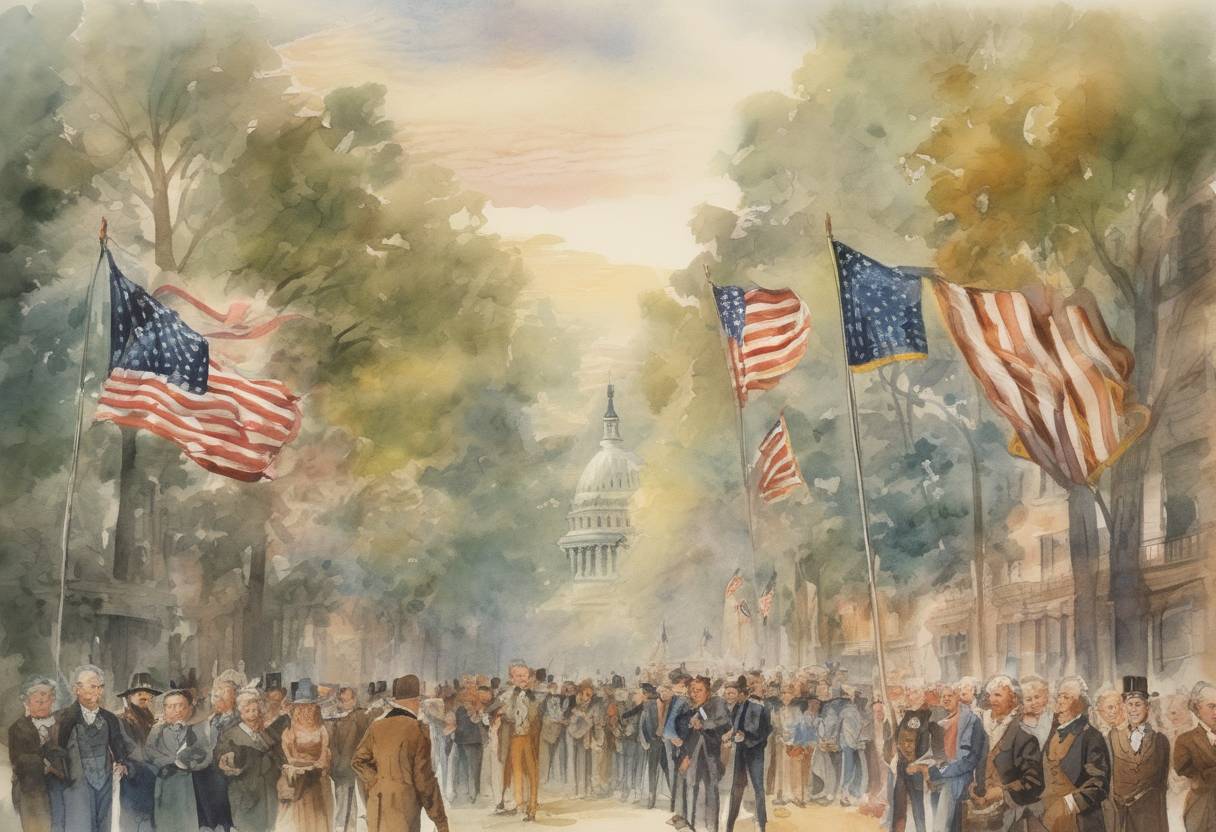
On July 4, 1976, the United States celebrated its Bicentennial, marking 200 years since the adoption of the Declaration of Independence. This momentous occasion was commemorated with a series of events and activities that spanned the entire year, culminating in grand celebrations on Independence Day.
The Declaration of Independence, adopted on July 4, 1776, marked the formal separation of the Thirteen Colonies from Great Britain. This document, primarily authored by Thomas Jefferson, laid the foundation for the United States’ principles of liberty and democracy. The Bicentennial celebration in 1976 was an opportunity for Americans to reflect on their nation’s history, achievements, and challenges over the past two centuries.
The Bicentennial celebrations fostered a renewed sense of patriotism and national identity. They provided an opportunity for Americans to engage with their history and consider the nation’s trajectory. The events also highlighted the diversity and resilience of the United States, as well as the ongoing challenges related to civil rights and social justice.
The Bicentennial served as a reminder of the enduring principles enshrined in the Declaration of Independence and the Constitution. It encouraged reflection on the nation’s achievements and the work still needed to fulfill its founding ideals. The celebrations also underscored the importance of historical memory and the role of public history in shaping national identity.
Overall, the United States Bicentennial in 1976 was a landmark event that celebrated the country’s past while looking forward to its future.
Source: en.wikipedia.org