The End of the IRA's Armed Campaign: July 28, 2005
2005 · Belfast, United Kingdom
The Provisional Irish Republican Army (IRA) formally announced an end to its armed campaign, stating that it would pursue its objectives through peaceful means.
August 31, 2005
The Irish Republican Army (IRA) officially ended its armed campaign and decommissioned its weapons, marking a significant step in the Northern Ireland peace process.
Belfast, United Kingdom | Irish Republican Army
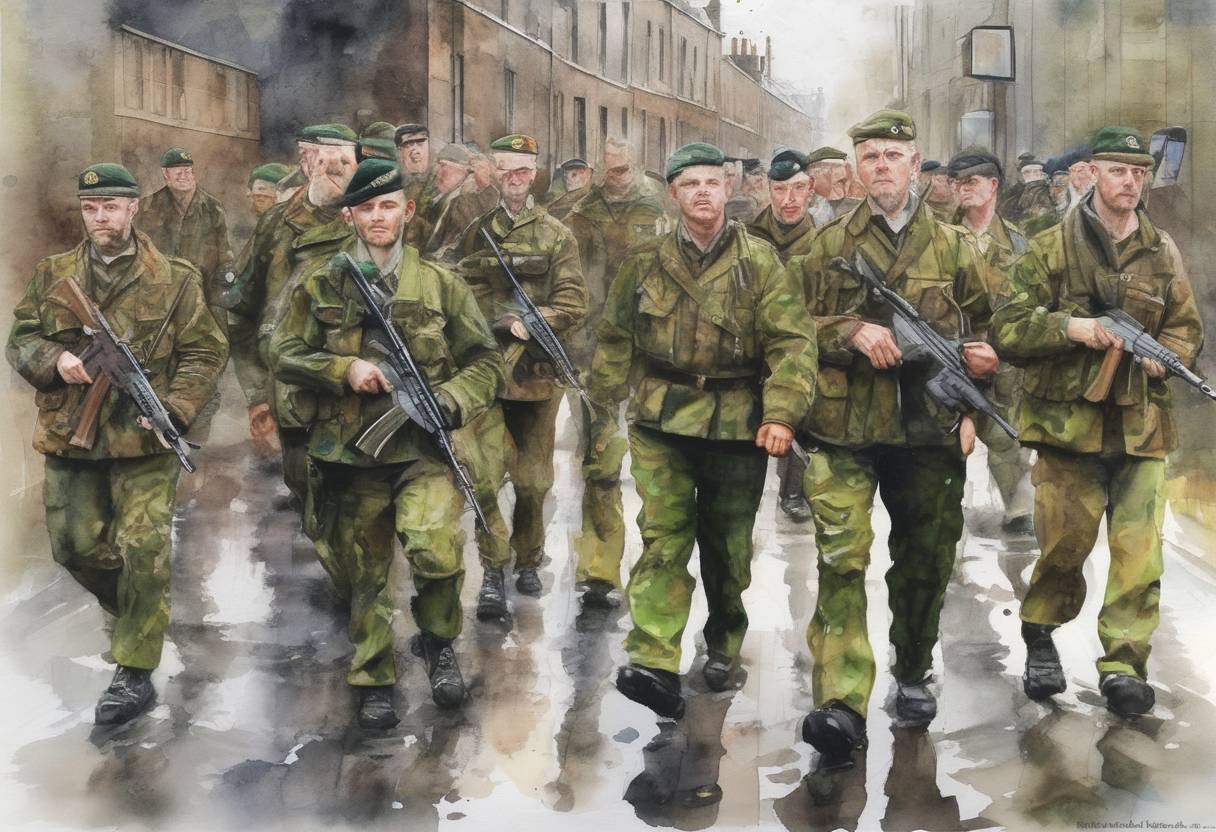
On August 31, 2005, the Irish Republican Army (IRA) officially announced the decommissioning of its weapons, marking a pivotal moment in the Northern Ireland peace process. This event was a significant step towards ending decades of conflict known as “The Troubles,” which had plagued Northern Ireland since the late 1960s.
The Troubles were a complex conflict involving nationalist/republican communities, primarily Catholic, who sought unification with the Republic of Ireland, and unionist/loyalist communities, primarily Protestant, who wanted to remain part of the United Kingdom. The IRA, a paramilitary organization, was one of the key groups fighting for Irish unification, often using violent means to achieve its goals.
The peace process in Northern Ireland was a long and arduous journey, with several key milestones:
The Good Friday Agreement (1998): Also known as the Belfast Agreement, this was a major political development that laid the groundwork for peace. It established a devolved government in Northern Ireland and set the stage for disarmament discussions.
Ceasefires: The IRA declared a ceasefire in 1994, which was a crucial step towards negotiations. However, sporadic violence continued, and trust-building was a slow process.
On July 28, 2005, the IRA declared an end to its armed campaign and committed to pursuing its objectives through peaceful and democratic means. This announcement was followed by the decommissioning of its weapons on August 31, 2005. The Independent International Commission on Decommissioning (IICD), led by General John de Chastelain, oversaw the process and confirmed that the IRA had put its arms beyond use.
The decommissioning was a landmark achievement in the peace process for several reasons:
Trust Building: It demonstrated the IRA’s commitment to peace and helped build trust among the communities and political entities involved in the peace process.
Political Progress: It paved the way for further political developments, including the restoration of the Northern Ireland Assembly and the participation of Sinn Féin, the political wing associated with the IRA, in the democratic process.
Reduction of Violence: The disarmament significantly reduced the potential for violence and contributed to a more stable and peaceful Northern Ireland.
The decommissioning of the IRA’s weapons was a crucial step in transforming the political landscape of Northern Ireland. It allowed for the continuation and strengthening of the peace process, leading to further political agreements and cooperation between different factions.
Despite the progress, challenges remained, including sporadic violence from dissident groups and ongoing sectarian tensions. However, the decommissioning marked a definitive move away from armed conflict and towards a future of dialogue and political engagement.
In conclusion, the IRA’s decision to decommission its weapons on August 31, 2005, was a monumental step in the Northern Ireland peace process, symbolizing a commitment to resolving differences through peaceful means and contributing to the ongoing efforts to achieve lasting peace in the region.
Source: www.bbc.com