The Freedom's Journal: A Pioneering Publication
1827 · New York City, United States
The Freedom's Journal, the first African American-owned and operated newspaper in the United States, was published in New York City.
December 9, 1793
Noah Webster establishes New York's first daily newspaper, the American Minerva, which later becomes the New York Evening Post.
New York City, United States | American Minerva
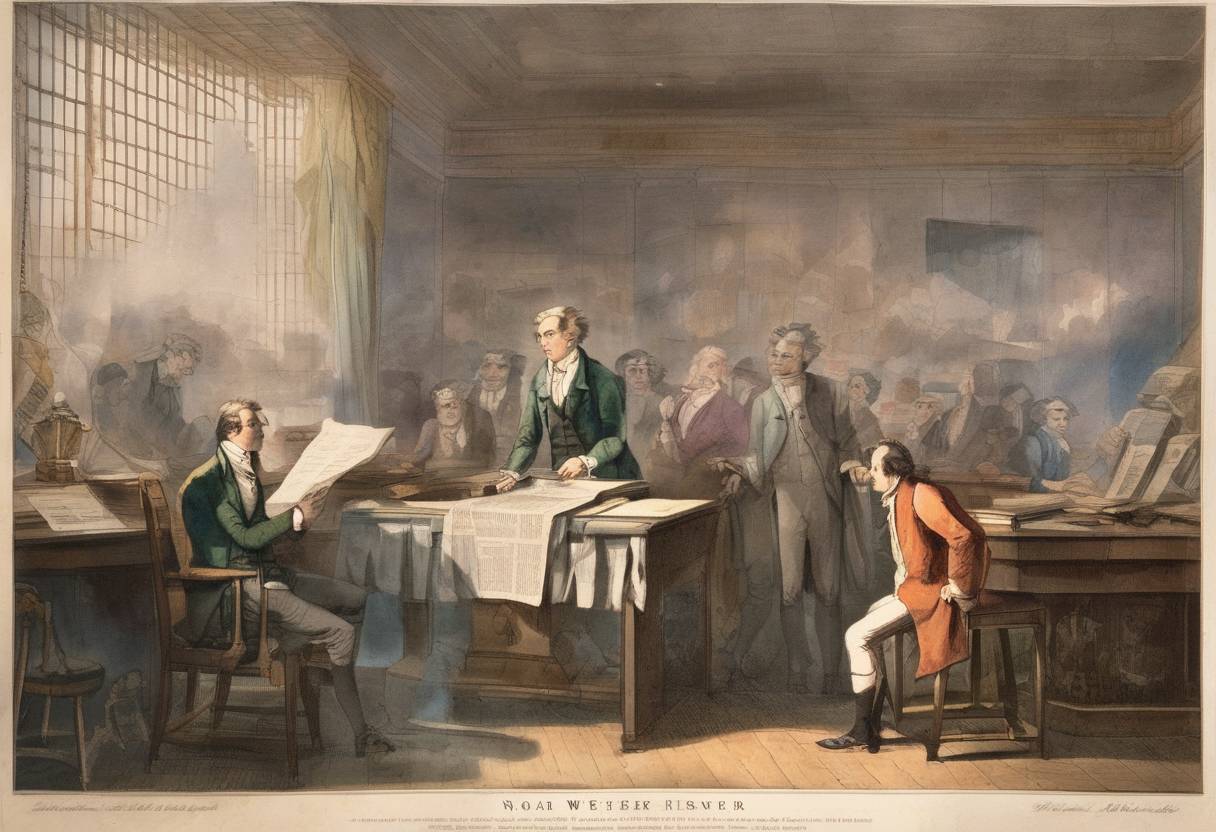
On December 9, 1793, Noah Webster, a prominent American lexicographer, educator, and author, established New York’s first daily newspaper, the American Minerva. This publication marked a significant development in the American press landscape, reflecting the growing demand for daily news and information in the burgeoning city of New York.
Noah Webster, best known for his later work on the American dictionary, was deeply invested in the cultural and educational development of the United States. In the late 18th century, newspapers were becoming an essential medium for disseminating information and shaping public opinion. Webster, recognizing the potential influence of the press, sought to create a publication that would provide not only news but also moral and educational content.
The American Minerva was launched with the aim of offering comprehensive coverage of both domestic and international news. Webster’s vision for the newspaper was to promote civic virtue and informed citizenship, reflecting his broader educational goals. The paper included a mix of political commentary, essays, and reports on various topics, catering to the interests of New York’s diverse and growing population.
While the American Minerva itself did not directly become the New York Evening Post, it laid the groundwork for the evolution of daily newspapers in New York. The New York Evening Post was actually founded in 1801 by Alexander Hamilton and others, and it became one of the most influential newspapers in the United States. However, the establishment of the American Minerva was a precursor to the vibrant press culture that would develop in New York City.
The creation of the American Minerva was a pivotal moment in the history of American journalism. It demonstrated the increasing importance of daily newspapers in American society and set a precedent for future publications. Webster’s efforts contributed to the professionalization of journalism and the expansion of the public sphere, allowing for greater dissemination of information and ideas.
In summary, the establishment of the American Minerva by Noah Webster on December 9, 1793, was a foundational event in the history of American media, reflecting the growing importance of newspapers in shaping public discourse and informing the citizenry.
Source: www.britannica.com