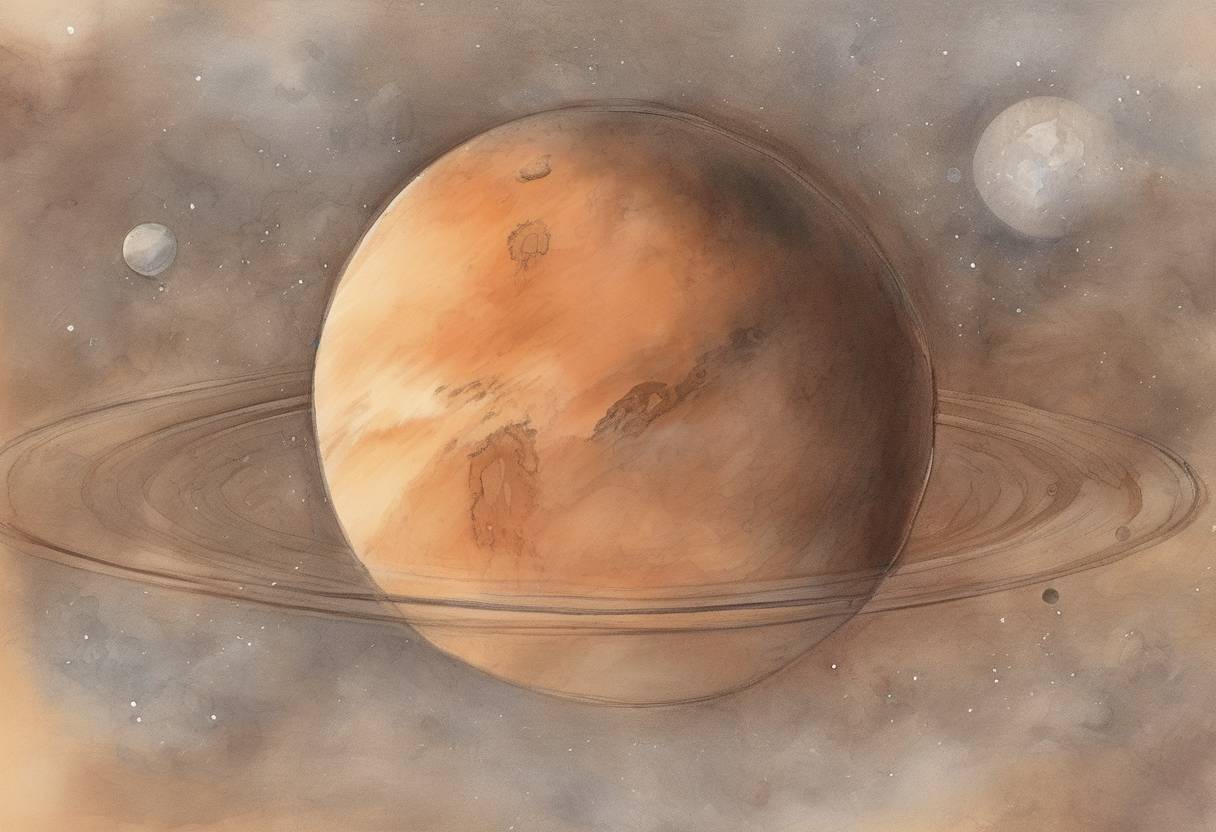
Mars’ Closest Approach to Earth on August 26, 2003
On August 26, 2003, Mars made its closest approach to Earth in nearly 60,000 years, coming within 34.6 million miles (55.8 million kilometers). This astronomical event was significant for both professional astronomers and space enthusiasts around the globe.
Context and Background
- Orbital Dynamics: Mars and Earth have elliptical orbits, which means their distance from each other varies. The closest approach, known as “perihelic opposition,” occurs when Mars is closest to the Sun (perihelion) and Earth is directly between Mars and the Sun.
- Historical Significance: The last time Mars came this close to Earth was approximately 60,000 years ago, during the Upper Paleolithic period, a time when early humans were developing tools and art.
Key Events Leading Up to the Approach
- Astronomical Calculations: Astronomers had been anticipating this event for years, using precise calculations to predict the exact date and distance of the approach.
- Public Interest: The event garnered significant public interest, with many observatories and planetariums organizing special viewing events and educational programs.
The Event
- Visibility: Mars appeared brighter and larger in the night sky than usual, offering a spectacular view through telescopes and even to the naked eye.
- Observations: Astronomers took advantage of the proximity to study Mars in greater detail, focusing on its surface features, atmosphere, and potential signs of water.
Aftermath and Consequences
- Scientific Discoveries: The close approach allowed for enhanced observations that contributed to a better understanding of Mars’ geology and climate.
- Increased Interest in Mars Exploration: The event helped fuel public and scientific interest in Mars exploration, leading to increased support for missions to the Red Planet, such as NASA’s Mars rovers.
Broader Historical Significance
- Cultural Impact: The event was a reminder of the dynamic nature of our solar system and the ongoing human fascination with Mars, a planet that has long captured the imagination of scientists and the public alike.
- Technological Advancements: The observations made during this period highlighted the advancements in astronomical technology and the importance of continued investment in space exploration.
The 2003 close approach of Mars to Earth remains a landmark event in the field of astronomy, illustrating the intricate dance of celestial bodies and the enduring human quest to explore and understand our universe.