Apollo 11 Safely Returns to Earth
1969 · Pacific Ocean, United States
Apollo 11 safely returns to Earth, completing the first manned mission to the Moon.
December 24, 1968
Apollo 8, the first manned mission to orbit the Moon, transmitted a live television broadcast from lunar orbit. The crew read from the Book of Genesis and showed images of the Earth and Moon, marking a significant moment in space exploration.
Lunar Orbit, United States | NASA
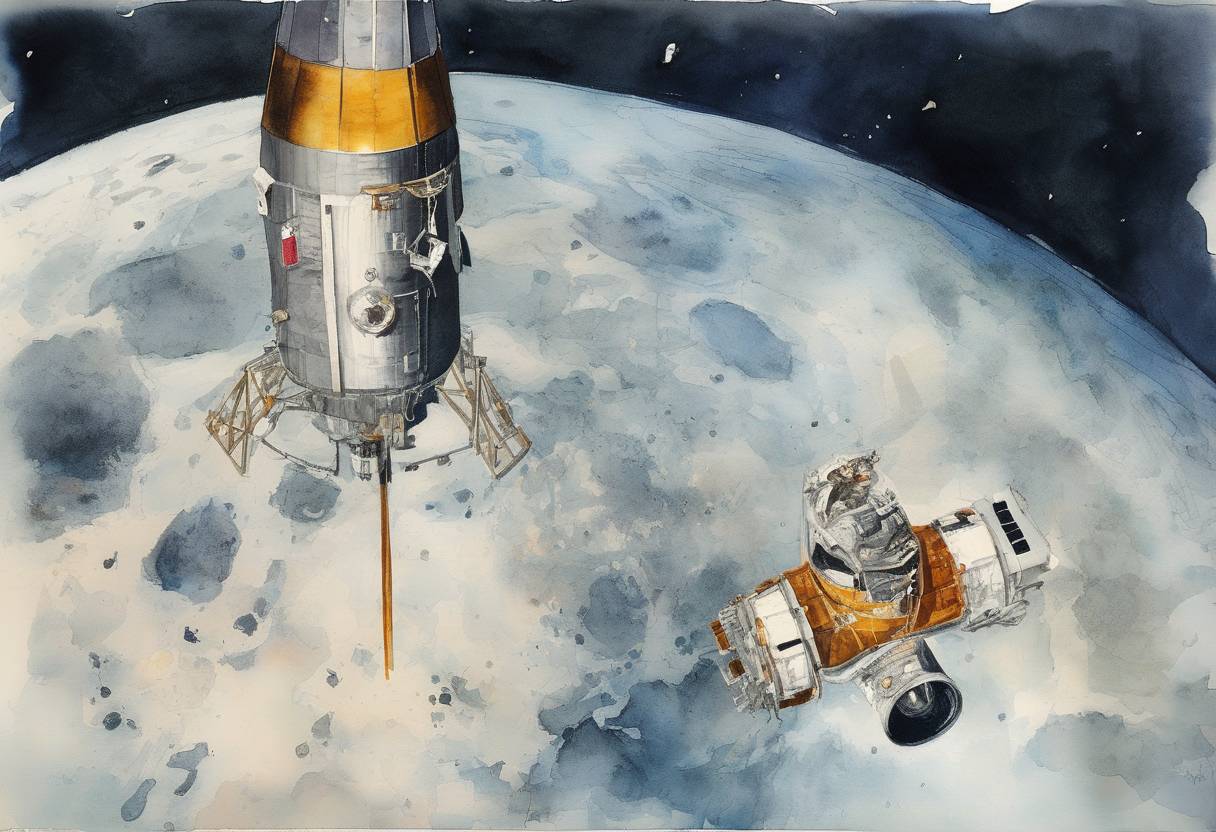
On December 24, 1968, the Apollo 8 mission achieved a monumental milestone in space exploration by becoming the first manned spacecraft to orbit the Moon. This mission was a pivotal moment in the Space Race and marked a significant achievement for NASA and the United States.
Apollo 8 was launched on December 21, 1968, from Kennedy Space Center in Florida. The mission was part of NASA’s Apollo program, which aimed to land humans on the Moon and ensure their safe return to Earth. The crew consisted of three astronauts: Commander Frank Borman, Command Module Pilot James Lovell, and Lunar Module Pilot William Anders. Although the mission did not include a lunar landing, it was crucial for testing the spacecraft systems and procedures needed for future lunar landings.
On Christmas Eve, December 24, 1968, Apollo 8 made history by transmitting a live television broadcast from lunar orbit. During this broadcast, the astronauts shared stunning images of the Earth and the Moon, providing a perspective that had never been seen before. The broadcast reached millions of viewers around the world, capturing the imagination and wonder of people everywhere.
A particularly poignant moment during the broadcast was when the crew took turns reading from the Book of Genesis. The astronauts recited the first ten verses, which describe the creation of the Earth. This reading was chosen for its universal and non-denominational message, resonating with the themes of exploration and unity.
The Apollo 8 mission and its broadcast had several significant impacts:
Technological Achievement: Successfully orbiting the Moon demonstrated the capabilities of NASA’s technology and the feasibility of a manned lunar landing, paving the way for the Apollo 11 mission in 1969.
Cultural Impact: The images of Earth from space, often referred to as “Earthrise,” became iconic symbols of the environmental movement and highlighted the fragility and unity of our planet.
Public Engagement: The live broadcast captivated a global audience, fostering a sense of shared human achievement and inspiring future generations of scientists, engineers, and explorers.
Apollo 8 safely returned to Earth on December 27, 1968, splashing down in the Pacific Ocean. The mission’s success bolstered confidence in NASA’s ability to achieve President John F. Kennedy’s goal of landing a man on the Moon before the end of the decade. It remains a testament to human ingenuity and the spirit of exploration.
Apollo 8’s journey and its Christmas Eve broadcast continue to be celebrated as a defining moment in the history of space exploration, symbolizing the potential for human achievement and the power of perspective.
Source: en.wikipedia.org