Establishment of Yellowstone National Park: March 1, 1872
1872 · Yellowstone, United States
Yellowstone National Park was established as the first national park in the world, marking a significant step in the conservation movement.
October 1, 1890
Yosemite National Park is established by the U.S. Congress, preserving the area for public use and enjoyment.
Yosemite, United States | United States Congress
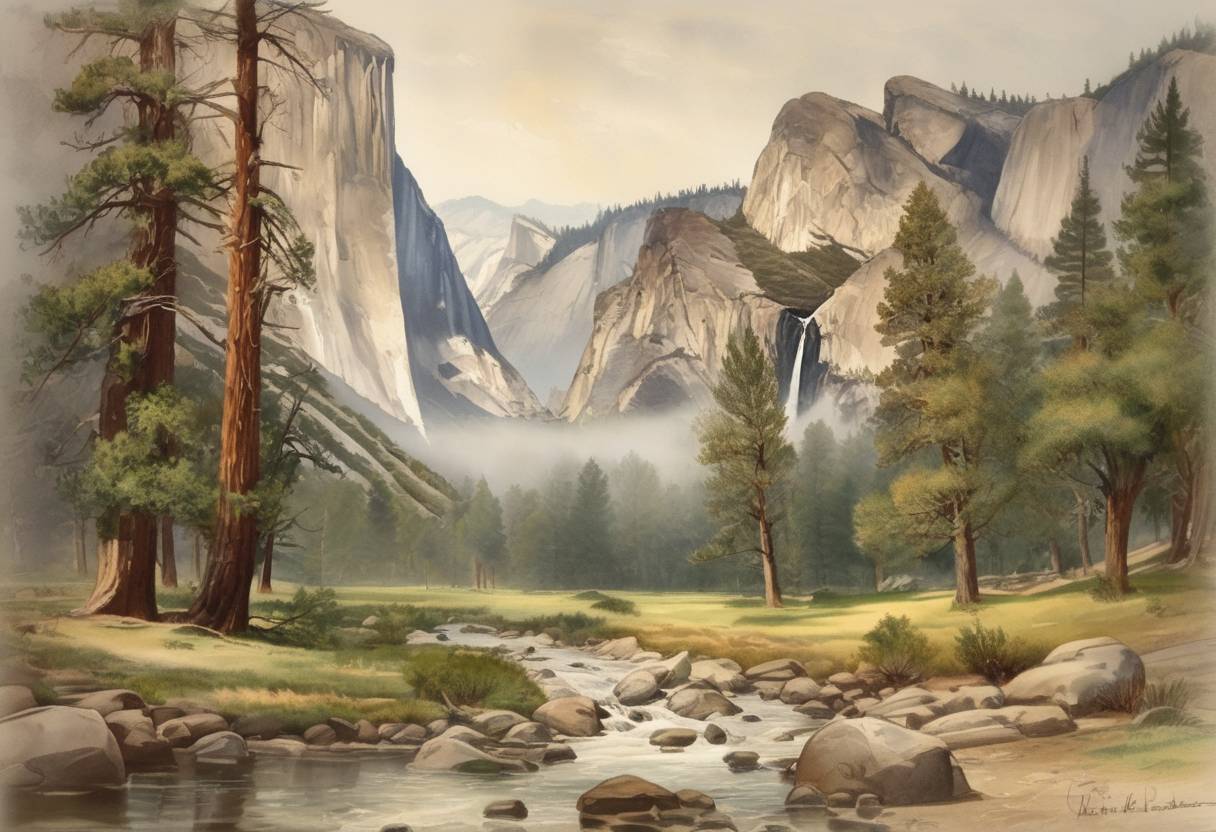
On October 1, 1890, the United States Congress officially established Yosemite National Park, marking a significant milestone in the conservation movement and the history of national parks in the United States. This act preserved over 1,500 square miles of land in California’s Sierra Nevada for public use and enjoyment, ensuring the protection of its stunning landscapes and diverse ecosystems.
The establishment of Yosemite National Park was part of a broader movement in the late 19th century aimed at preserving America’s natural wonders. The idea of setting aside land for public enjoyment and conservation was gaining traction, influenced by the earlier creation of Yellowstone National Park in 1872, the world’s first national park.
John Muir: A Scottish-American naturalist and advocate for wilderness preservation, Muir played a crucial role in the establishment of Yosemite National Park. His writings and activism highlighted the beauty and ecological importance of the Yosemite region, garnering public and political support for its protection.
Galen Clark: Known as the “Guardian of Yosemite,” Clark was instrumental in the early efforts to protect the Yosemite Valley and Mariposa Grove. His advocacy helped lay the groundwork for the park’s eventual establishment.
The Yosemite National Park Act, signed into law by President Benjamin Harrison, designated the area as a national park. This legislation came after years of advocacy and was a response to increasing concerns about the impact of human activities, such as logging and mining, on the region’s natural beauty.
Conservation Legacy: The establishment of Yosemite National Park was a pivotal moment in the American conservation movement. It set a precedent for the creation of additional national parks and highlighted the importance of preserving natural landscapes for future generations.
Tourism and Recreation: Yosemite quickly became a popular destination for tourists and nature enthusiasts, drawn by its iconic granite cliffs, waterfalls, and giant sequoias. The park’s creation helped foster a growing appreciation for outdoor recreation and the intrinsic value of nature.
Environmental Awareness: The protection of Yosemite contributed to a broader awareness of environmental issues and the need for sustainable management of natural resources. It underscored the role of government in safeguarding public lands.
Following the establishment of Yosemite National Park, efforts continued to expand and protect the park’s boundaries. In 1906, the Yosemite Valley and Mariposa Grove, initially managed by the state of California, were incorporated into the national park, further enhancing its conservation status.
Today, Yosemite National Park remains one of the most visited and cherished national parks in the United States, attracting millions of visitors each year who come to experience its breathtaking landscapes and rich biodiversity. Its establishment serves as a lasting testament to the vision and dedication of early conservationists and the enduring value of preserving natural wonders for public benefit.
Source: en.wikipedia.org