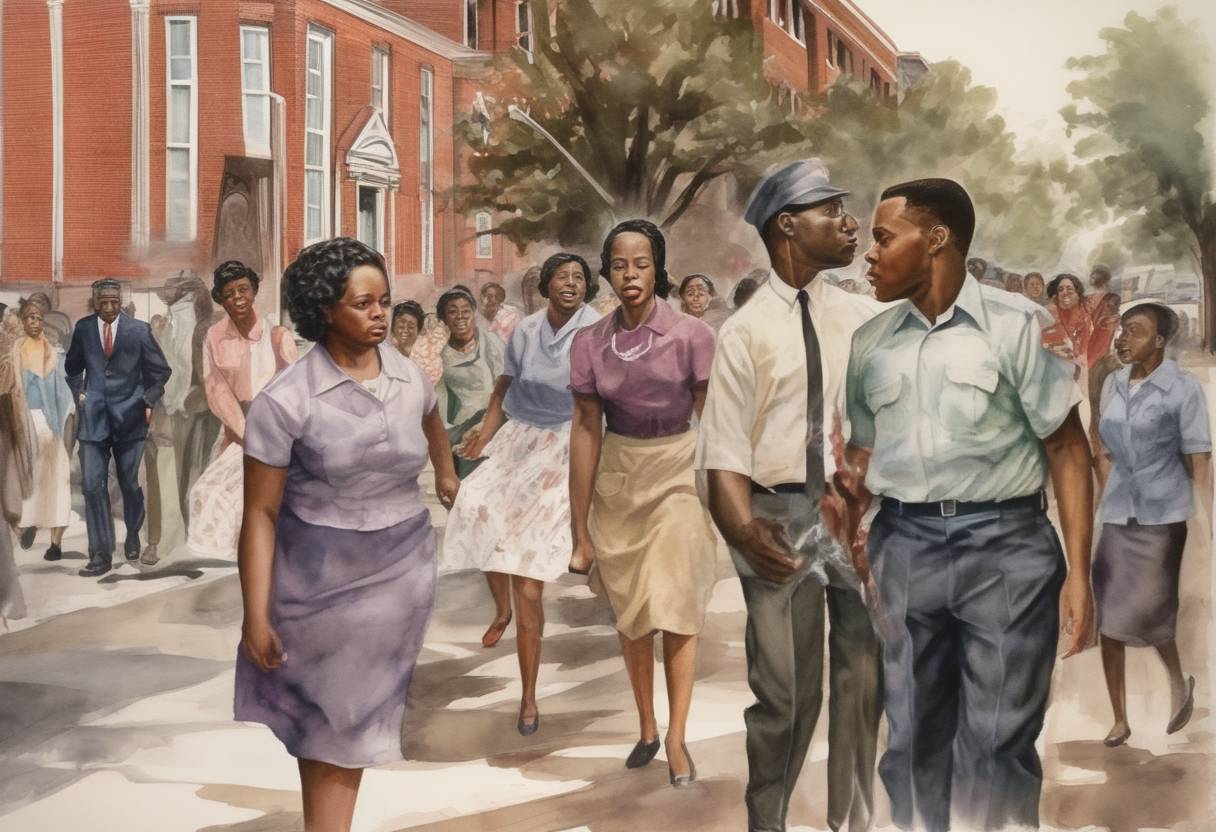
The 16th Street Baptist Church Bombing
Date and Location
- Date: September 15, 1963
- Location: 16th Street Baptist Church, Birmingham, Alabama, USA
Background
The 16th Street Baptist Church was a significant site for the African American community in Birmingham and served as a meeting place for civil rights leaders, including Dr. Martin Luther King Jr. The church was a central hub for organizing civil rights activities, making it a target for those opposed to racial integration and equality.
The Bombing
On the morning of September 15, 1963, a bomb exploded at the 16th Street Baptist Church. The explosion occurred at approximately 10:22 a.m., just before the Sunday service was to begin. The bomb, consisting of at least 15 sticks of dynamite, was placed under the steps of the church.
Casualties
The bombing resulted in the tragic deaths of four African American girls:
- Addie Mae Collins, aged 14
- Cynthia Wesley, aged 14
- Carole Robertson, aged 14
- Denise McNair, aged 11
Additionally, more than 20 other individuals were injured in the blast.
Perpetrators
The bombing was carried out by members of the Ku Klux Klan, a white supremacist group vehemently opposed to the civil rights movement. The investigation into the bombing was initially slow, but eventually, four men were identified as responsible:
- Robert Chambliss was convicted in 1977.
- Thomas Blanton was convicted in 2001.
- Bobby Frank Cherry was convicted in 2002.
- Herman Cash was identified as a suspect but died before charges could be brought.
Impact and Significance
The bombing was a turning point in the Civil Rights Movement. It drew national and international attention to the violent resistance faced by African Americans in their struggle for civil rights. The brutality of the attack and the young age of the victims shocked the nation and galvanized support for the movement.
Legislative Consequences
The outrage over the bombing contributed to the passage of significant civil rights legislation, including:
- The Civil Rights Act of 1964, which prohibited discrimination based on race, color, religion, sex, or national origin.
- The Voting Rights Act of 1965, which aimed to overcome legal barriers at the state and local levels that prevented African Americans from exercising their right to vote.
Legacy
The 16th Street Baptist Church bombing remains a poignant reminder of the struggle for racial equality in the United States. It is commemorated as a symbol of the sacrifices made in the pursuit of civil rights and justice. The church itself has been designated a National Historic Landmark, and the memory of the four girls continues to inspire efforts toward racial reconciliation and equality.