Nazi Germany's Invasion of Czechoslovakia on March 15, 1939
1939 · Prague, Czechoslovakia
Nazi Germany invaded and occupied Czechoslovakia, violating the Munich Agreement.
March 14, 1939
Slovakia declares independence under German pressure, becoming a client state of Nazi Germany at the onset of World War II.
Bratislava, Slovakia | Slovak Government
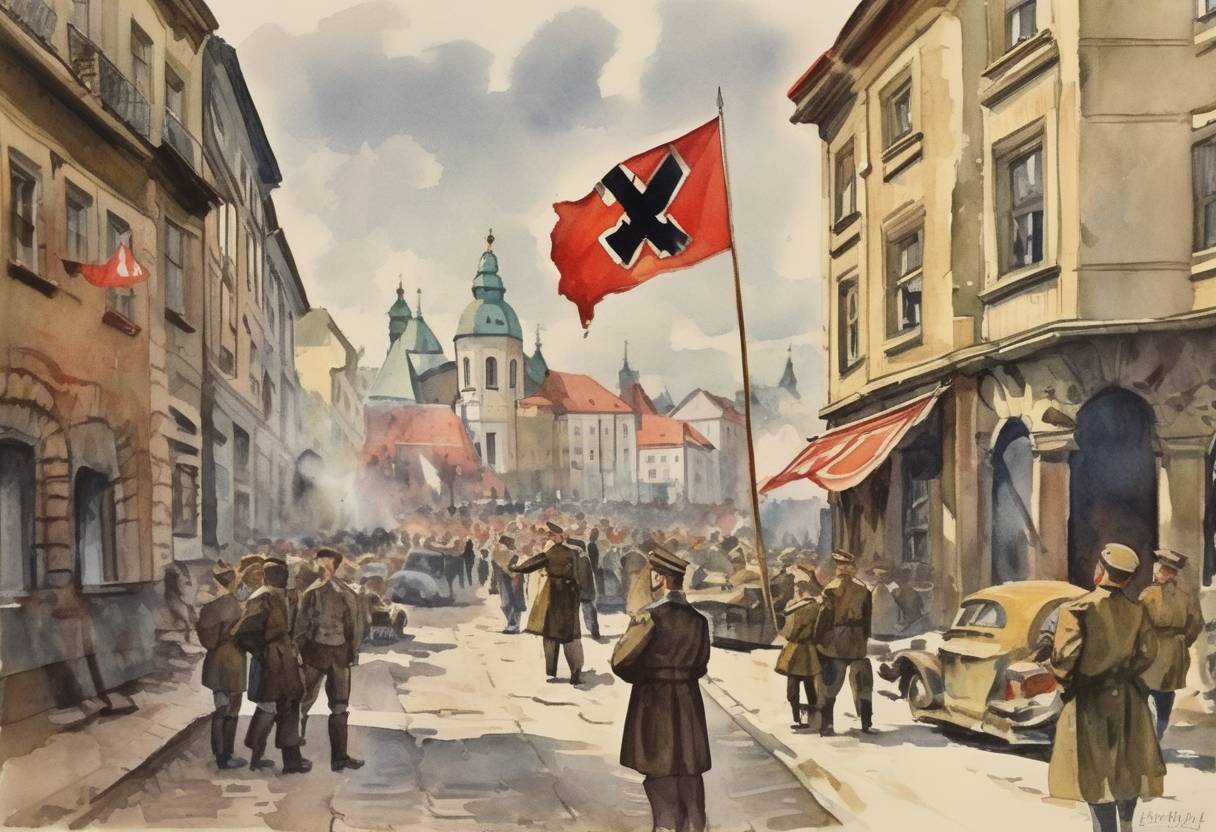
On March 14, 1939, Slovakia declared its independence from Czechoslovakia, a pivotal moment in the lead-up to World War II. This declaration was heavily influenced by Nazi Germany, which sought to expand its influence in Central Europe.
Czechoslovakia’s Formation: After World War I, the Treaty of Versailles and the subsequent treaties established Czechoslovakia as a new nation, combining Czech and Slovak territories. The country was a democratic state with a diverse population, including Czechs, Slovaks, Germans, Hungarians, and other minorities.
Munich Agreement: In September 1938, the Munich Agreement allowed Nazi Germany to annex the Sudetenland, a region of Czechoslovakia with a significant ethnic German population. This agreement, signed by Germany, Italy, France, and the United Kingdom, aimed to appease Adolf Hitler and prevent further conflict but ultimately weakened Czechoslovakia.
Rising Tensions: Following the Munich Agreement, Slovakia’s autonomy within Czechoslovakia increased. Slovak nationalist leaders, led by Jozef Tiso, sought greater independence, and tensions between Czechs and Slovaks grew.
German Pressure: Adolf Hitler invited Slovak leaders to Berlin and pressured them to declare independence, promising protection and support. The alternative presented was the potential partition of Slovakia between Hungary and Poland.
Slovak Independence: On March 14, 1939, the Slovak Diet (parliament) declared Slovakia an independent state. Jozef Tiso became the Prime Minister and later the President of the newly formed Slovak Republic.
Client State of Nazi Germany: Slovakia quickly became a client state of Nazi Germany. It aligned its foreign policy with German interests and participated in the Axis powers’ military campaigns, including the invasion of Poland in September 1939.
Protectorate of Bohemia and Moravia: The day after Slovakia’s declaration, on March 15, 1939, German forces occupied the remaining Czech territories, establishing the Protectorate of Bohemia and Moravia.
World War II: Slovakia’s independence under German influence marked a significant step in the disintegration of Czechoslovakia and the expansion of Nazi Germany’s control in Europe. This event contributed to the tensions that led to the outbreak of World War II later that year.
Post-War Period: After World War II, Czechoslovakia was re-established as a sovereign state. The actions of the wartime Slovak government, particularly its collaboration with Nazi Germany, were scrutinized, and leaders like Jozef Tiso were held accountable.
The declaration of Slovak independence on March 14, 1939, illustrates the complex interplay of nationalism, foreign influence, and geopolitical strategy in the prelude to World War II. It highlights the vulnerabilities of smaller nations amidst the ambitions of more powerful states.
Source: en.wikipedia.org