King George III Declares the American Colonies in Open Rebellion
1775 · London, England
King George III declared the American colonies to be in open rebellion.
March 30, 1775
King George III endorses the New England Restraining Act, restricting trade in the American colonies, to suppress the growing unrest preceding the American Revolutionary War.
London, United Kingdom | British Government
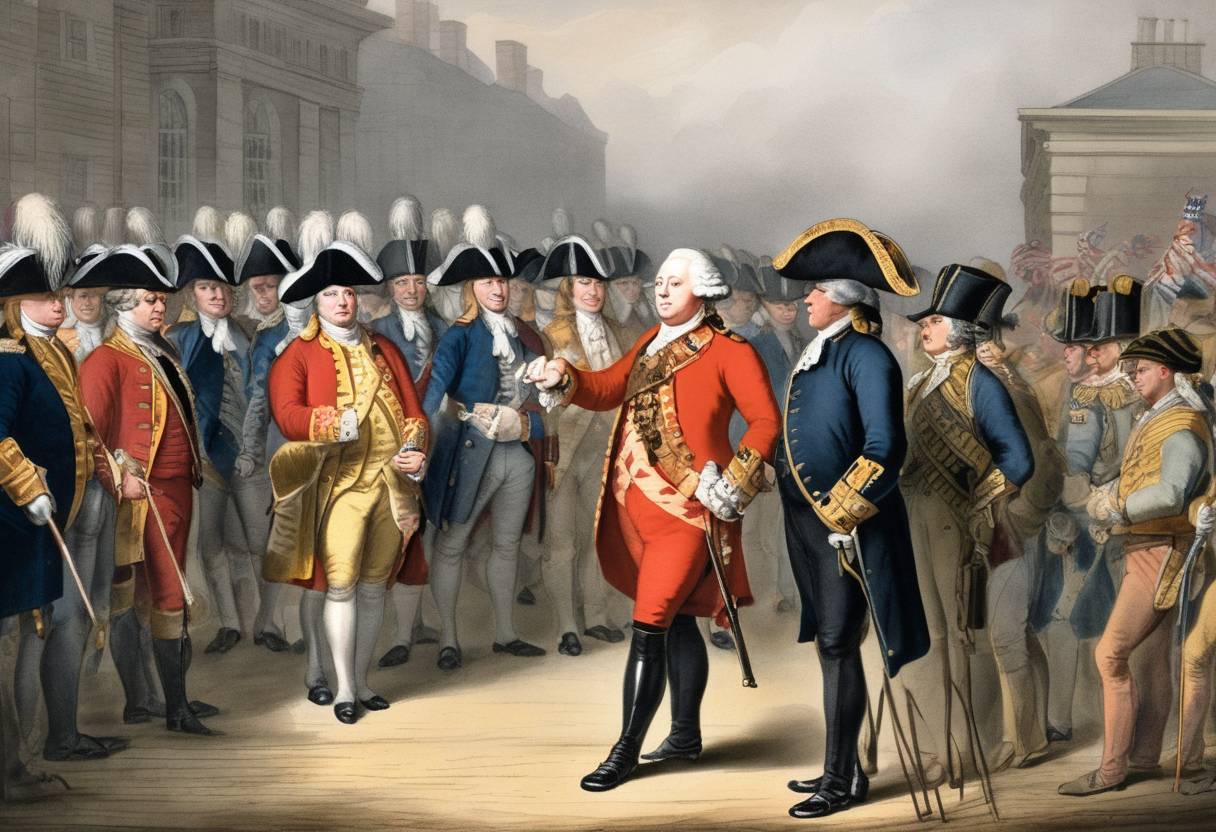
On March 30, 1775, King George III formally endorsed the New England Restraining Act, aimed primarily at curbing the burgeoning trade independence of the American colonies, notably New England. This legislative act was part of the British empire’s broader strategy to suppress the escalating unrest that would culminate in the American Revolutionary War.
In the early 1770s, tensions between the British government and its American colonies were reaching a boiling point. Economic policies, such as the Stamp Act and the Townshend Acts, had already strained relations, leading to widespread protests and boycotts. The British Parliament, seeking to reassert control, passed a series of punitive measures known as the Coercive Acts (or the Intolerable Acts in the colonies) following the Boston Tea Party in 1773.
The New England Restraining Act specifically targeted the colonies of Massachusetts, Connecticut, New Hampshire, and Rhode Island. Its main provisions included:
Trade Restrictions: The Act restricted the New England colonies from trading with nations other than Great Britain or its Caribbean colonies. The intent was to economically coerce the colonies by limiting their market opportunities and access to essential imports.
Fisheries Regulation: It also restricted access to the North Atlantic fisheries for New England ships, a crucial economic activity for the region. This restriction was particularly onerous, as fishing was a vital industry for New Englanders, providing employment, food, and export goods.
The endorsement of the New England Restraining Act by King George III was met with vehement opposition from the colonies. Seen as yet another heavy-handed move by the British Crown, it further fueled colonial resentment and suspicion. Many colonists viewed these trading restrictions as an attack on their economic autonomy and freedom, solidifying revolutionary sentiments.
These punitive measures did not succeed in quelling the unrest. Instead, they contributed to the growing unity among the colonies, sowing seeds for collective action which would manifest in the formation of the First Continental Congress. Eventually, these continued legislative pressures and the colonial response would propel the American colonies towards open rebellion and the onset of the Revolutionary War.
The New England Restraining Act symbolizes the severe misunderstandings and disagreements over governance and economic freedom that were pivotal in the lead-up to the American Revolutionary War. It reflected the imperial mindset of the British Crown and Parliament and underscored the colonies’ increasingly radical push for autonomy and self-determination. The act’s endorsement on March 30, 1775, marks a critical moment of increasing conflict, influencing the course of American history toward independence.
Source: www.britannica.com