Charles Cornwallis Appointed Governor-General of India - February 24, 1786
1786 · London, United Kingdom
Charles Cornwallis is appointed Governor-General of India, which marks a significant shift in British administration in India.
January 10, 1839
Tea from India officially arrived in the United Kingdom for the first time, marking a significant event in British colonial trade.
London, United Kingdom | British East India Company
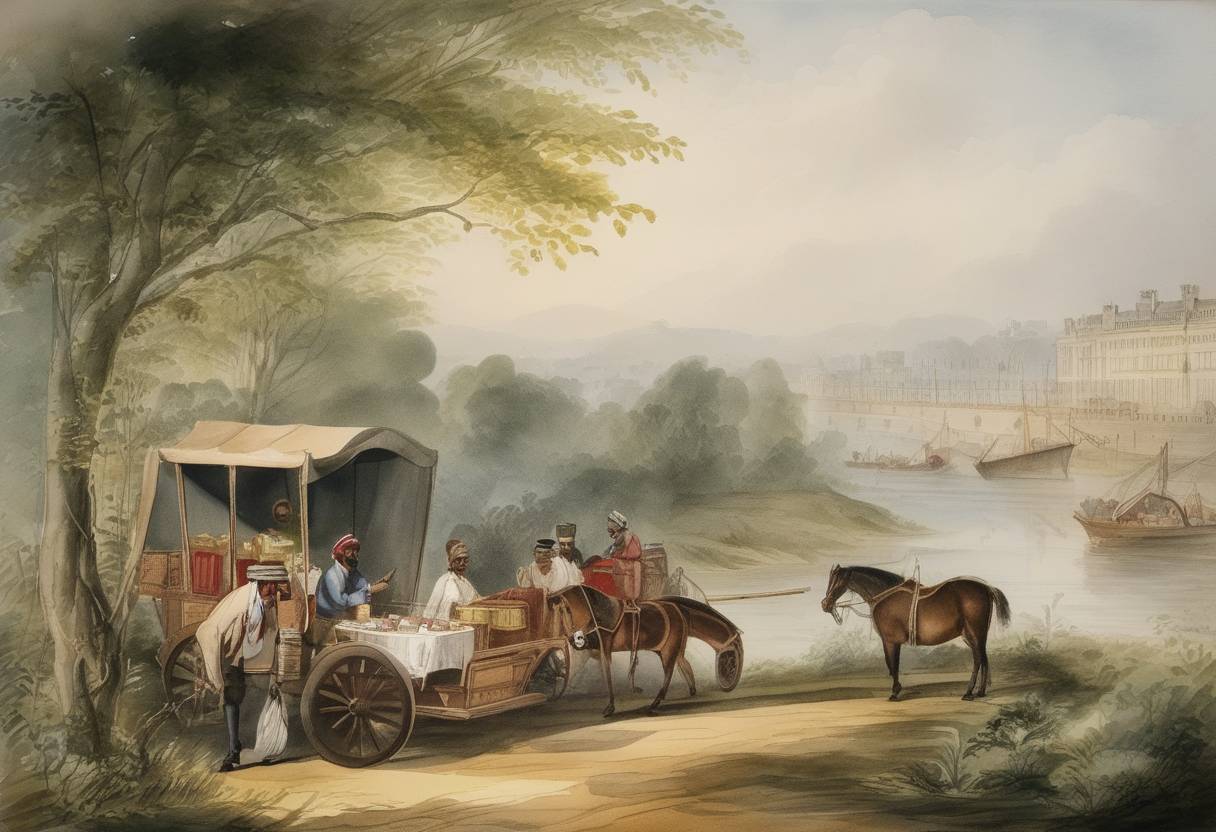
October 1, 1839, marks a pivotal moment in the history of British colonial trade and the global tea industry, as tea from India officially arrived in the United Kingdom for the first time. This event signaled the beginning of a significant shift in tea sourcing by the British, eventually transforming the dynamics of the international tea trade.
During the early 19th century, the British East India Company held a monopoly over the tea trade, primarily importing tea from China. However, the company faced challenges such as the Opium Wars, which strained relationships between Britain and China, and increased demand for tea at home. These factors motivated the British to seek alternative sources for tea.
The introduction of Indian tea was part of a strategic initiative led by the British to cultivate tea in their colonial territories. The large-scale cultivation of tea began in Assam, India, following experiments led by British plantation owners and botanists who recognized the region’s potential for tea production due to its suitable climate and terrain.
The arrival of the first shipments of Indian tea in London on October 1, 1839, was a potential game-changer for British commerce. Although the initial quantities were modest, this event marked the advent of a new era in the tea trade, significantly reducing Britain’s reliance on Chinese tea.
This shift had profound implications:
Economic Impact: Indian tea eventually led to competitive pricing and increased availability, contributing to tea becoming a staple beverage in British households.
Colonial Expansion: The success of tea cultivation in India bolstered British efforts to expand their agricultural and industrial influence in their colonies. This expansion was part of the broader colonial strategy to integrate Indian resources into the British economy.
Cultural Change: As Indian tea gained popularity, it played a role in shaping British cultural practices, including the custom of “afternoon tea.”
In the years following the initial shipment, the tea production in India expanded rapidly. By the late 19th century, Assam had become one of the leading tea-producing regions worldwide. The success of Indian tea cultivation inspired similar initiatives in other British colonies, including Ceylon (modern-day Sri Lanka).
This diversification significantly altered the global tea trade landscape, establishing India as a major player. The British tea culture persisted and evolved, cementing tea’s role as a central element in the social and economic fabric of the United Kingdom.
The arrival of Indian tea in 1839 was a key turning point, laying the foundation for a century of growth and adaptation in the global tea industry.
Source: www.britannica.com