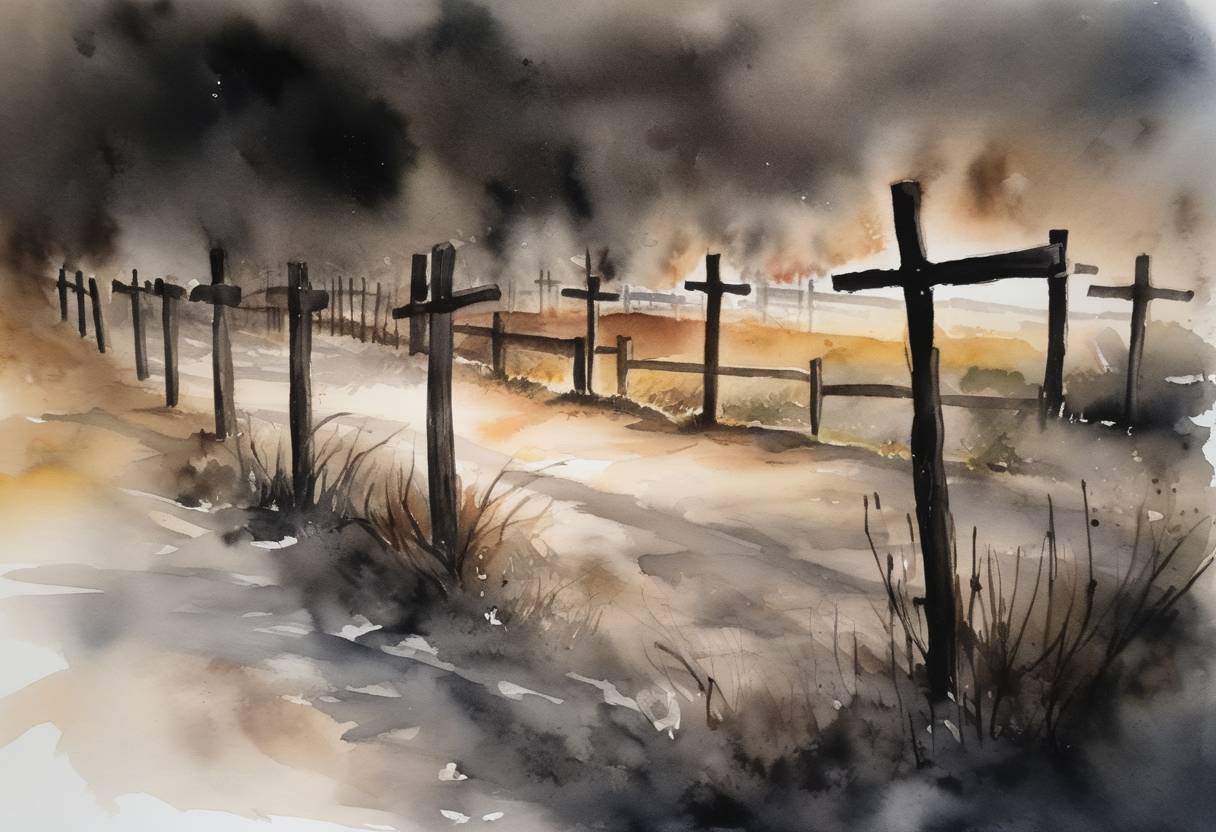
International Holocaust Remembrance Day - January 27, 2021
On January 27, 2021, International Holocaust Remembrance Day was observed globally, marking the 76th anniversary of the liberation of Auschwitz-Birkenau, the largest Nazi concentration and extermination camp.
Historical Context
- Auschwitz-Birkenau Liberation: Auschwitz-Birkenau was liberated by the Soviet Red Army on January 27, 1945. The camp had been a site of mass murder during the Holocaust, with an estimated 1.1 million people, predominantly Jews, killed there between 1940 and 1945.
- Holocaust Remembrance Day Establishment: In 2005, the United Nations General Assembly designated January 27 as International Holocaust Remembrance Day to honor the victims of the Holocaust and promote Holocaust education worldwide.
2021 Observance
Due to the COVID-19 pandemic, the 2021 observance largely transitioned to virtual events, ensuring that global remembrance continued safely despite public health restrictions.
Key Events and Observations
- Virtual Ceremonies: Various countries and international organizations held virtual ceremonies, allowing survivors, politicians, educators, and young people to participate without the risk of virus transmission.
- United Nations Commemoration: The United Nations held a high-level online event that included testimonies from Holocaust survivors, speeches from world leaders, and discussions emphasizing the crucial mandate to prevent future genocides.
- Social Media Campaigns: Many institutions, including museums, educational organizations, and governments, launched social media campaigns sharing survivor stories and educational content to broaden public awareness in a digital format.
Notable Themes
- Education and Memory: Emphasis was placed on Holocaust education as a tool against antisemitism and hate, with numerous educational resources and webinars made available to the public.
- Survivor Narratives: Personal stories and testimonies from Holocaust survivors remained central, highlighting the resilience and the enduring impact on their lives, stressing the importance of preserving their narratives for future generations.
Significance and Legacy
The 2021 observance underscored the enduring significance of Holocaust remembrance in confronting modern antisemitism and fostering an informed, empathetic society. By adapting commemorative practices to a digital format, the global community continued to honor the memory of the Holocaust victims while reaching new audiences worldwide. This approach demonstrated the adaptability and resilience of memory culture in the face of global challenges.