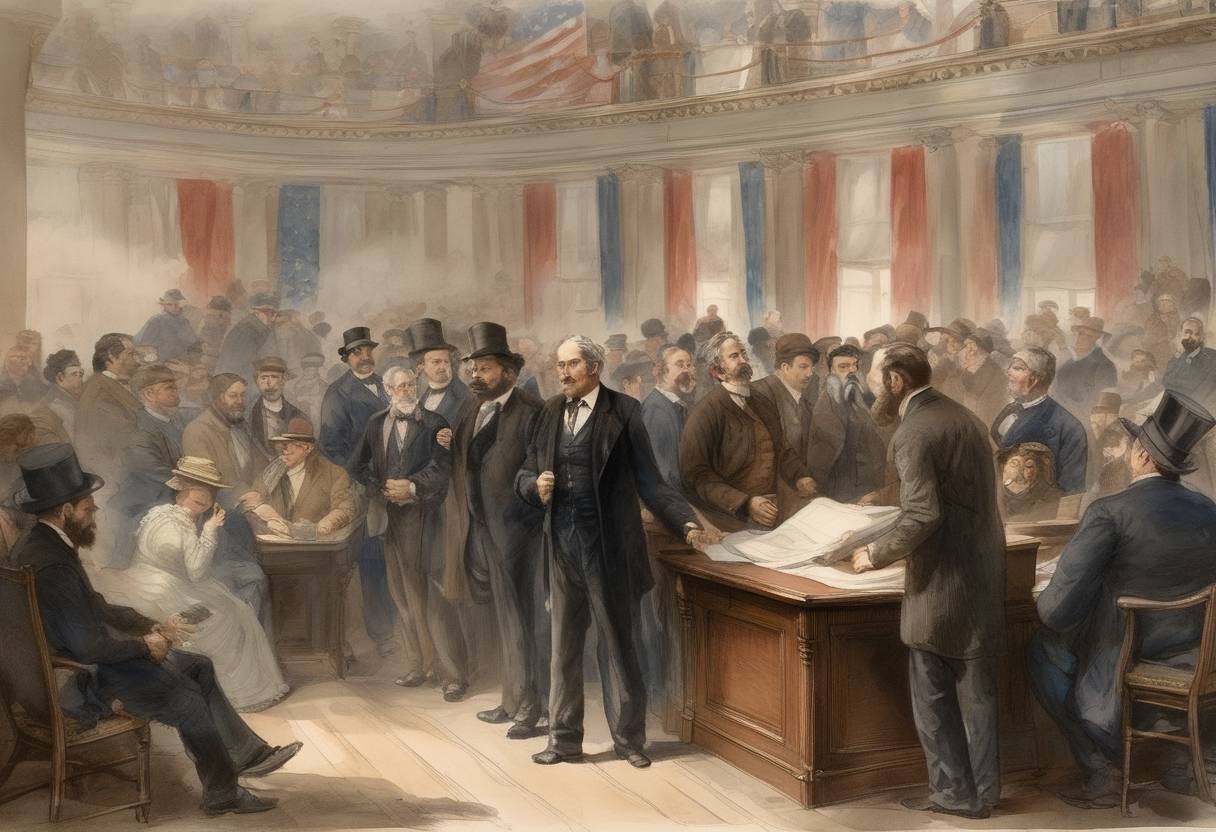
Immigration Act of 1882
Date of Enactment
On August 3, 1882, the United States Congress enacted the Immigration Act of 1882, marking a significant moment in the history of U.S. immigration policy.
Key Provisions
Head Tax
- Imposition of a Head Tax: The act imposed a 50-cent head tax on each immigrant arriving at U.S. ports. The revenue generated from this tax was intended to offset administrative expenses related to immigration processing.
Exclusions
- Exclusion of Certain Classes: The act introduced measures to exclude specific classes of immigrants deemed undesirable. These included:
- Convicts (except those convicted of political offenses).
- Lunatics and idiots, terms used at the time to broadly categorize individuals with mental health issues or developmental disabilities.
Background and Context
- Post-Civil War Immigration Surge: In the years following the U.S. Civil War, there was a significant increase in immigration, particularly from Europe. This influx led to growing public and political debates over immigration’s effects on the economy and society.
- Early Federal Regulation: Prior to the act, immigration regulation was primarily managed at the state level. The Immigration Act of 1882 represented one of the first comprehensive attempts by the federal government to regulate immigration, setting a precedent for future legislation.
Political and Social Implications
- Rise of Nativism: The act reflected the growing nativist sentiment of the late 19th century, fueled by concerns over economic competition, cultural differences, and the welfare burdens posed by immigrants.
- Policy Evolution: The exclusionary policies set forth in the Immigration Act of 1882 paved the way for further restrictions, including the Chinese Exclusion Act of the same year, which specifically targeted Chinese immigrants.
Aftermath and Legacy
- Foundation for Future Legislation: The Immigration Act of 1882 laid the groundwork for more comprehensive and restrictive immigration policies in the following decades.
- Development of Federal Infrastructure: The act led to the creation and expansion of federal immigration infrastructure, including the establishment of the Bureau of Immigration in 1891.
The enactment of the Immigration Act of 1882 was a pivotal step in the codification and federal oversight of immigration policies in the United States, influencing the trajectory of immigration regulation well into the 20th century.