The Battle of Okinawa: April 1, 1945
1945 · Okinawa, Japan
The Battle of Okinawa began during World War II, one of the largest amphibious assaults in the Pacific Theater, lasting until June 22, 1945.
February 3, 1945
The Battle of Manila begins between American and Filipino forces and the Japanese during World War II, lasting until March 3.
Manila, Philippines | United States Armed Forces
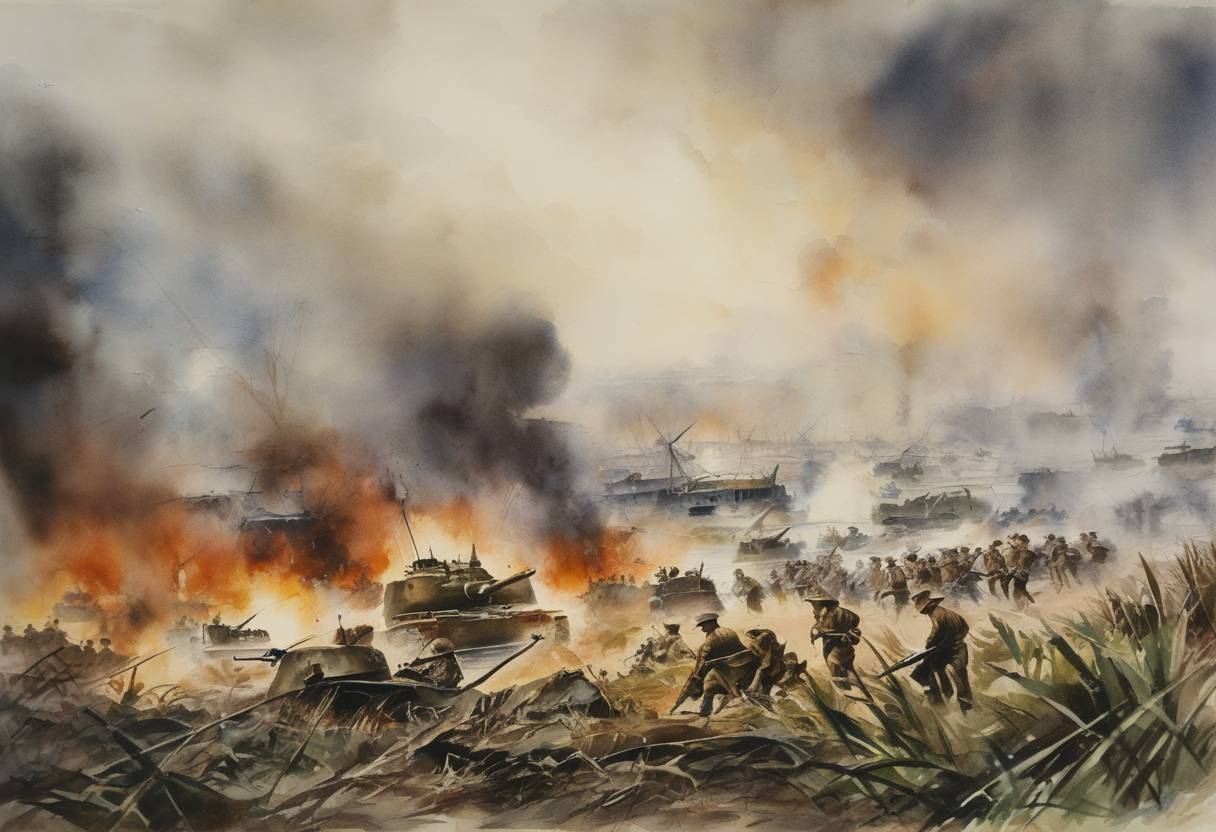
The Battle of Manila commenced on February 3, 1945, marking a pivotal moment in the Pacific theater of World War II. This battle was part of the larger campaign by American and Filipino forces to liberate the Philippines from Japanese occupation.
Following the successful landings on Leyte in October 1944, General Douglas MacArthur continued his operations to liberate the entire Philippine archipelago. The capture of Manila was crucial due to its strategic and symbolic significance as the capital city.
American Reconnaissance and Entry: The American forces, primarily consisting of the 1st Cavalry Division, entered the northern outskirts of Manila on February 3, 1945. Their entry into the city was relatively unopposed as initial resistance was light.
Strategic Goals: The immediate objective was to secure the Santo Tomas Internment Camp, where approximately 3,700 civilians—many of them American nationals—were held by the Japanese. By February 3, the First Cavalry executed a swift assault on the camp and successfully liberated the internees the same day.
The Battle of Manila was one of the fiercest urban battles fought in the Pacific during World War II. Its beginning signaled the start of a month-long struggle characterized by intense combat and significant civilian casualties due to widespread destruction throughout the city. By the end of the battle in March 1945, vast portions of Manila lay in ruins, highlighting the severe human and material cost of the conflict.
While the liberation of Manila eventually contributed to the weakening of Japanese positions in the Philippines, the battle’s toll on the local population and infrastructure was devastating. The successful recapture of the city, however, represented a crucial step toward the ultimate liberation of the Philippines and the eventual defeat of Japanese forces in the Pacific theater.
Source: en.wikipedia.org