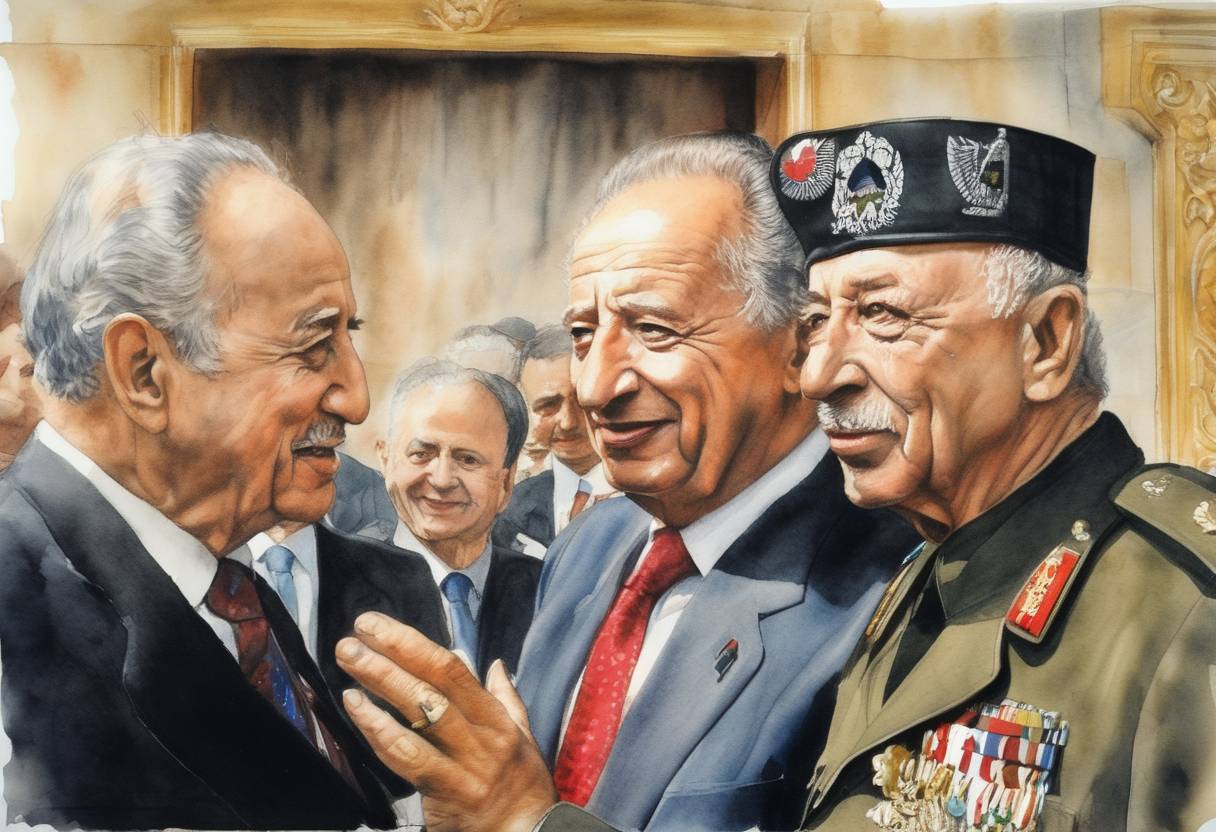
Nobel Peace Prize Awarded - October 13, 1994
On October 13, 1994, the Nobel Peace Prize was awarded jointly to Yasser Arafat, Shimon Peres, and Yitzhak Rabin. This prestigious acknowledgment recognized their collective efforts toward achieving peace in the Middle East, notably through their roles in the Oslo Accords.
Context
The Oslo Accords were a series of agreements between Israel and the Palestine Liberation Organization (PLO), marked by the signing of the Declaration of Principles in Washington D.C. on September 13, 1993. These accords aimed to lay the groundwork for peace between Israelis and Palestinians. They were notable for being the first face-to-face agreement between the two parties, brokered with significant international support, particularly from Norway and the United States.
Yasser Arafat: As the Chairman of the Palestine Liberation Organization, Arafat was a pivotal figure in the Palestinian national movement. His leadership was significant in negotiating the Oslo Accords, where he agreed to recognize the State of Israel’s right to exist in peace, thereby facilitating dialogue and cooperation.
Shimon Peres: Serving as the Foreign Minister of Israel during the Oslo negotiations, Peres played a crucial role in facilitating the peace talks. His diplomatic efforts and vision were instrumental in navigating the complexities of the negotiation process.
Yitzhak Rabin: The Prime Minister of Israel at the time, Rabin demonstrated decisive leadership in pursuing a peace strategy that risked significant political backlash within Israel. His willingness to engage directly with Palestinian representatives marked a significant shift in Israeli policy.
Broader Impact
The award underscored the global significance of the Oslo Accords and highlighted the international community’s support for Middle Eastern peace efforts. It energized peace movements and fostered subsequent dialogues between Israeli and Palestinian leaders. However, the path to lasting peace continued to face numerous challenges, reflected in the recurring conflicts and ongoing negotiations in the region.
Aftermath
Despite the optimism that surrounded the Oslo Accords and subsequent Nobel Peace Prize recognition, the path to peace remained fraught with challenges. The continued violence and political turmoil in the Middle East have underscored the complexities involved in achieving durable peace. The legacy of the Oslo Accords and the Nobel laureates’ contributions remain a bittersweet chapter in the ongoing narrative of the Israeli-Palestinian conflict.