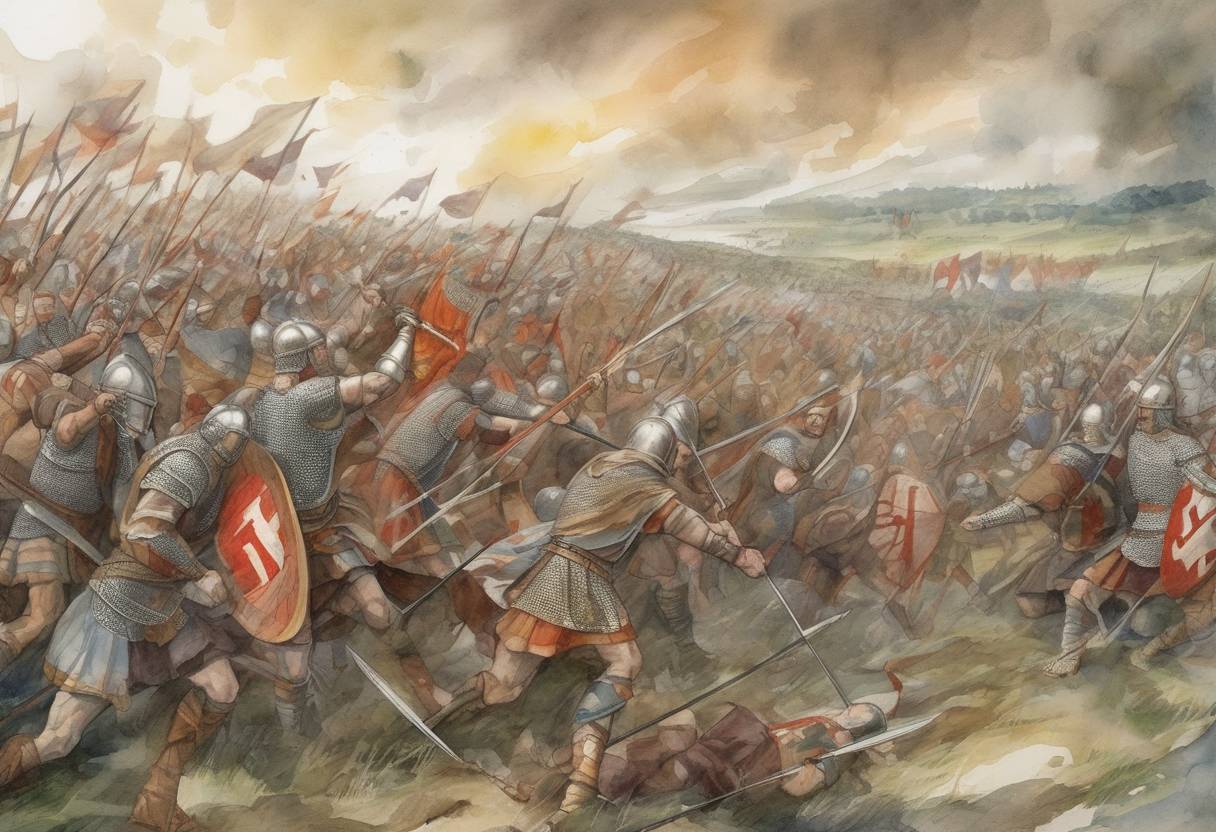
The Battle of Two Rivers: A Key Event in Early Medieval Britain
Date and Location
The Battle of Two Rivers, also known as the Battle of Nechtansmere, took place on May 20, 685, not April 3, 686, as sometimes mistakenly cited. It occurred near Dunnichen in present-day Scotland.
Historical Context
Background
- Northumbria: By the mid-7th century, the Kingdom of Northumbria had become a dominant power in northern Britain. Under King Ecgfrith, Northumbria sought to expand its influence further north into Pictish territories.
- The Picts: The Picts were a confederation of tribes in what is now Scotland. They had been resisting Northumbrian encroachment and sought to maintain their autonomy.
Prelude to Battle
- Tensions: The aggressive expansionist policies of King Ecgfrith of Northumbria led to increased tensions with the Picts. In 685, Ecgfrith launched a campaign into Pictish lands, aiming to subdue them.
- Pictish Leadership: The Picts were led by King Bridei III, who had consolidated power and was determined to resist Northumbrian domination.
The Battle
- Forces: The Northumbrian army, led by King Ecgfrith, was well-equipped and experienced. The Picts, under Bridei III, utilized their knowledge of the local terrain to their advantage.
- Tactics: The Picts employed guerrilla tactics, drawing the Northumbrians into difficult terrain near Dunnichen. The battle took place near a body of water, which played a crucial role in the Pictish strategy.
- Outcome: The Picts decisively defeated the Northumbrian forces. King Ecgfrith was killed during the battle, marking a significant turning point in the power dynamics of the region.
Aftermath and Significance
- Impact on Northumbria: The death of Ecgfrith and the loss at Nechtansmere significantly weakened Northumbrian influence in the north. It marked the end of Northumbrian expansion into Pictish territories.
- Pictish Autonomy: The victory bolstered Pictish independence and allowed them to consolidate power in the region. It also paved the way for the eventual unification of the Pictish tribes.
- Historical Significance: The battle is seen as a pivotal moment in early medieval British history, highlighting the shifting power dynamics and the resilience of the Pictish people against external threats.
The Battle of Two Rivers remains a significant event in the history of Britain, illustrating the complex interplay of power, culture, and resistance during this period.