The Edict of Nantes: A Milestone in Religious Tolerance
1600 · Paris, France
Henry IV of France issued the Edict of Nantes, which granted a measure of religious freedom to Huguenots.
July 25, 1593
Henry IV of France converted from Protestantism to Roman Catholicism, reportedly declaring 'Paris is well worth a Mass,' which helped to end the French Wars of Religion.
Paris, France | French Monarchy
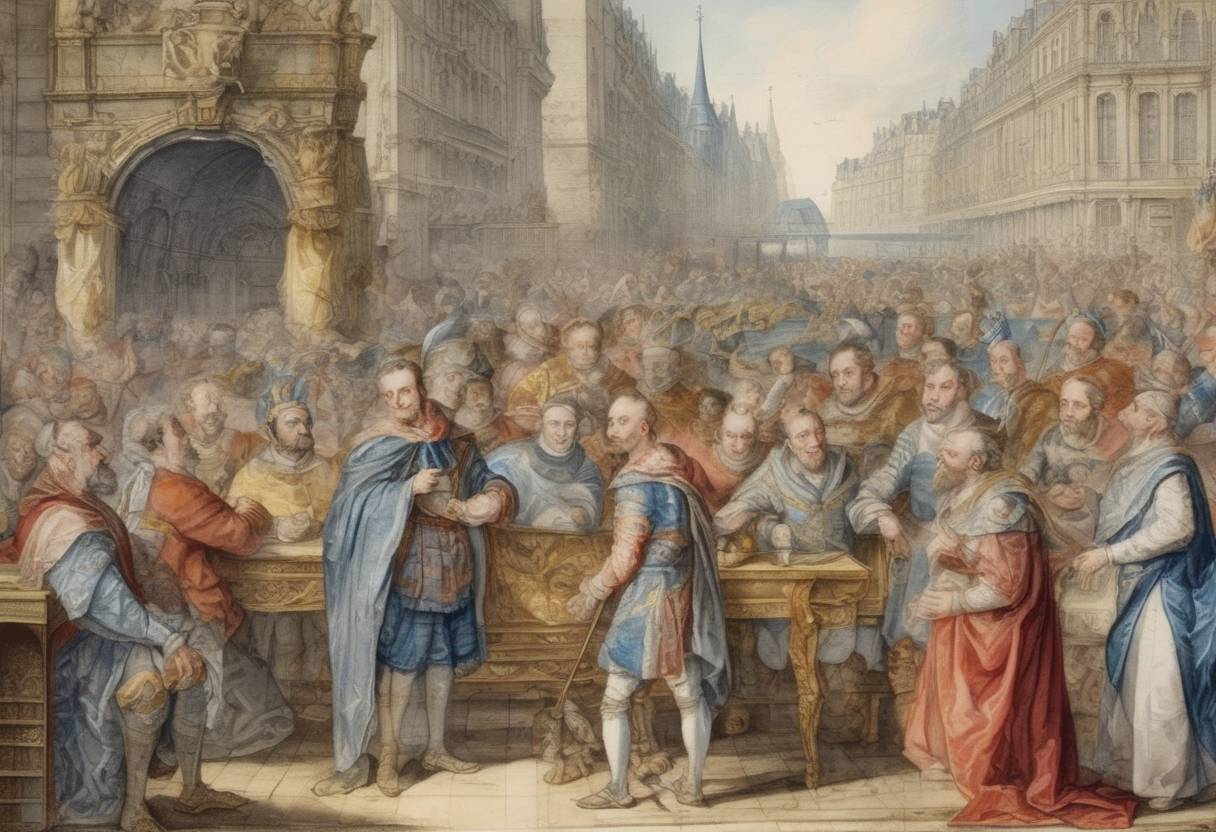
On July 25, 1593, Henry IV of France, originally a Protestant, converted to Roman Catholicism in a significant political and religious maneuver that played a crucial role in ending the French Wars of Religion. This event is famously associated with his purported declaration, “Paris is well worth a Mass,” highlighting his pragmatic approach to governance and the unification of France.
The French Wars of Religion (1562-1598) were a series of conflicts primarily between Catholics and Huguenots (French Protestants) that devastated France. The conflict was not only religious but also political, involving various factions vying for power. Henry IV, born as Henry of Navarre, was a leading Huguenot and became the heir to the French throne through his marriage to Margaret of Valois, sister of the last Valois king, Henry III.
Upon Henry III’s assassination in 1589, Henry of Navarre became King Henry IV. However, his Protestant faith was a significant obstacle to his acceptance by the predominantly Catholic population of France, particularly in Paris, which was controlled by the Catholic League.
Faced with the challenge of securing his rule and bringing peace to a fractured nation, Henry IV decided to convert to Catholicism. On July 25, 1593, he formally abjured Protestantism at the Basilica of Saint-Denis, a decision that was both strategic and symbolic. His conversion was a pivotal moment in French history, as it paved the way for his acceptance by the Catholic majority and the eventual end of the religious wars.
Henry IV’s conversion was instrumental in his successful entry into Paris in 1594, a city that had long resisted his rule. His reign marked the beginning of the Bourbon dynasty’s consolidation of power in France. In 1598, he issued the Edict of Nantes, granting substantial rights to the Huguenots and effectively ending the French Wars of Religion. This edict established a degree of religious tolerance and laid the groundwork for a more unified and stable France.
Henry IV’s pragmatic approach and his efforts to balance religious tensions earned him the nickname “Good King Henry.” His conversion and subsequent policies helped to restore peace and prosperity to France, leaving a lasting legacy on the nation’s history.
In summary, Henry IV’s conversion to Catholicism was a decisive act that not only secured his throne but also contributed significantly to the resolution of one of France’s most turbulent periods. His reign is remembered for its emphasis on reconciliation and the strengthening of the French state.
Source: en.wikipedia.org