Appointment of Pope Leo VIII on December 6, 963
963 · Rome, Italy
Pope Leo VIII is appointed as pope by Emperor Otto I, marking a significant moment in the history of the papacy and the Holy Roman Empire.
July 4, 0993
Saint Ulrich of Augsburg becomes the first saint to be canonized by a pope, Pope John XV, marking a significant development in the formal process of canonization in the Catholic Church.
Augsburg, Holy Roman Empire (modern-day Germany) | Catholic Church
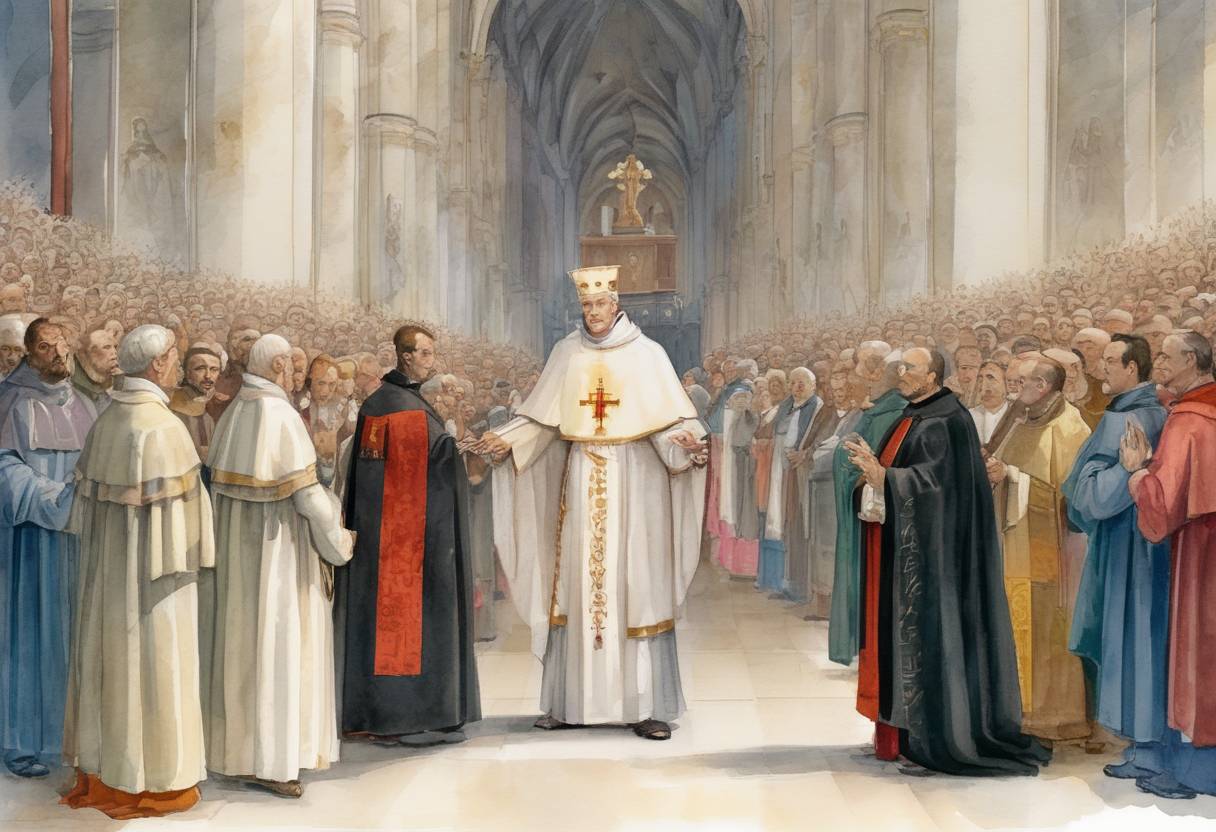
On July 4, 993, Saint Ulrich of Augsburg became the first saint to be formally canonized by a pope, marking a pivotal moment in the history of the Catholic Church. This event was significant as it established a precedent for the formal process of canonization, which would become a central aspect of the Church’s recognition of sainthood.
Saint Ulrich of Augsburg: Born around 890, Ulrich was a prominent bishop of Augsburg, serving from 923 until his death in 973. He was known for his piety, administrative skills, and efforts to strengthen the Church’s influence in his diocese. Ulrich played a crucial role during the Hungarian invasions, fortifying the city of Augsburg and providing spiritual leadership.
Pope John XV: Serving as pope from 985 to 996, John XV’s papacy was marked by political challenges and the need to assert papal authority. His decision to canonize Ulrich was a strategic move to formalize the process of recognizing saints, which had previously been more localized and less structured.
Formalization: Before Ulrich’s canonization, the recognition of saints was often a regional affair, with local bishops or communities venerating individuals based on their perceived holiness and miracles attributed to them. Pope John XV’s involvement in Ulrich’s canonization set a new standard, emphasizing the papal authority in such matters.
Significance: This event underscored the centralization of ecclesiastical authority in Rome and the pope’s role as the ultimate arbiter in matters of faith and sainthood. It also laid the groundwork for the development of a more systematic and rigorous process for canonization, which would evolve over the centuries.
Influence on the Church: The formal canonization of Ulrich by Pope John XV was a significant step in the Church’s efforts to standardize and control the recognition of saints. It reinforced the pope’s authority and helped unify the Church’s practices across different regions.
Legacy: The process initiated by Ulrich’s canonization would eventually lead to the establishment of the Congregation for the Causes of Saints, which oversees the complex procedures involved in declaring someone a saint today.
In summary, the canonization of Saint Ulrich of Augsburg by Pope John XV on July 4, 993, was a landmark event in the Catholic Church’s history. It not only honored a revered bishop but also marked the beginning of a more formalized and centralized approach to recognizing sainthood, shaping the Church’s practices for centuries to come.
Source: en.wikipedia.org