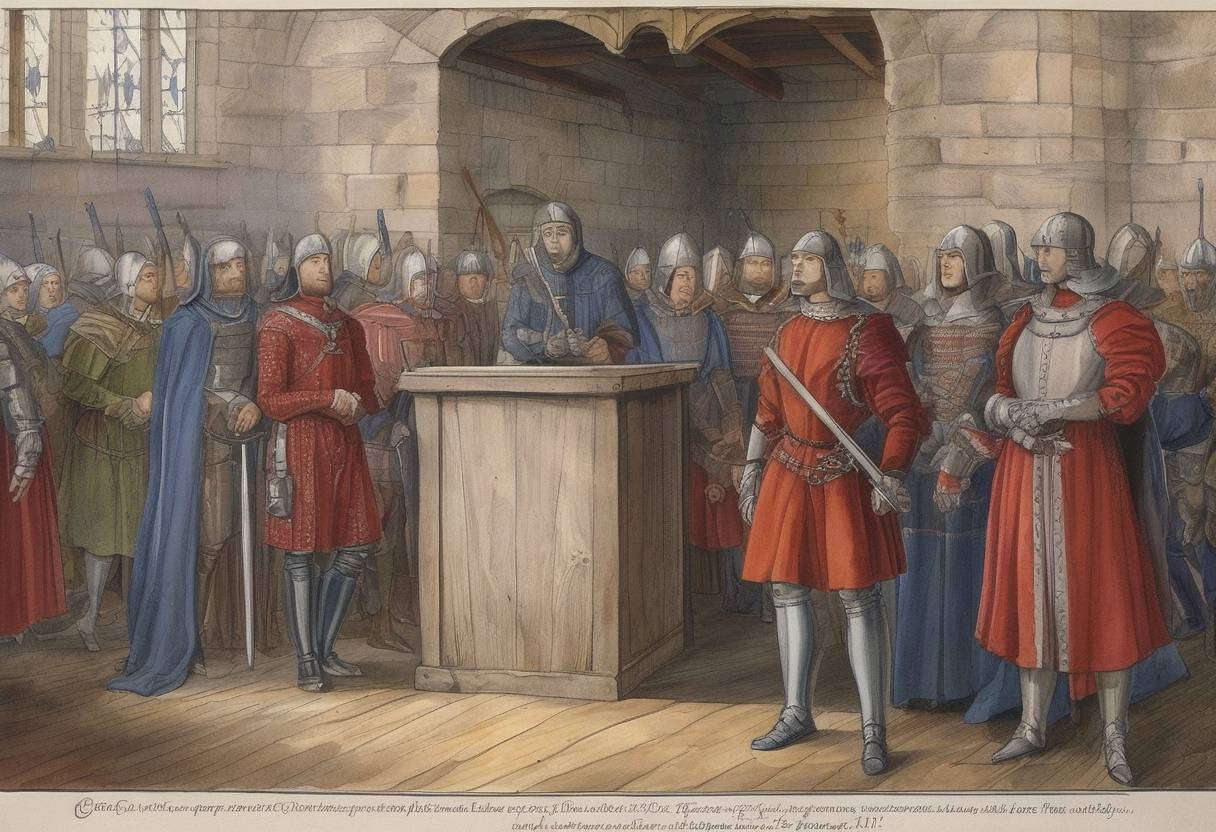
Execution of George, Duke of Clarence
On February 18, 1478, George Plantagenet, the Duke of Clarence, was executed for treason against his brother, King Edward IV of England. This event marked a dramatic and tragic moment in the turbulent period of the Wars of the Roses, a series of dynastic conflicts between the rival houses of Lancaster and York for control of the English throne.
Background
George, Duke of Clarence, was born on October 21, 1449, as the third son of Richard Plantagenet, Duke of York, and Cecily Neville. He was a younger brother to Edward IV and an elder brother to Richard III. Initially, George was a staunch supporter of his brother Edward’s claim to the throne. However, his ambitions and alliances shifted over time, leading to a series of betrayals.
Key Events Leading to His Execution
Alliance with the Earl of Warwick: George married Isabel Neville, the daughter of Richard Neville, the Earl of Warwick, known as the “Kingmaker.” Warwick initially supported Edward IV but later turned against him. George joined Warwick in rebellion against Edward, hoping to advance his own position.
Reconciliation and Further Plots: After Warwick’s defeat and death in 1471, George reconciled with Edward IV. However, his ambitions did not wane, and he became embroiled in further plots and conspiracies against his brother.
Accusations and Arrest: In 1477, George was accused of treason. The charges included plotting against the king and engaging in acts that threatened the stability of the realm. Edward IV, despite their familial ties, felt compelled to act against George to maintain his authority and the security of his reign.
Execution and Legend
George was executed privately in the Tower of London. The method of his execution is shrouded in legend. According to popular lore, he was drowned in a butt of Malmsey wine, a story that has captured the imagination of many over the centuries. While this tale is widely known, historical evidence to confirm the exact method of his execution is lacking.
Aftermath and Historical Significance
The execution of George, Duke of Clarence, had significant repercussions:
Impact on the Yorkist Dynasty: The execution underscored the internal divisions within the Yorkist faction, weakening the stability of Edward IV’s reign and contributing to the eventual downfall of the Yorkist dynasty.
Legacy and Cultural Depictions: George’s life and dramatic death have been depicted in various works of literature and drama, most notably in William Shakespeare’s play “Richard III,” where his execution is portrayed as a pivotal moment in the narrative of the Wars of the Roses.
In conclusion, the execution of George, Duke of Clarence, remains a poignant example of the personal and political turmoil that characterized the Wars of the Roses, illustrating the complex interplay of ambition, loyalty, and betrayal within the English nobility during this period.