Palestinian Suicide Bombing Outside Tel Aviv - July 22, 2002
2002 · Tel Aviv, Israel
A Palestinian suicide bomber kills nine and injures 20 at a bus stop outside Tel Aviv, Israel.
March 27, 2002
A suicide bombing at the Park Hotel in Netanya, Israel, killed 30 people and injured 140 others during a Passover Seder, marking one of the deadliest attacks of the Second Intifada.
Netanya, Israel | Hamas
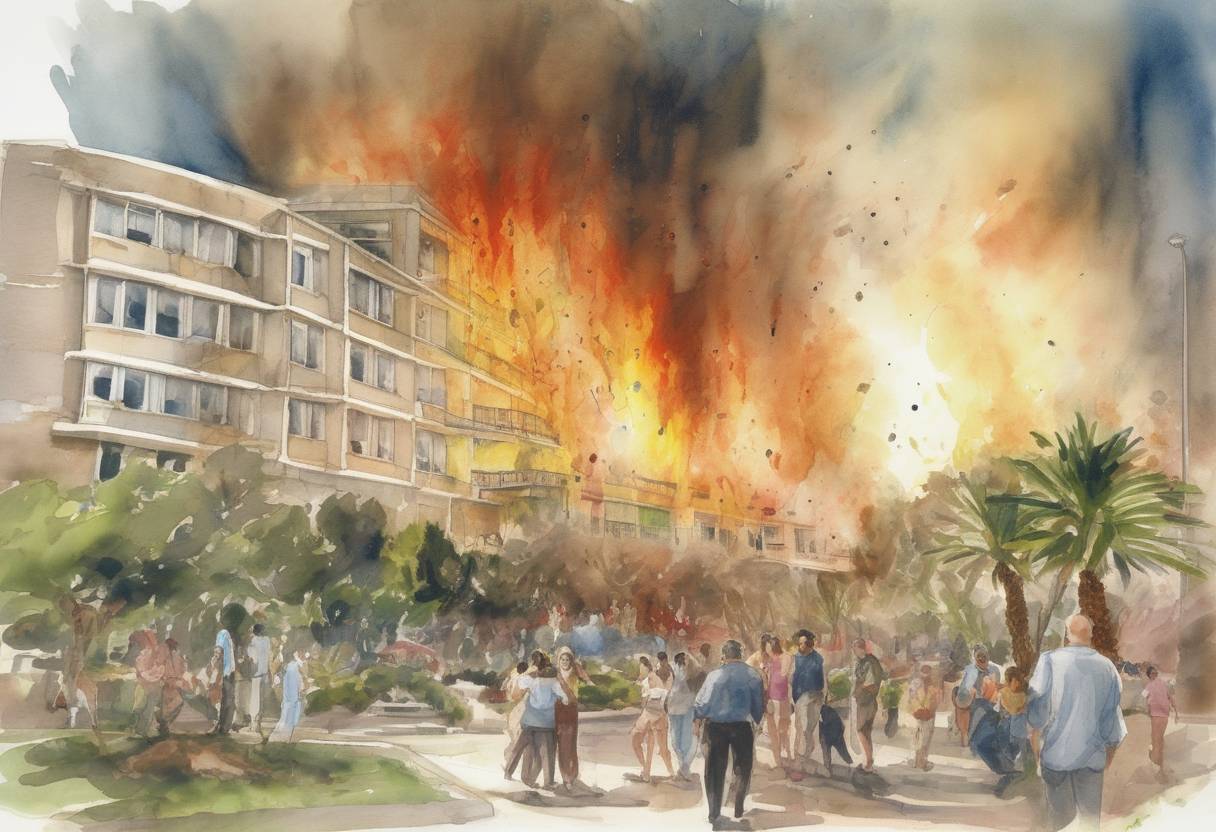
On March 27, 2002, a devastating suicide bombing occurred at the Park Hotel in Netanya, Israel. This attack stands as one of the deadliest incidents during the Second Intifada, a period of intensified Israeli-Palestinian violence that began in late 2000.
Second Intifada: The Second Intifada was a Palestinian uprising against Israeli occupation in the West Bank and Gaza Strip. It was marked by frequent clashes, military operations, and numerous attacks, including suicide bombings targeting civilians.
Passover Seder: The attack took place during the Jewish holiday of Passover, specifically during a Seder, which is a ritual feast marking the beginning of the holiday. This timing was significant as it targeted a moment of cultural and religious importance.
Location: The bombing occurred at the Park Hotel, a popular venue in the coastal city of Netanya, Israel. The hotel was hosting a large Passover Seder attended by many guests.
Casualties: The suicide bombing resulted in the deaths of 30 people and injured approximately 140 others. The high number of casualties made it one of the most lethal attacks during the Second Intifada.
Perpetrator: The attack was carried out by a Palestinian suicide bomber affiliated with Hamas, a militant organization that opposes Israeli occupation and has been responsible for numerous attacks during the conflict.
Operation Defensive Shield: In response to the bombing, the Israeli government launched “Operation Defensive Shield,” a large-scale military operation in the West Bank aimed at dismantling terrorist infrastructure. This operation involved incursions into several Palestinian cities and refugee camps.
International Reaction: The attack drew widespread international condemnation and highlighted the urgent need for renewed peace efforts. It underscored the cycle of violence and retaliation that characterized the Second Intifada.
Impact on Peace Process: The bombing and subsequent military operations further strained Israeli-Palestinian relations and complicated efforts to revive peace negotiations. The violence during this period contributed to a deepening mistrust between the two sides.
The Park Hotel bombing exemplified the intense violence and human cost of the Second Intifada. It highlighted the challenges of achieving peace in a region marked by deep-seated grievances and ongoing conflict. The attack and its aftermath had lasting impacts on Israeli security policies and the broader geopolitical landscape in the Middle East.
This tragic event remains a poignant reminder of the need for dialogue and reconciliation in pursuit of a lasting resolution to the Israeli-Palestinian conflict.
Source: www.britannica.com