The Killing of Peter Fechter: August 17, 1962
1962 · Berlin, Germany
East German border guards kill Peter Fechter, an 18-year-old bricklayer, as he attempts to cross the Berlin Wall into West Berlin, sparking international outrage.
August 13, 1961
Construction of the Berlin Wall begins, dividing East and West Berlin and symbolizing the Cold War's division of East and West Europe.
Berlin, Germany | East German government
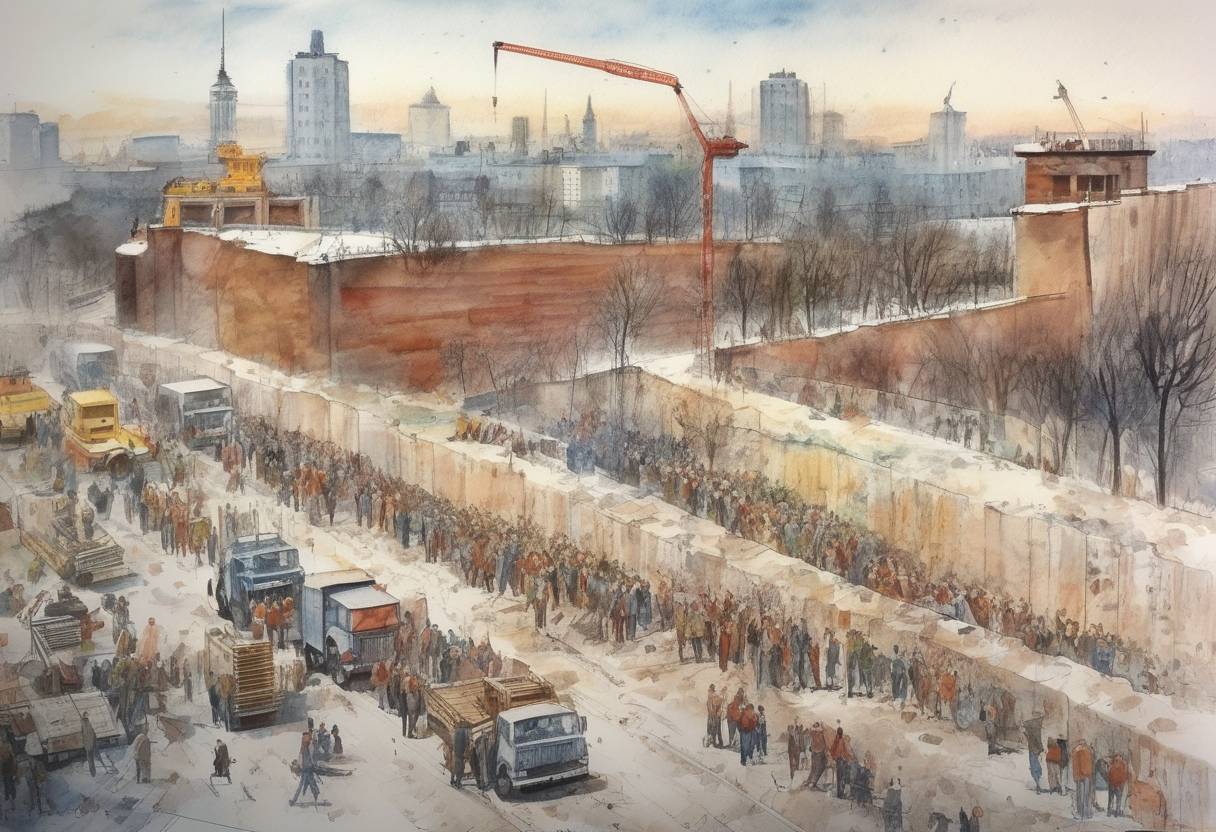
On August 13, 1961, the construction of the Berlin Wall commenced, marking a pivotal moment in Cold War history. This event symbolized the stark division between East and West Europe, both ideologically and physically.
Following World War II, Germany was divided into four occupation zones controlled by the United States, the United Kingdom, France, and the Soviet Union. Berlin, located deep within the Soviet-controlled East Germany, was similarly divided. Tensions between the Soviet Union and the Western Allies escalated into the Cold War, a period characterized by political and military rivalry.
By the late 1950s, a significant number of East Germans were fleeing to the West through Berlin, seeking political freedom and economic opportunities. This exodus threatened the stability of East Germany, prompting the Soviet-backed East German government to take drastic measures.
The Berlin Wall stood for 28 years until November 9, 1989, when political changes in Eastern Europe and mounting public pressure led to its fall. This event paved the way for German reunification and marked the beginning of the end of the Cold War.
The construction of the Berlin Wall on August 13, 1961, remains a defining moment in 20th-century history, illustrating the profound impact of geopolitical divisions and the enduring human desire for freedom and unity.
Source: www.britannica.com