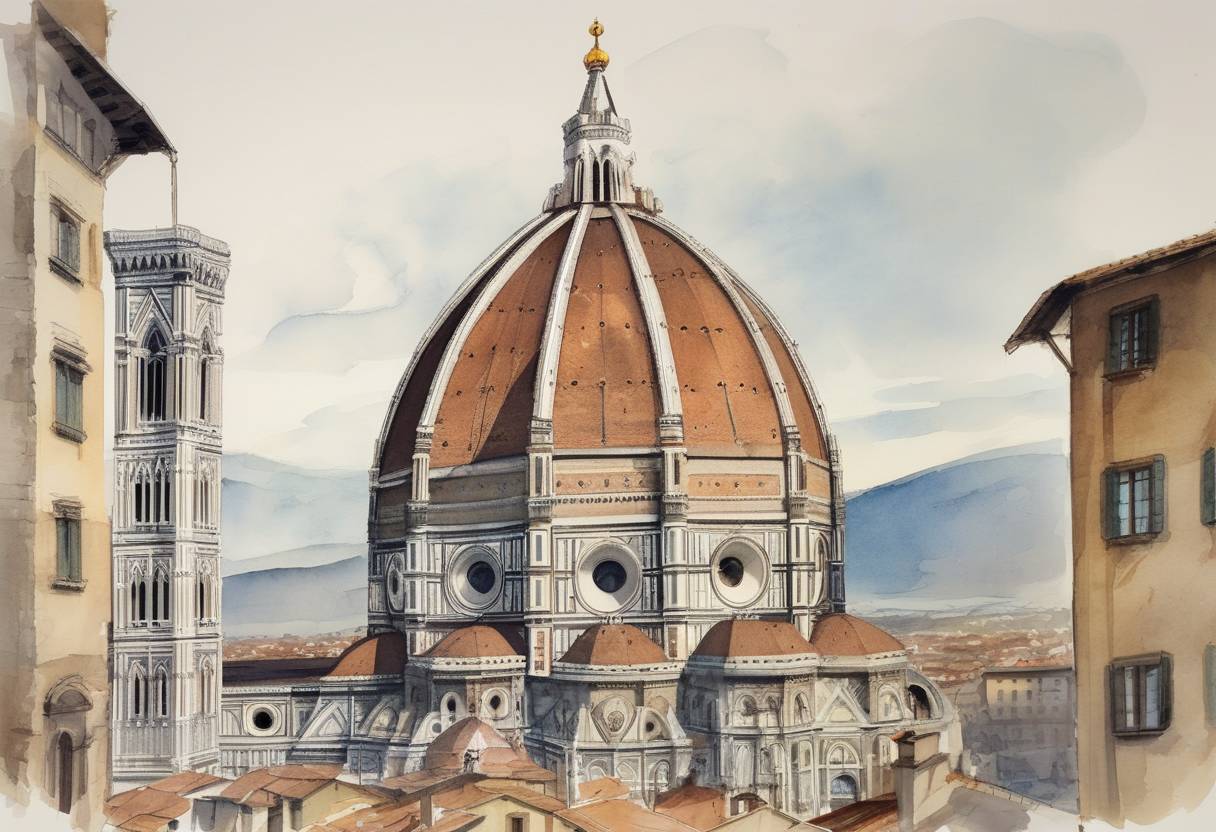
Construction of the Dome of Santa Maria del Fiore
Date: August 7, 1420
Overview
On August 7, 1420, the construction of the dome of Santa Maria del Fiore, the cathedral of Florence, began under the direction of Filippo Brunelleschi. This event marked a pivotal moment in Renaissance architecture, showcasing innovative engineering and design that would influence architectural practices for centuries.
Historical Context
Florence in the Early 15th Century: During this period, Florence was a thriving center of commerce and culture, often considered the cradle of the Renaissance. The city was eager to express its wealth and artistic prowess through monumental architecture.
The Cathedral: The construction of Santa Maria del Fiore, also known as the Florence Cathedral, began in 1296. However, by the early 15th century, the cathedral remained incomplete, lacking its crowning dome.
Filippo Brunelleschi
Background: Brunelleschi was a goldsmith and clockmaker by training, who later turned to architecture. His innovative approach to design and engineering made him a key figure in Renaissance architecture.
Design Competition: In 1418, a competition was held to design the dome. Brunelleschi’s proposal was revolutionary, as it suggested constructing a dome without the traditional wooden scaffolding.
Construction and Innovation
Double Shell Design: Brunelleschi designed the dome with a double shell, consisting of an inner and outer layer. This not only reduced the weight of the structure but also provided stability.
Herringbone Brick Pattern: He employed a herringbone pattern for laying bricks, which helped distribute the weight evenly and prevented the dome from collapsing inward.
Hoisting Machines: Brunelleschi invented new machinery to hoist materials to great heights, a necessity given the dome’s unprecedented scale.
Significance
Architectural Achievement: The completion of the dome in 1436 was a testament to human ingenuity and marked a departure from Gothic architectural norms, embracing the symmetry and proportion characteristic of Renaissance design.
Cultural Impact: The dome became a symbol of Florence’s artistic and economic power. It inspired architects across Europe, contributing to the spread of Renaissance ideals.
Legacy: Brunelleschi’s work on the dome laid the groundwork for future architectural advancements and is considered a masterpiece of engineering and design.
Conclusion
The construction of the dome of Santa Maria del Fiore was not just an architectural feat but also a cultural milestone that encapsulated the spirit of the Renaissance. Brunelleschi’s innovative techniques and visionary design continue to be studied and admired, underscoring the enduring legacy of this monumental project.