Coronation of Richard I of England
1189 · London, England
Richard I of England is crowned King of England at Westminster Abbey, marking the beginning of his reign.
January 6, 1066
Harold Godwinson was crowned King of England, succeeding Edward the Confessor.
London, England | English Monarchy
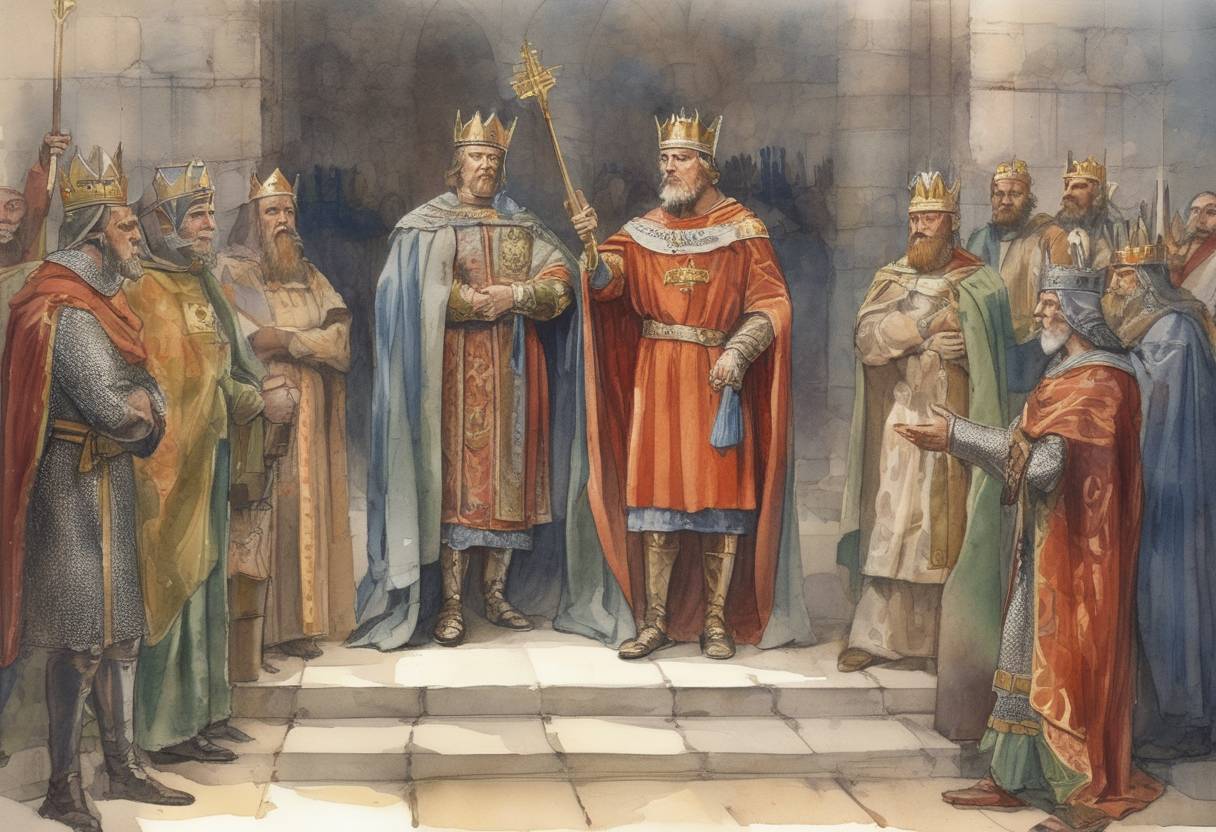
On January 6, 1066, Harold Godwinson was crowned King of England, marking a pivotal moment in English history. This event occurred shortly after the death of King Edward the Confessor, who passed away on January 5, 1066. Harold’s ascension to the throne set the stage for one of the most significant years in medieval English history, culminating in the Norman Conquest.
Edward the Confessor’s Reign: Edward the Confessor was the penultimate Anglo-Saxon king of England, ruling from 1042 until his death in 1066. His reign was marked by relative peace and the construction of Westminster Abbey, where he was buried.
Succession Crisis: Edward died without a direct heir, leading to a succession crisis. Several claimants vied for the throne, including Harold Godwinson, William of Normandy, and Harald Hardrada of Norway.
Witan’s Decision: The Witan, an assembly of nobles and clergy, elected Harold Godwinson as king. Harold was a powerful noble, the Earl of Wessex, and brother-in-law to Edward the Confessor, which bolstered his claim.
Coronation: Harold was crowned at Westminster Abbey, the same day as Edward’s burial. His coronation was conducted by Ealdred, the Archbishop of York, as the Archbishop of Canterbury, Stigand, was considered illegitimate by the papacy.
Harold’s Influence: As the Earl of Wessex, Harold was one of the most influential and powerful figures in England. His military prowess and political acumen made him a leading candidate for the throne.
Edward’s Alleged Promise: There were claims that Edward had promised the throne to William of Normandy, creating a contentious backdrop to Harold’s coronation.
Battle of Hastings: Harold’s reign was short-lived. In October 1066, he faced William of Normandy at the Battle of Hastings. Harold was killed in the battle, leading to William’s ascension as William the Conqueror.
Norman Conquest: Harold’s death and William’s victory at Hastings marked the beginning of the Norman Conquest, which profoundly transformed English society, governance, and culture.
Legacy: Harold’s brief reign is often seen as the end of Anglo-Saxon rule in England. His efforts to defend his kingdom against multiple invasions are remembered as a testament to his leadership and determination.
Harold Godwinson’s coronation was a crucial turning point in English history, setting off a chain of events that reshaped the nation’s future.
Source: en.wikipedia.org