Protests in Thailand: February 5, 2000
2000 · Bangkok, Thailand
Tens of thousands of protesters in Thailand took to the streets to demand the resignation of Prime Minister Chuan Leekpai, accusing him of corruption and economic mismanagement.
May 13, 2005
Uzbek government forces violently suppressed a protest in Andijan, resulting in a large number of civilian casualties.
Andijan, Uzbekistan | Uzbek government
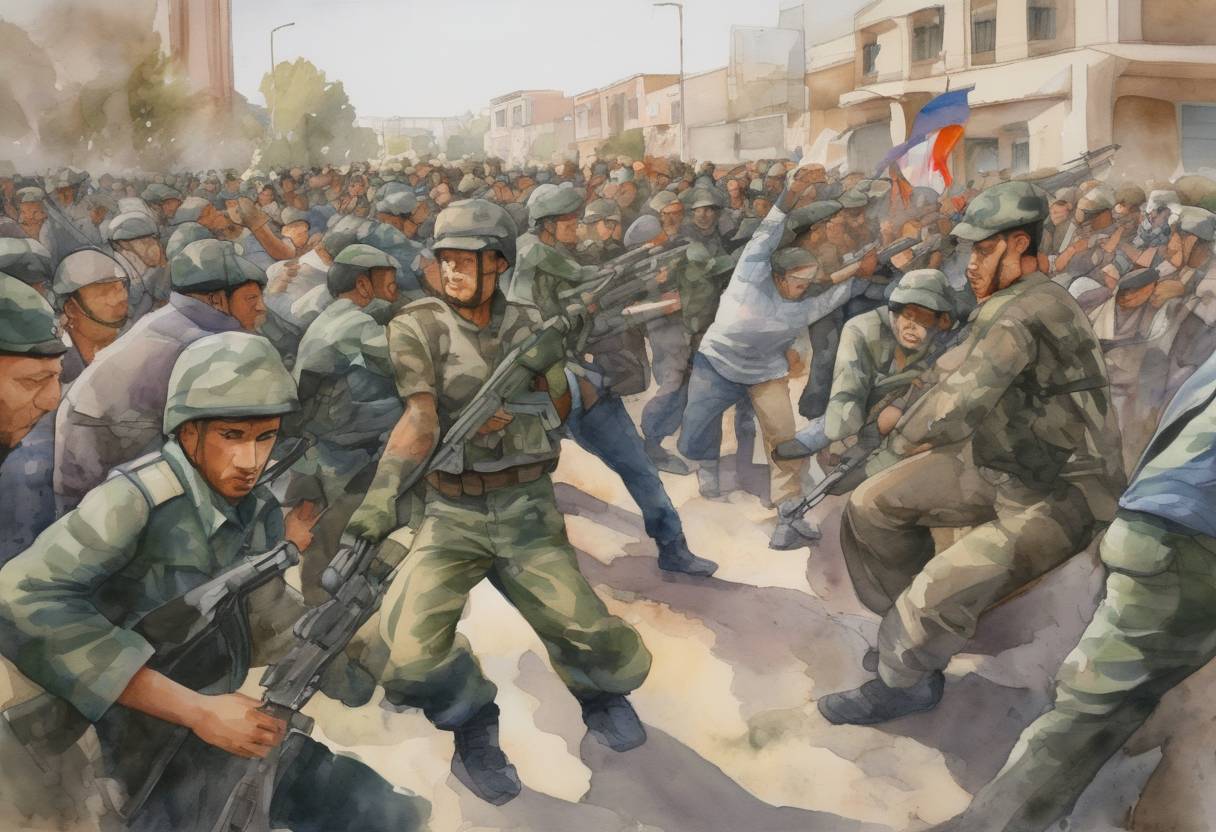
On May 13, 2005, the city of Andijan in Uzbekistan became the site of a tragic and violent suppression of a protest by Uzbek government forces. This event, often referred to as the Andijan Massacre, resulted in a significant number of civilian casualties and drew international condemnation.
The roots of the Andijan incident can be traced to widespread dissatisfaction with the Uzbek government’s economic policies and political repression. Uzbekistan, under the leadership of President Islam Karimov, faced criticism for its authoritarian governance, lack of political freedoms, and human rights abuses. In the Ferghana Valley, where Andijan is located, economic hardships and unemployment were particularly severe, exacerbating public discontent.
In the days leading up to the massacre, a group of businessmen from Andijan, accused of being part of an Islamist group, were arrested and put on trial. Their detention sparked protests, as many locals viewed the charges as politically motivated and unjust.
On the night of May 12, 2005, a group of armed individuals stormed a prison in Andijan, freeing the detained businessmen and several other prisoners. This act escalated tensions, and by the morning of May 13, thousands of people had gathered in Andijan’s central square to protest against the government.
The protestors demanded political reforms, the release of political prisoners, and an end to economic hardships. The demonstration was largely peaceful, with families and children among the crowd. However, the Uzbek government viewed the protest as a threat to its authority and responded with force.
Government troops, including military and security forces, surrounded the square and opened fire on the demonstrators. Eyewitness accounts and reports from human rights organizations indicate that the troops fired indiscriminately into the crowd, resulting in a high number of civilian casualties. Estimates of the death toll vary widely, with some reports suggesting hundreds of people were killed.
The Uzbek government, led by President Karimov, justified the crackdown by claiming it was necessary to quell an uprising by Islamic extremists. However, this narrative was widely disputed by international observers and human rights organizations, which condemned the excessive use of force and called for an independent investigation.
The Andijan Massacre had significant repercussions for Uzbekistan’s international relations. Western governments, including the United States and the European Union, criticized the Uzbek government’s actions and imposed sanctions. Human rights organizations continued to call for accountability and transparency regarding the events in Andijan.
Domestically, the massacre led to increased repression, with the government tightening its control over media and civil society. Many activists and opposition figures were arrested or forced into exile, further stifling political dissent in the country.
The Andijan Massacre remains a pivotal moment in Uzbekistan’s history, highlighting the challenges of authoritarian governance and the struggle for human rights and political freedoms in the region. It serves as a stark reminder of the potential consequences of state repression and the importance of international advocacy for human rights.
The events in Andijan continue to be a sensitive topic in Uzbekistan, with the government maintaining strict control over the narrative and limiting public discussion of the massacre. Despite this, the memory of the tragedy persists, both within Uzbekistan and among the international community, as a call for justice and reform.
Source: www.bbc.com