Christopher Columbus' Second Voyage: September 9, 1493
1493 · Cadiz, Spain
Christopher Columbus set sail on his second voyage to the New World, with a fleet of 17 ships carrying supplies and settlers.
May 9, 1502
Christopher Columbus embarked on his fourth and final voyage to the New World, aiming to find a passage to Asia.
Cadiz, Spain | Spanish Crown
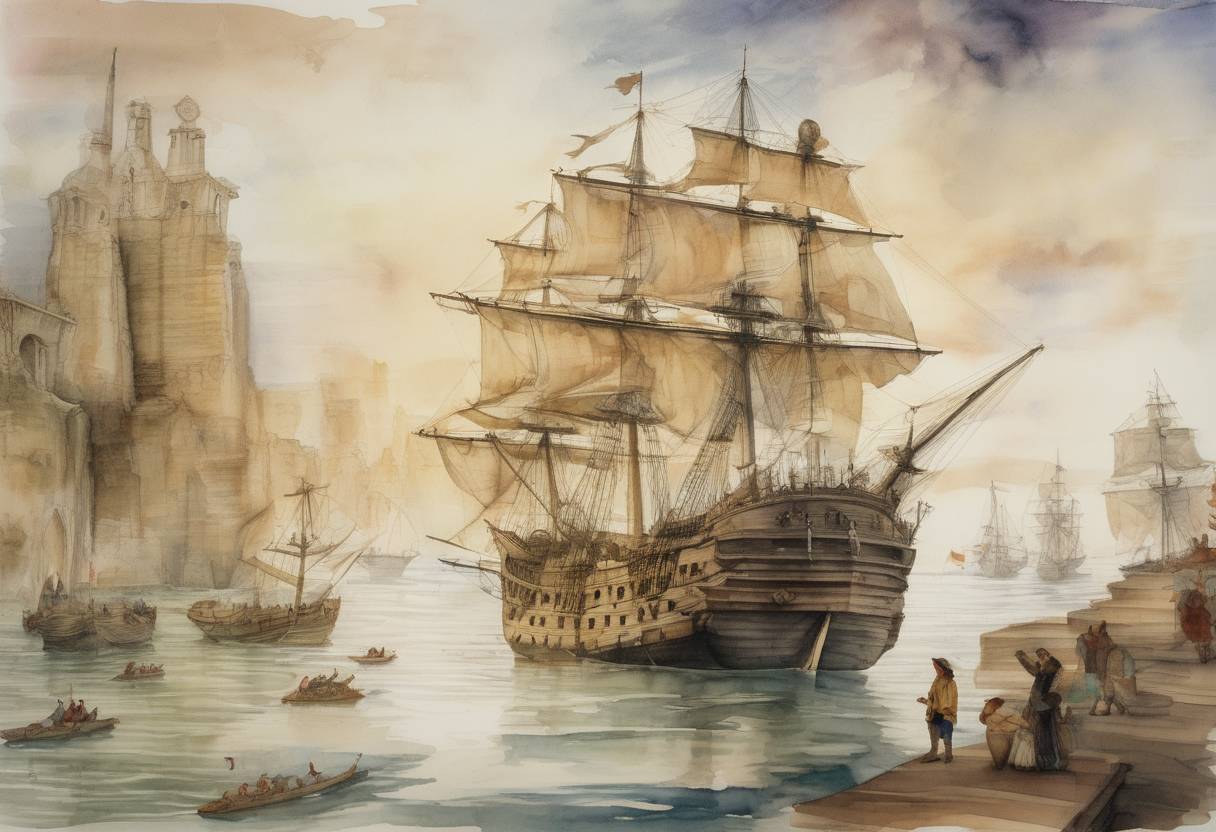
On May 9, 1502, Christopher Columbus embarked on his fourth and final voyage to the New World. This expedition was primarily aimed at discovering a westward passage to Asia, a goal that had eluded him in his previous voyages. Despite the challenges and controversies surrounding his earlier expeditions, Columbus remained determined to find a direct maritime route to the lucrative markets of Asia.
Previous Voyages: Columbus had already completed three voyages across the Atlantic. His first voyage in 1492 famously led to the European discovery of the Americas. Subsequent voyages in 1493 and 1498 expanded European awareness of the Caribbean and parts of Central and South America but failed to find a direct route to Asia.
Royal Support: Despite facing criticism and diminishing support due to his governance issues in the New World, Columbus managed to secure backing from the Spanish monarchs, Ferdinand and Isabella, for a fourth voyage. They were still hopeful of finding a passage to Asia that would enhance Spain’s trade prospects.
Fleet Composition: Columbus set sail with a fleet of four ships: the Capitana, the Gallega, the Vizcaína, and the Santiago de Palos. His crew consisted of about 150 men, including his brother Bartholomew and his teenage son Fernando.
Route and Challenges: The voyage took Columbus along the coasts of Central America, where he explored parts of what are now Honduras, Nicaragua, Costa Rica, and Panama. Despite his efforts, Columbus did not find the sought-after passage to Asia. The journey was fraught with difficulties, including hostile encounters with indigenous peoples, treacherous weather, and deteriorating ships.
Stranded in Jamaica: In 1503, Columbus and his crew were stranded on the island of Jamaica for over a year due to shipwrecks. They survived with the help of the indigenous Taíno people until rescue ships arrived in 1504.
Return to Spain: Columbus returned to Spain in November 1504, in poor health and with his reputation significantly tarnished. He never regained the favor he once held at the Spanish court and spent his remaining years attempting to secure the rewards and recognition he believed he was owed.
Legacy: Columbus’ voyages, including the fourth, played a crucial role in the European exploration and colonization of the Americas. Although he never found the passage to Asia, his expeditions opened the door for further exploration and eventual European dominance in the New World.
In summary, Columbus’ fourth voyage was marked by ambition and adversity, ultimately failing to achieve its primary goal but contributing to the broader narrative of exploration and contact between Europe and the Americas.
Source: www.history.com